How to Create Slack at the Start of a Downstream Drift
Useful slack lets a fly drift downstream without an early drag, but too much creates a helpless pile of line. I’ll show you how cast shape, reach, and line placement work together to preserve both freedom and contact.
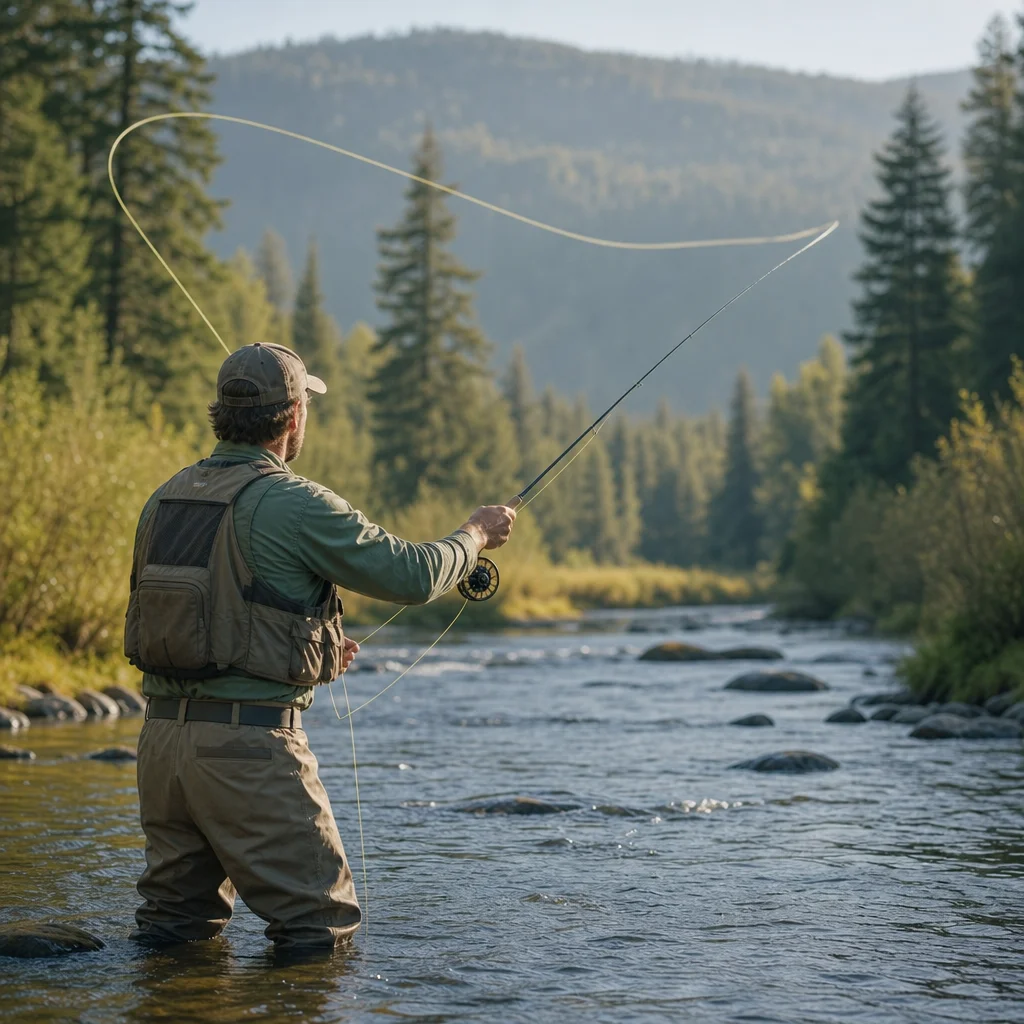
When a downstream drift fails, the problem is often not the fly or the fish. It’s the shape of the line on the water. A straight line can pull the fly into drag almost immediately, while an oversized pile of slack leaves you unable to detect a take or set the hook.
The goal is controlled slack: enough loose line between the rod tip and fly to delay drag, but not so much that the connection disappears. You create that balance mostly in the air, then refine it with a reach, a small mend, or careful line placement.
Start with the Drift You Need
Before casting, decide what the fly must do during the first few seconds. A downstream drift may need to travel beside a seam, pass beneath an overhanging bank, or move through a narrow lane between conflicting currents. Each situation calls for a different amount and shape of slack.
Look at the water between you and the intended drift. If the near current is moving faster than the far current, line landing close to you will be pulled downstream first. That near-side belly can drag the fly even when the fly itself is in slower water.
If the far current is faster, the line may be pulled upstream or sideways. The exact direction matters less than the basic question: which section of line will move first and tighten the connection?
You’re trying to place line so the current can move it without immediately moving the fly. That usually means putting more slack on the side of the line exposed to the faster current and keeping the leader and tippet relatively free to follow the fly.
Build Slack Into the Cast Shape
The simplest downstream presentation isn't a straight cast. A straight cast lays the leader, fly line, and tippet out in one direction. It looks tidy, but it also gives current a direct path from your rod tip to the fly.
Instead, use a cast that lands with curves, angles, or a small amount of line stacked behind the fly. The fly should arrive first or nearly first, followed by leader and fly line with enough slack to delay tension.
Use a Reach Cast for Directional Slack
A reach cast is one of the most useful tools for this job. During the forward stroke, move the rod tip sideways before the line settles. The line travels toward the target, but the fly line lands offset from the direction of the fly.
For example, if you’re casting across a current flowing from left to right, reach the rod upstream—toward the left—during the forward stroke. The fly can land in the target lane while the fly line lands farther upstream. That upstream offset gives the current time to straighten the line before it begins pulling on the fly.
The reach doesn’t need to be dramatic. A small, deliberate move is usually easier to control than a wide sweep. Too much reach can leave the line in a deep curve and make a take difficult to feel.
Think of the reach as moving the line away from the fly, not simply throwing more line. Its value comes from where the line lands relative to the currents.
Add a Curve or Pile When You Need More Delay
A curved or slightly piled-down cast can create more slack than a reach cast. The fly lands toward the end of the cast, while the leader and fly line settle in a loose curve behind it. This can be useful when the drift needs extra time before the current tightens the system.
The curve should be intentional and modest. If the entire leader collapses into a heap, the fly may land poorly, the tippet may catch on itself, and you’ll have little chance of responding to a subtle take.
A useful test is whether you can still identify the approximate path from your rod tip to the fly. You don’t need a straight line, but you do need a recoverable connection.
Place the Line, Not Just the Fly
Many anglers focus on putting the fly in the right lane and treat the fly line as an afterthought. In a downstream drift, that approach often creates drag before the fly has traveled a rod length.
After choosing the fly’s landing point, choose where the line should land. Try to keep line out of faster or conflicting currents whenever possible. If you must cross several currents, place the line so the largest belly forms in the current that would otherwise tighten the system first.
Your rod position can help. Hold the rod tip high enough to keep unnecessary line off the water, but don’t lift so much line that you disturb the fly or lose the ability to mend. A high rod position isn't a substitute for good cast shape; it’s a way to manage the line you’ve already placed.
If the fly is drifting below you, avoid allowing a large section of fly line to settle directly above it. The line may look loose, but the current can pull that section tight and transmit drag downstream.
Match Slack to the Water Type
Smooth, Uniform Current
In uniform current, you need less elaborate slack. A small reach or gentle curve may be enough to let the fly begin naturally. Too much slack can make the drift difficult to track, especially with a small dry fly.
Start with the smallest presentation that delays drag. Add more only if the fly begins skating or swinging before it reaches the target zone.
Broken Water and Seams
Broken water can hide both the fly and the line, but it also creates rapidly changing pressure on the leader. Use shorter casts and more deliberate curves. Keep the fly close enough that you can follow its approximate position through the surface texture.
When fishing a seam, consider which side of the line is in the faster water. A reach toward that faster side can move the line away from the seam and prevent it from pulling the fly across the boundary.
Banks, Bends, and Downstream Edges
A downstream bank often has slower water near the edge and faster water farther out. If your line lands across that speed change, the faster current can swing the fly toward the bank or pull it out of the feeding lane.
Place the line in the slower water when possible. If the fly must enter from faster water, use a curved cast that lets the fly arrive ahead of the line and gives the current less direct leverage.
Use Mends as Corrections, Not the Entire Plan
A mend can improve a cast, but a large mend after the fly has landed often creates more problems than it solves. It may move the fly, disturb a dry fly’s position, or pull the leader into an unnatural curve.
The best downstream mends are usually small and early. Lift only the amount of line that needs moving, make the correction in the direction that reduces tension, and return the rod tip to a position where you can follow the drift.
An aerial mend is often better when you can make one. Moving the line before it lands lets you shape the presentation without dragging the fly across the surface. This is one reason cast shape matters so much: it gives you a correction before current begins working on the line.
Keep Enough Contact to Detect a Take
Slack is useful only while it serves the drift. Once the fly has entered the productive zone, maintain enough contact to notice a pause, lift, stop, or change in the line’s movement.
You don’t need to hold the line tight. Instead, track the fly line and leader with the rod tip. If the line begins to straighten rapidly, lower or reposition the rod as needed while keeping the fly moving naturally. If it collapses farther than you can monitor, you’ve probably created more slack than the presentation requires.
For a dry fly, watch the fly whenever visibility allows. For a nymph or wet fly, watch the leader, sighter, or the point where the line enters the water. The more difficult the indicator, the more conservative your slack should be.
Common Problems and Simple Fixes
The Fly Drags Immediately
Your cast is probably landing too straight, or the line is crossing a faster current. Add a small reach toward the faster water, curve the leader slightly, or shorten the cast so you can keep more line off the surface.
The Fly Lands Naturally but the Line Collapses Completely
You’ve created freedom for the fly but lost the connection. Use a smaller curve, reduce the amount of line in the air, or lift some line from the water with the rod tip. The aim is a loose connection rather than a disconnected one.
The Fly Swings Toward You or Across the Current
A section of line is likely being pulled from the wrong direction. Look at the water between the fly and rod tip, then place the line in the slower current or make your reach toward the current that is tightening the system.
The Fly Lands Poorly After a Large Reach
The reach may be overpowering the cast. Slow the forward stroke slightly, use less sideways movement, and stop the rod high enough to let the line unroll. A controlled reach is more useful than a dramatic one.
A Repeatable Practice Sequence
On the next suitable run, practice the presentation without immediately changing flies. First, make a straight cast and observe how quickly drag appears. Then make the same cast with a small reach. Compare the fly’s movement and the line’s position.
Next, try a modest curve or pile cast. Watch how much additional drift time it provides and whether you can still follow the fly. Finally, vary the rod-tip height and make small corrections rather than large mends.
You’re looking for the minimum amount of slack that keeps the fly free through the target zone. That amount will change with current speed, distance, leader length, fly type, and wind.
Practical Takeaways
Before a downstream drift, ask yourself three questions:
- Where is the fastest or most conflicting current between you and the fly?
- Which cast shape will place the fly ahead of the line?
- Can you still track and respond to a take after the slack settles?
Use a reach when you need directional separation, a curve or small pile when you need additional delay, and a mend when a minor correction is enough. Keep the line out of the strongest conflicting current, and don’t confuse a large amount of loose line with a good presentation.
The most reliable downstream slack is planned before the fly lands. Shape the cast, place the line deliberately, and preserve just enough contact to know what the fly is doing.