How to Set a Turnaround Time for a Remote Fishing Day
A short walk back isn't always safer than one more bend upstream; daylight, terrain, and the drive home can change the decision. I’ll show you how to set a realistic turnaround time before a remote fishing day and communicate it clearly.
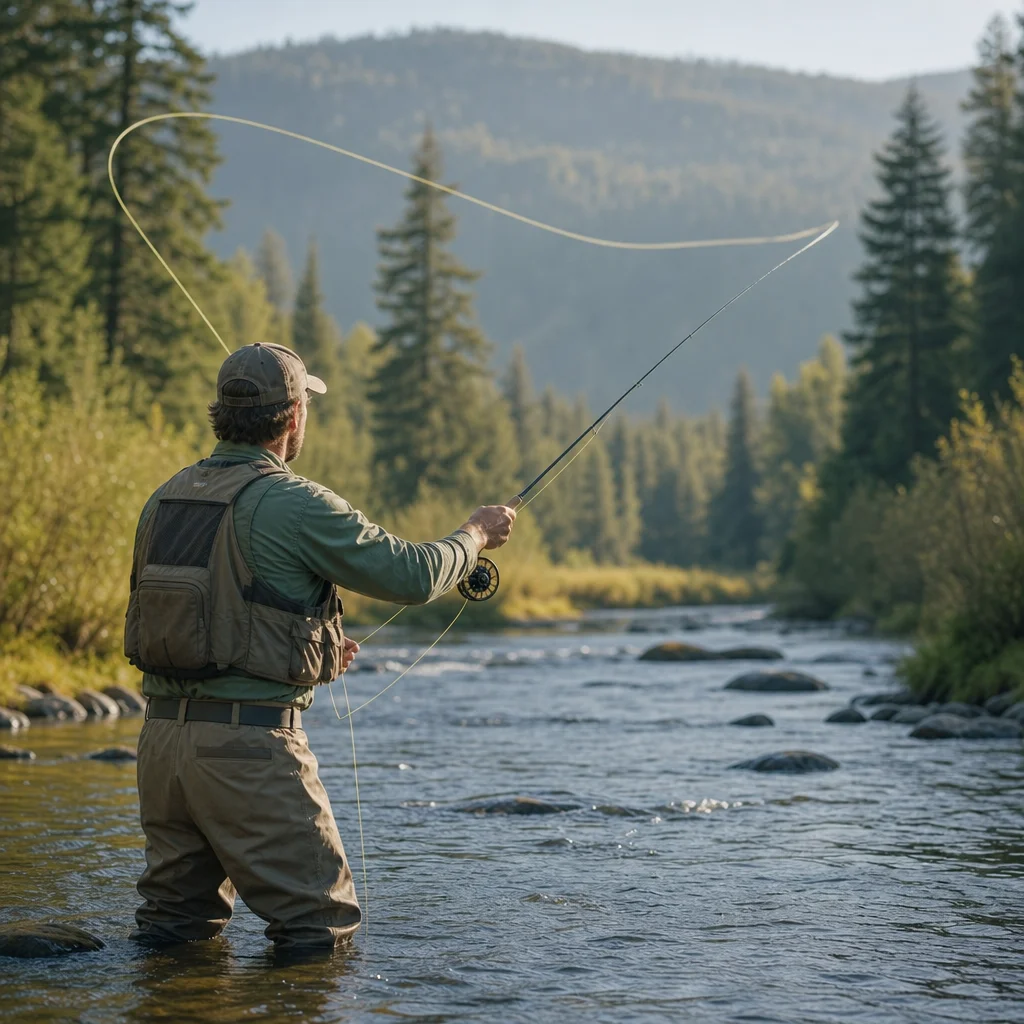
Remote trout water can make “one more pool” feel like a small decision. It often isn’t. A steep climb, a slow crossing, worsening weather, or a rough access road can turn extra fishing time into a rushed return after dark.
A turnaround time gives your day a firm stopping point. It doesn’t mean you have to leave the moment the clock reaches that minute, but it does create a decision you make before fatigue and good fishing start negotiating on your behalf.
Start with the return, not the fishing
The most common mistake is treating the day’s fishing time as the main calculation:
- Arrive at 9:00 a.m.
- Fish until 5:00 p.m.
- Walk out afterward
That plan leaves the return as an undefined leftover. Instead, work backward from the point when you need to be safely back at the vehicle, campsite, or meeting point.
For example, if you want to reach the vehicle by 6:00 p.m., estimate:
- Two hours to walk back
- Thirty minutes for breaks, route-finding, and slow sections
- Thirty minutes of daylight or weather margin
Your planned turnaround time is 3:00 p.m., not 4:00 p.m. The fishing window is what remains after the return plan is protected.
This approach also helps you separate two times that anglers often confuse:
- Turnaround time: when you stop moving farther from your exit and begin returning.
- Final departure time: when you leave the water or trailhead to meet a later commitment.
On a remote day, you may need both. You could turn around at 3:00 p.m., reach the vehicle at 5:00 p.m., and still have a long drive before dark.
Estimate the return in sections
A route description that says “four miles” isn't enough to set a safe schedule. Break the return into parts and estimate each one separately.
1. The fishing route back to the trail
Wading, scrambling, and moving through brush are slower than ordinary trail walking. You may also need to retrace the route rather than take the most direct line.
Ask:
- How much of the return is in the stream?
- Will you be climbing around the same obstacles in reverse?
- Are there steep banks, loose rocks, or dense vegetation?
- Do you know the exit route, or will you need to navigate by map?
- Will a tired angler move at the same pace as a fresh one?
Use your slower realistic pace, not your best pace from the first hour of the day. If you’re traveling with others, base the estimate on the slowest person, including anyone carrying extra gear or managing an injury.
2. The transition at the exit
Reaching the trail or road isn’t the same as reaching safety. Allow time to pack rods, change footwear if necessary, cross-check that everyone is present, and begin the next section.
A small group can lose twenty minutes here without anyone doing anything unreasonable. Someone needs water, another person has to find a dropped item, and the last rod tube somehow ends up under the seat.
3. The access road
Remote access roads deserve their own estimate. Gravel, mud, washouts, gates, narrow bridges, and wildlife can make the final drive much slower than a map suggests.
If you’ve never driven the road, use conservative assumptions. A route that is easy in dry conditions may be substantially slower after rain or snow. Also consider whether you’ll be comfortable driving it at dusk or in darkness. “The vehicle is close” doesn’t help much if the road is difficult to follow or a tire problem would leave you waiting without a signal.
Protect a daylight margin
Daylight isn't just the time you can still see the fly. It affects route-finding, footing, stream crossings, and the ability to notice hazards.
Set your return target so you have useful light for the difficult parts of the route. If the final mile is an easy, familiar road, your margin may be different from a route that finishes with a steep, rocky descent. The end of the trip often deserves more attention than the middle because fatigue is highest then.
Avoid planning to arrive at the vehicle exactly at sunset. Twilight can disappear quickly in narrow valleys or under dense forest. Clouds, tree cover, and changing terrain can make a route feel dark well before the official sunset time.
Check the conditions before you commit to the route: Verify the current forecast, daylight information, road or trail access, and any local advisories for the area. Recalculate your turnaround time if rain, wind, smoke, high water, or a closure changes the return conditions.
If weather is deteriorating, don’t wait for the original clock time. The turnaround time is a maximum, not a target you must reach.
Account for terrain and fitness
Distance alone hides the effort required to get out. A short route with repeated climbs, boulder hopping, and stream crossings may take longer than a level trail several times its length.
Your estimate should reflect the day you’re likely to have, not the strongest version of yourself. Consider:
- How much elevation you’ll gain on the return
- Whether you’ll be walking against current or over slippery rocks
- How much gear, water, and clothing you’ll carry
- Your recent fitness and familiarity with the terrain
- Heat, cold, smoke, or humidity
- Whether the group includes someone who may need frequent breaks
A useful method is to add a terrain buffer after making your basic estimate. For an unfamiliar or demanding route, a larger buffer is sensible than for a flat, well-known trail. You don’t need a perfect formula; you need enough time that a few slow sections won’t turn into a crisis.
If you’re unsure whether a route is within your ability, shorten the plan rather than relying on a faster return. Fishing farther upstream is optional. Getting back isn't.
Set decision points before the day begins
A single turnaround time can be too blunt for a complicated route. Add checkpoints that tell you whether the plan is still working.
For example:
- At the trailhead: Confirm the forecast, daylight, route, and communication plan.
- At the first major landmark: Compare your actual pace with your estimate.
- At the planned farthest point: Stop moving upstream, even if the fishing is good.
- When conditions change: Reassess immediately rather than waiting for the clock.
You can also set a “shorten the day” trigger. If the group reaches a landmark later than expected, turn around there instead of trying to recover lost time by walking faster. A late start, a slow approach, or a difficult crossing has already used part of your margin.
A simple rule is to treat lost time as lost fishing distance. Don’t try to make it back by spending your safety buffer.
Make the group plan explicit
In a small group, everyone should know:
- The planned turnaround time
- The latest time to reach the vehicle or camp
- The route back
- Who is responsible for navigation
- What to do if someone becomes separated
- How the group will respond to a minor injury or equipment problem
Say the plan out loud before leaving. “We’ll head back around three” is less useful than “We turn around at 3:00 p.m. at the marked bend, and we aim to be at the truck by 5:00.”
Keep the group together when the terrain or communication is difficult. If anglers spread out, the return time must work for the person farthest from the exit, not the person who can walk fastest. Don’t let a stronger hiker quietly become the assumption behind everyone else’s schedule.
Leave a plan with someone at home
For remote water, provide a dependable contact with enough information to recognize a problem. Include:
- The access point or general area
- The route or drainage you expect to fish
- Vehicle description and location
- Names of the people in the group
- Planned return time
- The time when they should begin trying to contact you
- Who to call if they can’t reach you
Choose a check-in time that allows for ordinary delays without creating confusion. If you say you’ll be back at 6:00 p.m., arriving at 6:20 shouldn’t automatically launch an emergency response. On the other hand, an unexplained absence well beyond your stated window should prompt action according to the plan you agreed on.
A satellite messenger or other communication device can be useful where cellular service is unreliable, but it doesn’t replace route planning, spare supplies, or a realistic turnaround time. Know how to use the device before the trip and keep it accessible rather than buried in a pack.
Common turnaround mistakes to avoid
Using the drive time as the only buffer
Anglers sometimes calculate the fishing route carefully but forget that the drive home may be long, tiring, or affected by poor conditions. Include the entire trip, especially if you have a fixed arrival time or a long distance to travel after leaving the water.
Treating a familiar route as risk-free
Familiarity helps with navigation, but conditions still change. A fallen tree, high water, washed-out road, or damaged bridge can make a known route slower or impassable.
Turning around when the light is already fading
If you’re deciding whether to leave because it’s getting dark, you’re already late for the daylight margin. Set the time earlier, when the choice is still easy.
Letting good fishing reset the clock
Strong insect activity and rising trout are exactly when a plan is most likely to slip. Decide in advance that the last productive pool doesn’t extend the schedule.
Ignoring the person having the hardest day
Cold, fatigue, a sore knee, or wet clothing can reduce someone’s pace without warning. Adjust for the person who needs the most time, and do so without making them defend the decision.
A simple turnaround checklist
Before leaving the vehicle, answer these questions:
- When must we be back at the vehicle or camp?
- How long will the return take at a tired, realistic pace?
- What buffer covers route-finding, breaks, weather, and minor problems?
- Where exactly will we turn around?
- What conditions would make us turn around earlier?
- What is the latest useful daylight for the difficult sections?
- Has someone at home received the route and check-in plan?
- Does every angler know the plan?
Write the key times in your phone, on a map, or on a small card. A visible reminder is more reliable than a promise to remember after several hours of fishing.
Practical next steps
For your next remote fishing day, set the return deadline first. Work backward through the drive, exit, route, terrain, and daylight, then add a buffer that reflects the weakest part of the plan. Mark a specific turnaround point, tell the group and your contact at home, and agree that worsening conditions move the time earlier.
The best turnaround time is the one that lets you enjoy the water without spending the final miles trying to outrun your own schedule.