How to Plan a Safe Solo Fly-Fishing Trip
I’ll compare the planning choices that make a solo fly-fishing trip safer, from familiar roadside water to more remote stretches, and explain how to build an itinerary, communication plan, gear list, and turnaround rule that fit your experience.
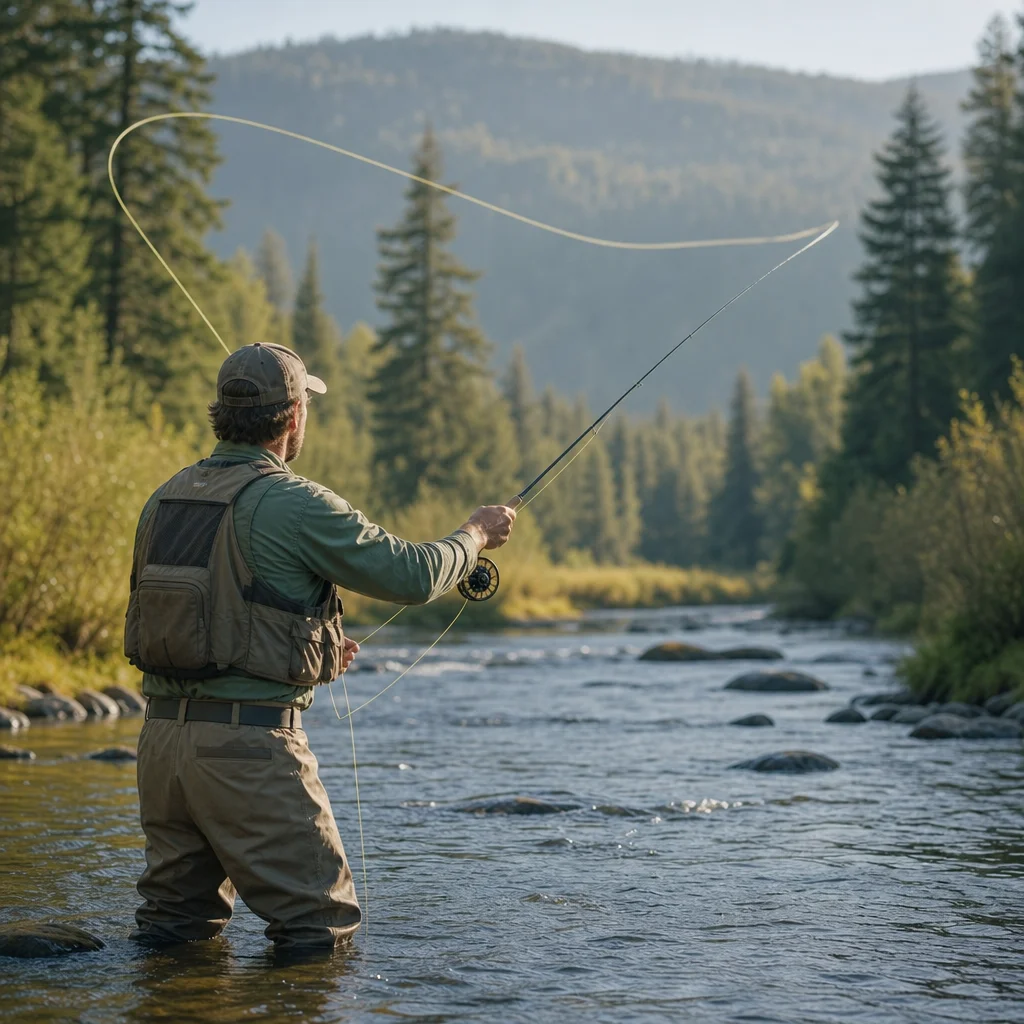
Solo fly-fishing is appealing because you can move at your own pace, change plans without negotiation, and spend a quiet day reading the water. The trade-off is that every decision—from choosing a trailhead to handling a sudden storm—rests with you.
A safe solo trip doesn’t require eliminating every risk. It requires keeping the consequences of ordinary problems manageable. Start with water you can reach and leave easily, tell someone exactly where you’ll be, carry a way to call for help, and decide in advance when you’ll turn around.
Choose water that matches your margin for error
For a first solo outing, favor familiar or easily understood water over an ambitious destination. A public stretch near a maintained road, with reliable parking and a short walk to the river, gives you more options if your plans change. You can leave early, return to the vehicle quickly, or get assistance without committing to a long route.
Remote water can be safe for an experienced angler, but distance adds consequences. A twisted ankle, damaged wading boot, dead phone battery, or rapidly rising stream becomes more serious when the trailhead is several miles away. Treat remoteness as a factor to manage, not a badge of accomplishment.
When comparing locations, consider:
- Access: Is the route clear, legal to use, and within your ability? Account for steep banks, loose footing, gates, and stream crossings.
- Exit options: Can you leave from several points, or does the route depend on returning the same way?
- Communication: Is there known cell coverage, or will you need a satellite communicator or personal locator beacon?
- Conditions: Could rain, snowmelt, heat, wildfire, or high water change the route during your trip?
- Crowds and isolation: A quiet stretch may be peaceful, but a completely empty area offers fewer chances for informal help.
- Vehicle access: Check whether the road is seasonal, rough, gated, or likely to become difficult after rain.
A productive stretch of water close to the car is often a better solo choice than a famous run that demands a long hike and complicated navigation. The trout won’t award extra points for logistical drama.
Check the local conditions: Before you leave, verify current access notices, weather, road status, fire restrictions, and any fishing regulations for the specific water you plan to visit. Conditions and rules can change during the season.
Make a simple, specific itinerary
“Fishing the river” isn't enough information for someone who may need to find you. Give a trusted person a written plan that another person could understand without knowing your habits.
Include:
- The name of the river, lake, or access area.
- The trailhead, parking area, or access point you’ll use.
- Your intended route and the farthest point you expect to reach.
- Your departure time and planned return time.
- Your vehicle description and license plate number, if appropriate.
- The clothing and pack you’ll be carrying.
- Your communication method and how often you’ll check in.
- What the person should do if you miss the check-in or return deadline.
A screenshot or pin from a mapping app can help, but don’t assume it tells the whole story. Map pins can be inaccurate, roads may be unnamed, and a route that looks short on a screen may involve difficult terrain. Send the actual access description as well as the digital location.
Agree on what “late” means. For example, you might promise to send a message when you return to the vehicle and ask your contact to call you if they haven’t heard by a specified time. For a remote trip, the response plan may need to be more deliberate. Your contact should know when to try calling, when to contact local authorities, and which details to provide.
This isn’t about creating an elaborate search operation for every delayed lunch. It’s about preventing uncertainty from lasting for hours when a clear plan could narrow the problem quickly.
Carry communication that fits the location
A phone is useful for maps, weather, and emergency calls, but it shouldn’t be your only plan in an area with unreliable coverage. Batteries drain faster in cold weather, water can damage electronics, and a phone may show a signal at the trailhead but lose it along the river.
For areas with dependable coverage, carry a charged phone in a waterproof pouch and keep it accessible without exposing it unnecessarily to rain or a fall. Download maps for offline use before leaving. A portable battery can extend the phone’s useful life, but it won’t create a signal.
For remote areas, consider a satellite communicator or personal locator beacon that you know how to operate. These devices differ in features, subscription requirements, message capability, and emergency functions. Test the device at home, charge it fully, and explain its operation to your trip contact. An emergency device that remains in a confusing menu or at the bottom of a pack isn't much of a plan.
Use routine messages when possible: departure, arrival at the fishing area, a meaningful change of location, and return to the vehicle. Keep emergency communication separate from casual updates. If you need help, state your location, the problem, the number of people involved, and whether the situation is getting worse.
Set a turnaround rule before you start fishing
Fly fishing encourages gradual delay. One more run becomes another hour, and a promising hatch can make the walk back seem inconvenient. Decide your limits before the first cast, when you’re less likely to bargain with yourself.
Set at least three boundaries:
- Time boundary: The latest time you’ll leave the water, allowing enough daylight and energy for the return.
- Weather boundary: The conditions that mean you’ll stop, such as nearby lightning, dangerous wind, extreme heat, or a forecast that is deteriorating faster than expected.
- Water or route boundary: A point you won’t pass if the river is higher, the trail is damaged, or a crossing no longer looks straightforward.
Your turnaround time should account for the route back, not just the time you want to spend fishing. Add margin for slower travel, a broken strap, a wrong turn, or stopping to deal with wet gear. If you’re exploring unfamiliar water, use a conservative limit and adjust on later trips only if the route proves easier than expected.
Leave immediately when the condition that triggered your rule appears. A rule that changes whenever the fishing improves isn’t a rule; it’s a suggestion made by a trout.
Pack for small problems, not every possible disaster
A solo pack should help you remain warm, hydrated, oriented, and mobile if the trip takes longer than expected. Keep it light enough that it doesn’t affect your balance or tempt you to leave essential items behind.
Useful basics include:
- Water and a way to carry or treat more, when appropriate for the destination.
- Food that remains usable if you return late.
- A waterproof shell and an insulating layer suited to the forecast.
- A first-aid kit with supplies you know how to use.
- Navigation tools, including an offline map and a physical backup when the route warrants one.
- Charged communication devices in waterproof protection.
- A headlamp, even for a daytime trip.
- Extra glasses, medication, sunscreen, and insect protection as needed.
- A small repair kit for line, waders, boots, pack straps, and other likely failures.
- Wading support appropriate to the water, such as a wading staff and a properly fitted belt when using waders.
Avoid carrying equipment simply because it appears on a generic checklist. Think through the likely problems at your destination. A short roadside outing may need less food and navigation equipment than a remote hike, but a headlamp and communication plan still make sense.
Treat crossings and wading as decision points
Moving water deserves special caution when you’re alone. Don’t enter a crossing merely because another person used it earlier or because the current looks manageable from the bank. Water depth, speed, footing, and temperature can change quickly after rain, releases, or snowmelt.
If you can’t confidently assess a crossing, find another route or turn around. Avoid crossing when the consequence of a slip would be a long swim, a pinned leg, or separation from your pack. Keep essential communication and insulation secured so they remain useful if you fall.
Wade conservatively. Use a staff, take deliberate steps, and avoid walking farther out just to reach a marginal lie. If the water becomes uncomfortable, back out while you still have a stable route. Solo fishing isn't the time to prove that your balance is better than the current.
Use check-ins and adjust without apology
Send the agreed updates even when the trip is going perfectly. A short message that says you’ve arrived, changed access points, or started walking back keeps your itinerary accurate.
If the weather worsens, the route takes longer, or you’re tired, shorten the trip. Changing plans is a sign that your safety system is working, not that the day failed. You can return to the water under better conditions; you can’t make a preventable injury less inconvenient by hiding it from your trip contact.
Afterward, note what you learned: actual walking time, coverage gaps, confusing junctions, water levels, and gear that stayed unused or proved valuable. Those observations will make the next itinerary more accurate.
A straightforward solo-trip checklist
Before leaving, confirm that you can answer yes to these questions:
- Do I know how I’ll get to the water and leave it?
- Does the route match my current fitness, navigation, and wading experience?
- Have I checked current weather, access, hazards, and regulations?
- Does someone reliable have my specific itinerary and response plan?
- Can I communicate if my phone has no signal?
- Do I have enough clothing, water, food, light, and first-aid supplies for a delay?
- What exact time, weather condition, or route change will make me turn around?
If any answer is uncertain, simplify the trip. Choose closer water, reduce the route, improve communication, or postpone the outing. The best solo plan leaves you with enough margin to handle an ordinary problem calmly—and still have energy to tie on one last fly when you get back.