How to Make a Turnaround Plan for a Group of Uneven Wading Experience
I’ll show you how to build a simple turnaround plan for a mixed-skill wading group, so faster anglers can explore without leaving beginners behind. You’ll learn how to set meeting points, time limits, communication rules, and sensible alternatives before anyone steps into the water.
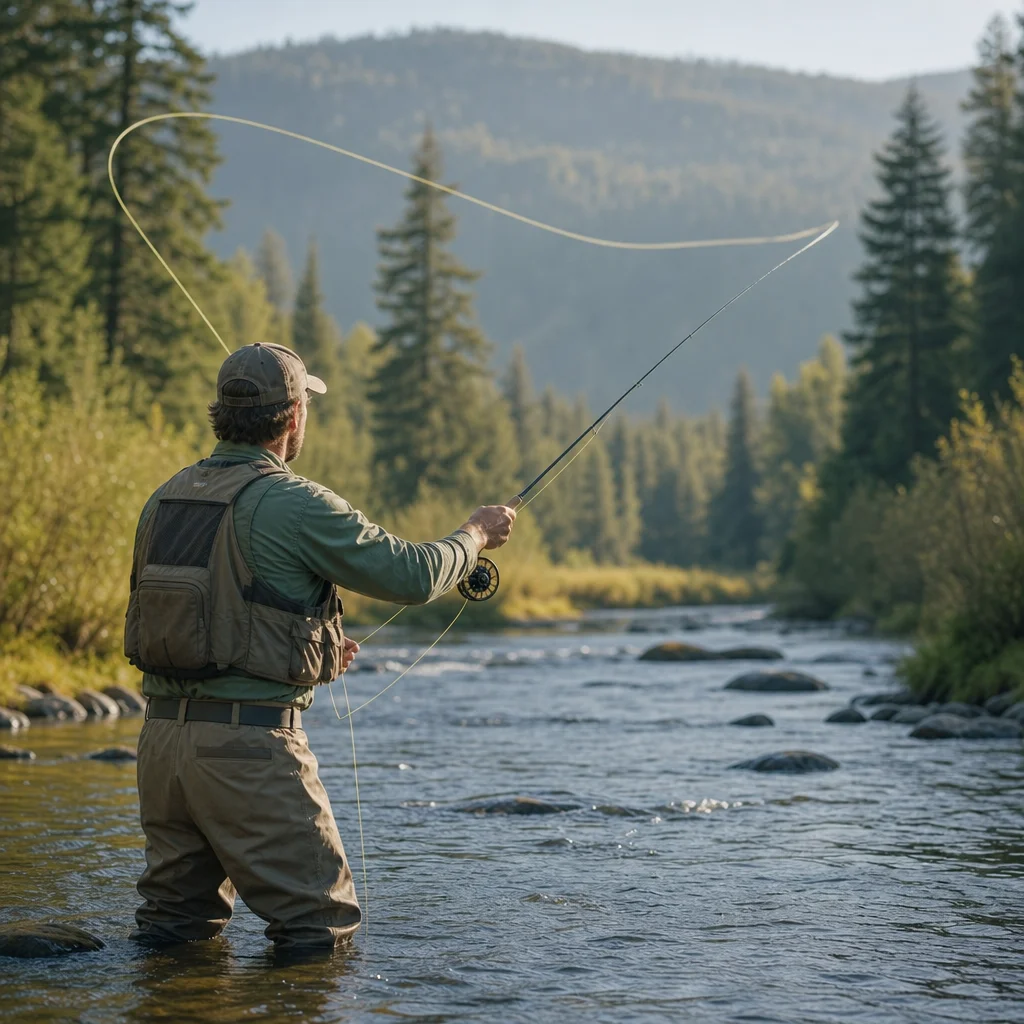
A group of anglers can start a wading outing together and quietly split into three different trips within the first hour. One person moves confidently through the shallows, another studies every step, and a beginner is left wondering whether the group has forgotten about them. The problem isn’t that anyone is fishing at the wrong pace. It’s that the group started without a plan for different paces.
A turnaround plan gives everyone room to fish while keeping the group connected. It defines where you’ll regroup, when you’ll turn back, how you’ll communicate, and what happens if a section is too difficult. For a mixed-skill group, that structure matters more than covering the most water.
Start with the group’s actual ability range
Before choosing a route, ask each person how comfortable they are with wading—not just how long they’ve been fly fishing. Casting experience and wading experience aren’t the same thing. An angler may be able to cast well but feel uncertain on slippery rocks, in deeper current, or while carrying a pack.
Ask about:
- Comfort walking on uneven or loose streambed
- Experience crossing current
- Balance, mobility, and any injuries that affect footing
- Ability to fish independently if separated briefly
- Familiarity with the area and its hazards
- Whether anyone needs frequent rests or shorter sessions
Treat the least experienced wader as the person who sets the group’s safety margin. That doesn’t mean everyone must fish beside them all day. It means the route, crossing points, and meeting schedule need to remain manageable for them.
A useful distinction is between a fishing pace and a travel pace. Someone may fish slowly but walk confidently. Another person may cover water quickly but need extra time at every crossing. Plan around the slower travel pace, not the fastest angler’s estimate of how long the route should take.
Choose a route with natural stopping points
A turnaround plan works best when it uses landmarks people can recognize without a map in hand. Good meeting points include a footbridge, trail junction, large boulder, obvious bend, fence crossing, or marked access point. A vague instruction such as “meet somewhere downstream” is an invitation to confusion.
For each planned section, identify three points:
- The starting point: where everyone prepares and confirms the plan.
- The regrouping point: where anglers meet after spreading out.
- The hard stop: the furthest point anyone should reach before returning.
The hard stop should be based on time and terrain, not merely distance. A half-mile of easy bank may take less effort than a few hundred yards of steep, brushy shoreline. If the route includes a crossing, scramble, narrow ledge, or deep channel, treat that feature as a decision point rather than something the group will automatically handle.
Mark the route on a paper map or offline map application before leaving the access point. Don’t rely on a phone signal to load a map later. You don’t need a complicated navigation system; you do need everyone to understand the general direction of travel and the locations where the group can reunite.
Check the route before you wade: Confirm current access rules, closures, weather, water conditions, and any local restrictions before the outing. Conditions that look reasonable from the bank can change the difficulty of a crossing or make a planned section unsuitable.
Set a turnaround time, not just a distance
Distance can be misleading when people move at different speeds. A turnaround time is easier for the group to use. For example, you might decide that everyone fishes away from the access point for 45 minutes, then begins working back toward the designated meeting point. The exact interval should reflect the route, daylight, weather, and the group’s experience.
Build in more time than the strongest wader thinks is necessary. The return trip may be slower because people are tired, the light is changing, or anglers are carrying fish, wet layers, and gear. If the route includes a difficult section, the group should reach the turnaround point with enough energy and daylight to handle it safely.
Use at least two time limits:
- Regroup time: when everyone should be at the next meeting point.
- Final return time: when everyone must be back at the access point or another agreed location.
A regroup time is flexible only within a small, stated window. “Be back around lunch” gives people too much room to interpret the plan differently. “Meet at the footbridge at 11:30; if you arrive early, wait there” is clear.
A final return time is firmer. It should account for changing weather, darkness, parking or shuttle arrangements, and the time needed to contact someone if a person is late. If the group is unfamiliar with the area, ending early is usually a better decision than trying to use every available minute.
Give faster anglers a way to move ahead safely
The goal isn’t to force every angler into a single line. Faster anglers can fish ahead if they understand the limits of the plan.
A simple arrangement is to divide the route into short sections. The lead anglers may move to the next section, while the slower anglers finish the current one. Nobody starts the following section until the lead anglers have reached its meeting point or checked in according to the agreed communication method.
Set a maximum separation distance as well as a time limit. The distance should be short enough that a person can return to the group without crossing unknown water or rushing. In complicated terrain, a visual connection may be more useful than a measured distance.
Ask faster anglers to stop at decision points rather than fishing continuously beyond them. A bridge, bend, side channel, or trail junction is a natural place to wait. Stopping in the middle of a long, featureless run makes it harder for the rest of the group to know where to look.
A practical rule is: the lead moves only when the rear has arrived or checked in. If someone loses sight of the group, they stop at the last agreed landmark and wait. They don’t continue forward in the hope of finding everyone downstream.
Agree on communication rules before leaving
Communication plans need to work in the actual setting. Phone service may be unreliable in a canyon or valley, and shouting over current and wind can fail surprisingly quickly.
Decide how the group will communicate when people are within sight, when they’re separated by terrain, and when someone is overdue. Options may include a phone message sent from the access point, two-way radios, a whistle signal, or a buddy system. Each method has limitations, so explain what it means and when to use it.
For example, the group might agree that:
- One short whistle means “look toward me.”
- Three blasts mean “I need help” or “return to the meeting point,” depending on the group’s established emergency protocol.
- A phone message confirms arrival at a meeting point but doesn’t replace the final group check.
- Anyone who changes direction tells a buddy or leaves a clear message at the agreed communication point.
Don’t create elaborate signals nobody will remember. The best plan is brief enough to repeat at the trailhead. Make sure every person knows who is carrying the first-aid kit, who has the map, and who is responsible for confirming that the group is back together.
Use a buddy system without creating a second problem
Pairing people can help, particularly when one angler is new to wading. A buddy can notice fatigue, help interpret the route, and provide a second set of eyes near difficult footing. The buddy shouldn't pull another person through current or attempt a rescue beyond their ability.
Pair by compatibility rather than simply placing the strongest wader with the least experienced person. A patient, attentive angler is more useful than someone who is technically capable but eager to keep moving. Explain that a buddy stays close enough to communicate and checks in at every regrouping point.
For larger groups, use a lead and sweep arrangement. The lead identifies the next safe stopping point, while the sweep ensures nobody is left behind. Rotate those roles only if the group remains clear about who has them. If the sweep reaches the group but another person is missing, the group stops and follows the communication plan rather than sending several people searching in different directions.
Build alternate fishing areas into the plan
An alternate area prevents one difficult section from derailing the entire day. It might be a slower-water pool near the access point, an easier bank section, a nearby trail-accessed run, or a separate location for anglers who want to fish alone after the main outing.
Choose the alternate before the group needs it. Consider:
- Whether it has legal and clearly understood access
- Whether it offers safe footing and an easy exit
- How the group will travel there
- Whether everyone can meet there if plans change
- Whether weather or water conditions could affect it too
Use the alternate when conditions, fatigue, or confidence make the original route a poor choice—not as a punishment for the least experienced angler. A beginner who opts for easier water is making a sensible decision, not slowing the group down.
You can also split the day into two formats: a short shared session followed by optional fishing. Everyone fishes together until the first planned turnaround, returns to the access point, and then chooses whether to continue in a suitable area. This gives the group a common experience without requiring identical stamina or ambition.
What to do when someone misses a meeting point
Agree on the response before it happens. If one person is late, the group shouldn't immediately scatter to search. First, wait for the stated grace period at the exact meeting point. Then use the planned communication method and check the most likely nearby landmarks.
If there’s still no contact, keep the group together and return along the agreed route or follow the local emergency plan. One capable person may be designated to stay at the meeting point only if that is safe and the rest of the group knows where they are. Don’t send an inexperienced person alone into unfamiliar terrain.
A missing angler may simply have stopped to untangle a line, take a rest, or use a different path. That’s why the plan should include a rule for announcing delays whenever possible. It also helps if everyone carries a whistle, knows the access-point location, and has enough clothing, water, and basic supplies to wait comfortably.
Keep the plan short enough to remember
Before entering the water, give the group a concise briefing:
- Where the next meeting point is
- When everyone should reach it
- How far ahead anyone may move
- Who is lead, sweep, and buddy-paired
- What to do if someone gets tired or loses contact
- What time the entire group returns
- Which alternate area is available
Then ask one or two people to repeat the key points. This isn’t a formal ceremony; it’s a quick way to catch misunderstandings while everyone is still standing on stable ground.
Conditions and confidence can change during the outing. Reassess after the first section. If the beginner is struggling, shorten the next interval. If the water has risen or weather turns poor, use the alternate area or end the wading portion. A turnaround plan is successful when it changes with the situation instead of becoming a reason to press on.
Practical next steps
For your next mixed-skill outing, choose a route with obvious landmarks and write down two meeting times: one for regrouping and one for the final return. Tell faster anglers exactly where they may wait, pair less experienced waders with patient buddies, and agree on a simple lost-contact procedure.
Most importantly, make the shared portion of the trip achievable for everyone. The strongest wader may cover more water on another day. A well-planned group outing leaves nobody guessing where to go, how long to wait, or whether they’re expected to take a risk just to keep up.