How to Fish Safely Around High Water Without Chasing the Trip
High water changes the balance between access, visibility, and personal risk. I’ll explain how to recognize unsafe conditions, choose better observation points, and turn a river day into a worthwhile outing without stepping into dangerous current.
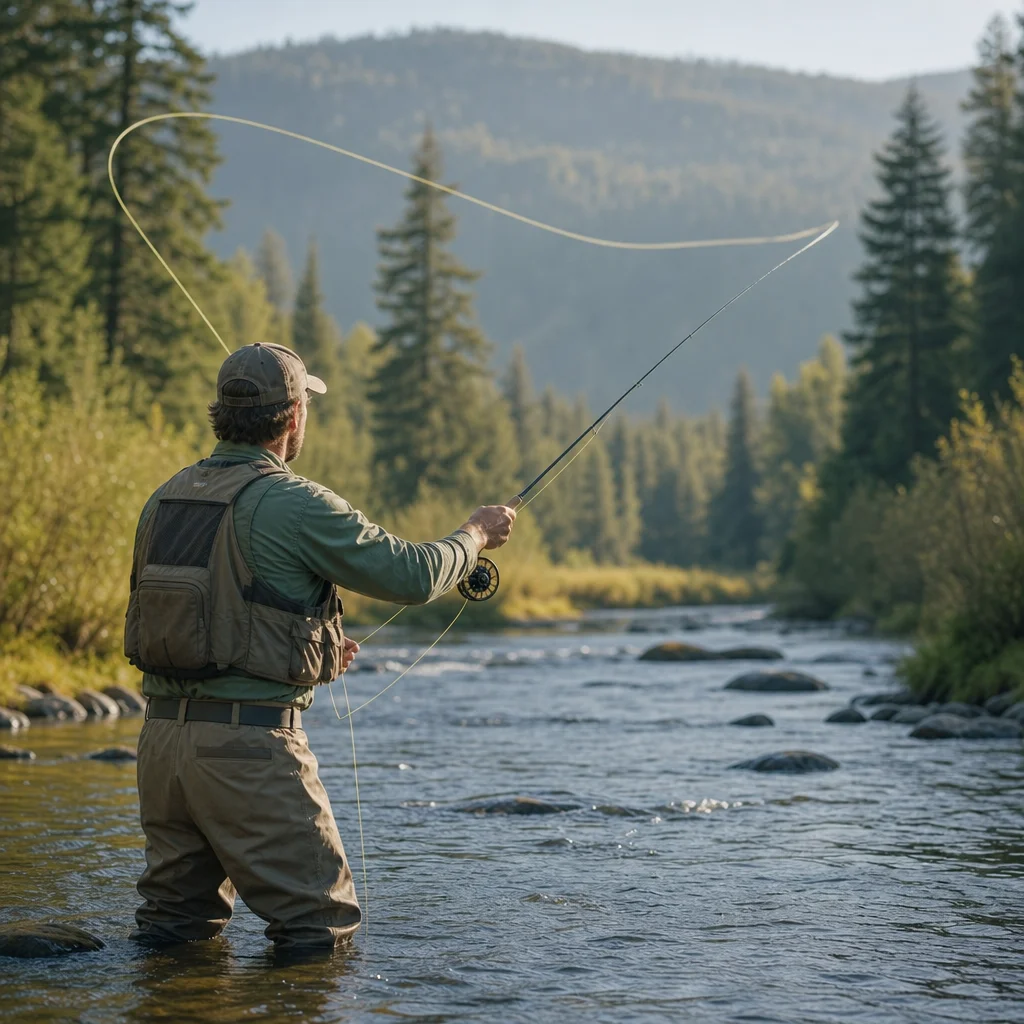
Rain and snowmelt can turn a familiar trout stream into a different river within hours. Banks become slick, current seams disappear, and water that looks merely fast from the road can be powerful enough to move a person off balance.
The useful question isn’t simply whether fish are still feeding. It’s whether you can reach productive water, move along the bank, and leave safely if conditions worsen. High water often offers fishing opportunities, but the safest choice may be to change the plan rather than force the original one.
Start by deciding whether the river is suitable
Before you unpack a rod, look at the river as a hazard first and a fishing opportunity second. Conditions can be unsuitable even when the weather has cleared and the water level appears to be falling.
Watch the trend, not just the current level
A river that is still rising deserves more caution than one that has reached a steady, manageable level. Rain may have stopped at your location while runoff continues upstream. Snowmelt can also keep flows elevated after several warm days, particularly when a new storm arrives on top of an already saturated watershed.
Check a current gauge when one is available, and pay attention to the direction and speed of change. Compare the reading with recent observations rather than treating one number as a universal safe limit. Rivers differ in channel shape, gradient, bank structure, and access, so a level that is manageable on one stream may be hazardous on another.
Look for signs that conditions are still changing:
- Water is visibly climbing against rocks, trees, or banks.
- Debris is moving downstream or collecting in new places.
- The river has spread into side channels, gravel bars, or normally dry banks.
- Foam lines, boils, and turbulence have expanded into areas that were previously calm.
- Access roads, footpaths, bridges, or parking areas are flooded or undermined.
- The water has become cold, opaque, or unusually swift after a recent surge.
Clear water isn’t proof that the river is safe. A cold, fast current can be dangerous even when you can see the bottom.
Check today’s river conditions: Before leaving, review the latest gauge trend, weather forecast, flood or high-water alerts, access closures, and local fishing rules. Treat official warnings and closed areas as limits, not suggestions.
Use a simple stop decision
You don’t need to justify a risky choice because you drove a long way. Set a stopping rule before you arrive. For example, if the river is still rising, the planned access is flooded, or reaching the bank requires crossing moving water, the original plan is off.
This is a useful trade-off: giving up a particular run costs less than losing your footing, damaging equipment, or creating a rescue problem for someone else. You can still fish elsewhere, observe the river, or return when the water stabilizes.
Choose observation points before fishing spots
High water rewards a different kind of scouting. Instead of walking directly to the place where you usually cast, find a position that lets you understand the river without putting yourself beside its most forceful current.
Prefer high, stable ground
Good observation points include elevated banks, established overlooks, broad gravel areas well back from the edge, and access roads that remain dry and stable. From there, look for changes in current speed, flooded channels, submerged obstacles, and places where the bank has slumped.
Avoid standing on narrow ledges, undercut banks, fresh mud, or surfaces covered with wet leaves and algae. High water can remove support from below a bank without making the damage obvious from above. Keep a sensible distance from the edge, especially where the current is pressing against a bend.
Bridges can provide useful views, but don’t assume a bridge is a safe fishing platform. Vehicle traffic, slippery approaches, limited escape routes, and fast water around bridge supports all create separate hazards. Observe from a legal, stable area instead.
Identify an exit before you cast
Every position should have a clear way back to higher ground. Don’t move into a pocket, narrow bank, or island-like area unless you know how you’ll leave if the water rises or your route becomes slippery.
If you’re fishing with someone else, agree on where to regroup and what conditions will end the outing. Keep phones, keys, and other essentials secure and dry. A plan is most useful when it’s made before anyone is cold, wet, or separated.
Decide whether wading is worth the trade-off
High water changes the cost of a mistake. Wading may provide access to familiar holding water, but it also reduces your balance, narrows your escape options, and places you directly in the hazard.
For many high-water situations, the safest default is to stay on shore. Fish may move closer to the bank, into softer edges, behind structure, or into slower side currents. You may catch fewer fish than you would during ideal conditions, but you can often find worthwhile water without crossing or entering the main flow.
If you’re considering a crossing, ask several questions:
- Can you reach the far side without entering moving water?
- Is the entry and exit point firm, visible, and free of undercut banks?
- Is there a safe route back if the first step feels unstable?
- Are you carrying a pack, net, camera, or other equipment that could catch current?
- Would a slip leave you in a shallow margin, or in a deep channel with downstream hazards?
If the answer to any of these is uncertain, don’t make the crossing. “I’ve crossed it before” isn't a useful comparison when the river is higher, colder, faster, or carrying more debris.
If you do enter shallow water
Follow local guidance and use the least exposed route available. Move slowly, face across the current, keep your feet apart, and test each step before shifting your weight. A wading staff can provide additional contact with the bottom, but it doesn’t make unsafe current safe.
Keep your pack arranged so you can release it quickly if it becomes a liability. Use a wading belt where appropriate, and avoid attaching gear in ways that could snag. Don’t rely on felt, studs, or any single footwear feature to overcome unstable footing; traction varies with rock type, algae, sediment, and equipment condition.
Never wade alone in conditions you consider marginal. More importantly, don’t treat a partner as a substitute for a safe decision. A companion can summon help, but may not be able to stop a person being swept away.
Fish the water high flow creates
Once you’ve chosen a safe bank position, adjust expectations and tactics. High water often pushes trout away from the strongest current. Look for softer water that provides shelter while still delivering food.
Potential areas include:
- The inside of bends, where current may be slower than along the outside bank.
- The downstream side of large, stable rocks, viewed from a safe distance.
- Seams where faster and slower water meet.
- Flooded margins only when they can be reached from stable ground without crossing current.
- Deep bankside pockets and sheltered water behind substantial structure.
Don’t walk close to the edge simply to inspect every pocket. Fish from farther back when possible, keep your profile low, and make fewer casts to likely water. A longer leader or heavier setup may help you reach the target, but equipment changes should never tempt you into a more exposed position.
High, discolored water may also make fish and flies harder to detect. Use patterns and techniques suited to the local fishery, but avoid assuming that one fly, weight, or presentation will compensate for unsafe access. The best tactical adjustment is often moving to a safer section of river.
Carry equipment that supports a retreat
Safety gear is most useful when it helps you stay warm, visible, and mobile while you change plans. Consider carrying:
- A phone in a waterproof case or dry bag.
- Extra insulating layers and rain protection.
- A small first-aid kit.
- Food and water for a longer-than-planned return.
- A headlamp if there is any chance of finishing near dusk.
- Traction appropriate for the terrain and current conditions.
- A wading staff if you regularly fish water where local guidance considers it appropriate.
Tell someone where you’re going, especially when fishing remote water. Include the access point, expected return time, and what you’ll do if the intended river section is closed or unsafe. Keep the plan simple enough that another person can understand it.
Salvage the day without chasing the trip
Changing the objective doesn’t mean wasting the day. You can often make a high-water outing useful by shifting from fishing to observation, practice, or exploration on stable ground.
Try one of these alternatives:
- Scout future access. From legal, safe viewpoints, note bank angles, current seams, and where debris has changed the channel. Return only after conditions have settled and access is confirmed.
- Fish a smaller tributary or stillwater. A nearby option may be less affected, but check its current rules and access conditions rather than assuming it’s open or safe.
- Practice without entering the river. Work on roll casts, line control, or accuracy from a dry, stable area where casting is permitted and hooks can’t endanger others.
- Observe the recovery. Watch how water clarity, insect activity, and holding areas change as flow drops. This can improve your next trip without requiring a risky cast today.
- Leave early. If water is rising, weather is deteriorating, or fatigue is affecting your judgment, the successful outcome is getting home with the rod still intact.
A short high-water decision checklist
Before fishing after rain or snowmelt, confirm that:
- The river trend is known and conditions aren’t worsening unexpectedly.
- Your access point and intended route are open, stable, and legal.
- You can fish from shore or another position with a clear exit.
- You won’t need to cross moving water to reach the planned area.
- Someone knows your location and expected return time.
- You have enough clothing, communication, and light for a delayed return.
- You’re willing to abandon the original plan without trying to make the drive “count.”
High water can concentrate trout and create interesting fishing, but it also reduces your margin for error. Read the river from a safe position, favor stable banks over heroic crossings, and let the conditions—not the distance you traveled—decide how much fishing the day contains.