Understanding Heat Risk on Summer Trout Streams
I’ll explain how air temperature, sun exposure, stream temperature, and timing decisions affect a summer trout outing, so you can protect yourself, reduce stress on fish, and avoid spending a long afternoon on unsafe or unproductive water.
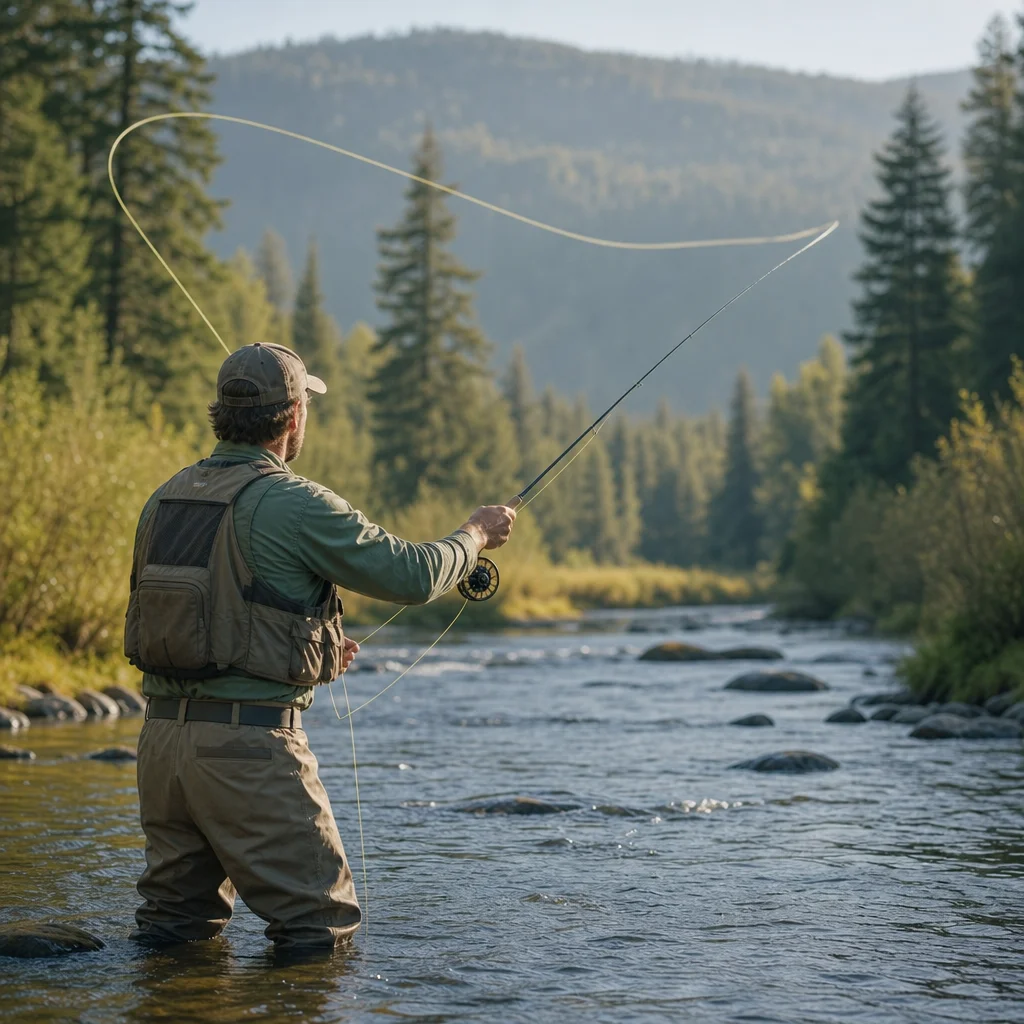
Summer trout fishing can create two different heat problems at once: you may overheat while standing in full sun, and trout may become dangerously stressed by warm water. A cool mountain stream can make the day feel manageable while the surrounding air, altitude, exertion, and reflected sunlight steadily drain you.
The most resource-efficient decision is often made before you leave home. A shorter, earlier outing on suitable water usually costs less effort—and causes less stress to fish—than traveling to a stream that is too warm by midday and trying to force a few more casts.
Separate Your Heat Risk From the Trout’s Heat Risk
Your comfort isn't a reliable measure of stream safety. Wading in cool water can hide how much you’re sweating, while a hat and long sleeves may make direct sun feel less intense without removing the effects of heat and exertion.
Watch for common signs of heat illness, including headache, dizziness, unusual fatigue, nausea, confusion, weakness, and loss of coordination. Stop fishing, get into shade, drink fluids, and cool yourself if these symptoms appear. Confusion, fainting, seizures, or worsening symptoms require urgent medical help.
Altitude adds another complication in many Western waters. Dry air can increase fluid loss without making you feel especially sweaty, and a steep approach can turn a modest fishing plan into strenuous exercise. Build in breaks before you feel depleted rather than treating the streambank as a place to recover after you are already overheated.
Trout face a separate problem. As water warms, it generally holds less dissolved oxygen, while fish require more oxygen and may have less energy available for recovery after a fight. A trout that swims away strongly can still be affected by prolonged handling or an exhausting battle in marginal conditions.
Treat Water Temperature as a Decision, Not Just a Number
A thermometer is useful, but it shouldn’t become a permission slip to fish regardless of conditions. Temperature varies through the day, along a single reach, and between shaded tributaries and exposed main channels. Recent weather, low flows, direct sun, and the presence of cold-water refuges all matter.
Many anglers use the upper 60s Fahrenheit as a point for increased caution, but there is no universal temperature that makes every trout stream safe or unsafe. Species, elevation, acclimation, flow, dissolved oxygen, and local guidance can change the risk. Some fisheries agencies publish species-specific recommendations or voluntary closures; others use emergency rules when conditions deteriorate.
Check the stream’s current limits: Before leaving, review the relevant state fish-and-wildlife agency notices, land-manager alerts, emergency fishing restrictions, and current weather forecast for the specific drainage. Confirm whether the guidance is voluntary or mandatory, and follow the most protective current direction when conditions conflict.
If you measure the water yourself, use a reliable stream thermometer and take the reading in moving water away from the shallow edge. Keep the sensor out of direct sunlight and allow it time to stabilize. Measure near the water you intend to fish, not only at a roadside pullout or a much colder tributary. Record the time, because a morning reading may not describe the conditions you’ll encounter in the afternoon.
You don’t need to chase a perfect measurement every few minutes. One careful reading before fishing, followed by attention to changing weather and fish behavior, is more useful than repeatedly disturbing the stream to obtain marginally different numbers.
Make Timing Do the Work
The simplest way to reduce both personal and fish heat risk is to shift your schedule.
Fish early, then leave
Water is often coolest early in the day, before several hours of sunlight have warmed exposed pools and riffles. An early start also reduces your exposure to peak afternoon heat. Set a stopping time before you begin, and treat it as part of the plan rather than a suggestion you can ignore when the hatch or bite improves.
If the forecast calls for an unusually hot day, an even shorter morning session may be the sensible choice. A few productive hours are a better use of time and travel than a full day spent fishing deteriorating conditions.
Choose elevation and shade carefully
Higher or more shaded water may remain cooler, but don’t assume every high-elevation stream is automatically safe. A small creek can become warm and shallow during a dry spell, and a strenuous hike can raise your personal heat exposure even if the fishing water is cool.
Look for realistic combinations: manageable access, dependable shade, adequate flow, and a legal place to fish. A shaded reach near the trailhead may be a better choice than a remote canyon that requires hours of exertion and offers no easy exit.
Have a warm-weather alternative
If temperatures are already marginal, switch to a non-fishing plan, move to a cooler location, or spend the day preparing gear. This isn't a failed trip. It’s a way to avoid spending fuel, time, and physical energy on water that is unlikely to provide good fishing or a safe experience for trout.
Reduce Stress When You Do Fish
When conditions are suitable but warm, keep the fight as short as practical. Use tackle strong enough to land the fish promptly, especially if larger trout are possible. Avoid deliberately extending the fight on light gear for the sake of a photograph.
Keep the fish in the water whenever possible. Wet your hands before touching it, avoid squeezing the body, and support it gently rather than holding it by the jaw or gill area. Have your camera ready before lifting the fish, and skip the photograph if the trout is slow to recover.
A fish that needs recovery should face into gentle, flowing water while you support it. Don’t push it back and forth; that can interfere with normal respiration. Release it only when it maintains its position and swims away under its own power. If fish are repeatedly sluggish after release, stop fishing that water even if the temperature reading hasn't reached a number you consider critical.
Warm conditions also make shallow water and exposed fish easier to disturb. Limit wading, avoid unnecessary movement through holding water, and don’t repeatedly cast at the same trout. Fewer, more deliberate presentations reduce time spent handling fish and conserve your own energy.
Pack for the Heat You’ll Actually Encounter
A sensible summer kit should cover both the forecast and the route back to the vehicle. Carry more drinking water than you expect to need, along with food that is easy to eat during breaks. A brimmed hat, breathable long sleeves, sunglasses, and sunscreen reduce sun exposure without requiring you to fish in short sleeves.
Choose footwear and clothing that support safe movement. Heat exhaustion becomes more likely when you’re rushing over unstable terrain, and wet wading adds slip and cold-exposure hazards even on a hot day. Use a wading staff where it helps, and don’t let warm air persuade you that unfamiliar crossings are harmless.
A basic emergency plan matters more in remote Western terrain than an extra box of flies. Tell someone where you’re going, carry a charged phone or suitable communication device, and know where shade, vehicle access, and reliable exits are located. Cell coverage is inconsistent, so don’t make your plan depend entirely on a signal.
Know When the Day Is Over
Stop fishing when you or your partner shows signs of heat illness, when the route becomes unsafe, or when fish aren't recovering normally. Stop earlier if the forecast is worsening, your water supply is running low, or you’re becoming too tired to wade and hike with control.
Also reconsider the outing when smoke, wildfire activity, thunderstorms, or land closures affect the area. Heat risk rarely arrives alone during Western summer. A day that starts cool can change quickly, and a legal access point can be closed because of fire danger or other hazards.
Recheck conditions before you commit: On the morning of the trip, compare the forecast, stream-flow information, fire restrictions, access notices, and water-temperature guidance with your planned timing. If the conditions have moved beyond the local agency’s recommendation, choose cooler water, shorten the outing, or leave the trout stream for another day.
A Simple Summer Decision Checklist
Before fishing a summer trout stream, ask:
- Can you complete the outing during the coolest practical part of the day?
- Do you know the current water-temperature guidance for this stream and trout species?
- Is the access route realistic for your fitness, water supply, and heat exposure?
- Do you have shade, fluids, communication, and a clear turnaround plan?
- Can you land, handle, and release fish quickly in the expected conditions?
- What will you do if the water warms, the weather changes, or fish fail to recover?
If several answers are uncertain, the efficient choice is to change the plan rather than improvise beside the water. Summer fishing rewards restraint: fish early, measure thoughtfully, protect yourself from the heat, handle trout briefly, and leave while the conditions are still good.