How to Fish a Dry Fly When the Hatch Is Scattered
I’ll help you choose efficient search patterns, cover likely water, and interpret occasional rises so you can keep fishing productively instead of waiting for a perfect hatch that may never arrive.
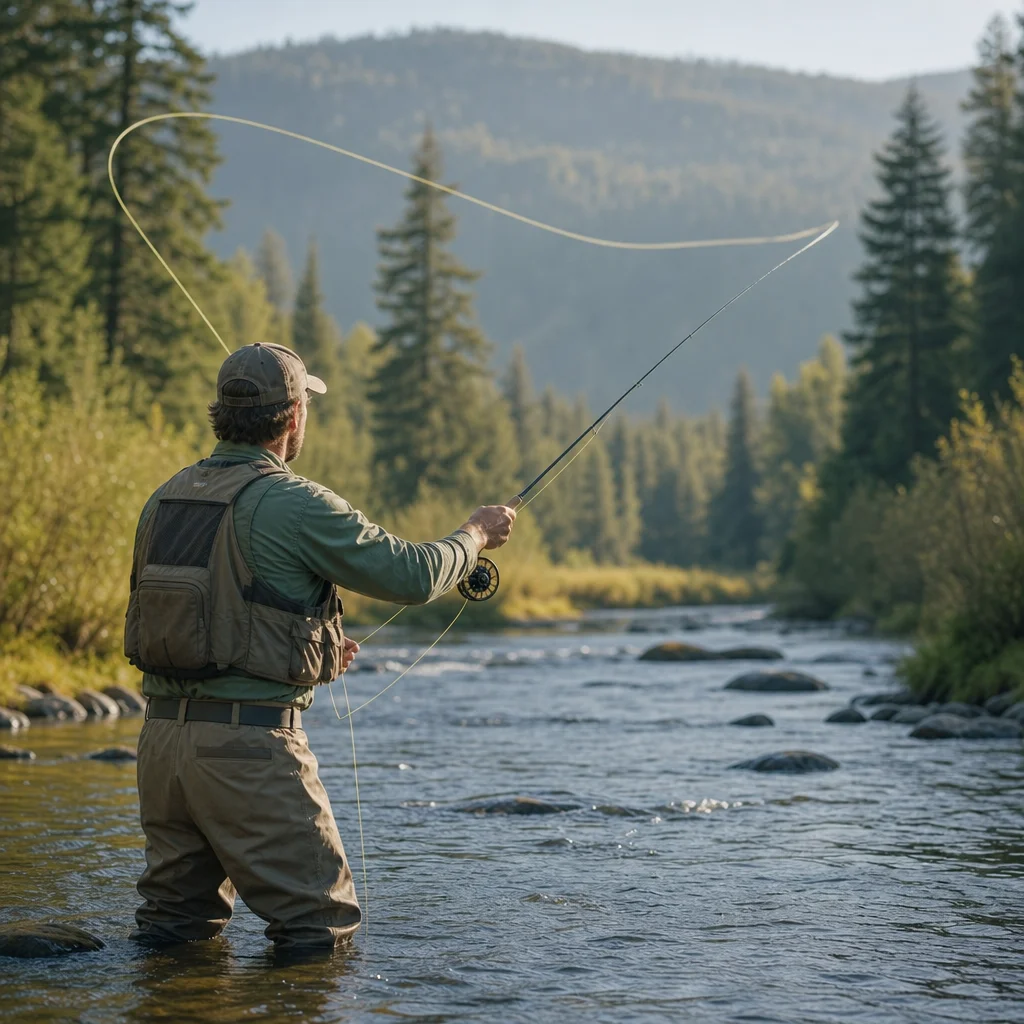
A scattered hatch can make dry-fly fishing feel like a test of patience. You see a few mayflies, caddis, or terrestrials, then nothing for several minutes. One trout rises near the bank, another shows briefly in a seam, and the river gives you just enough information to create doubt.
The efficient approach isn't to wait for the surface to become busy. It’s to treat each insect and rise as useful evidence, then cover water with a fly that is visible, plausible, and easy to present. You’re looking for a balance between imitation and opportunity: match the most likely food, but don’t spend half an afternoon proving that one fish might eventually eat it.
Understand what a scattered hatch tells you
A scattered hatch usually means insects are emerging or drifting in small groups rather than carpeting the water. Trout may still feed actively, but their opportunities are spread across the current. That changes how you fish a dry fly.
During a dense hatch, a trout may hold in one lane and feed repeatedly. During a scattered hatch, the fish may move a little farther, feed less predictably, or take only when an insect passes through the right part of its window. You may see fewer rises even though dry-fly opportunities are present.
The first insect you notice isn’t automatically the only food available. Watch for several clues:
- Size: Are the insects tiny, medium-sized, or large enough to spot easily?
- Profile: Do they sit flush in the film, ride high, or skitter across the surface?
- Color: Is there a clear body color, or are the insects too small and distant to identify confidently?
- Location: Are they concentrated in foam lines, slower edges, riffles, or backwaters?
- Timing: Do rises begin after a cloud passes, the wind drops, or the water warms slightly?
You don’t need a perfect identification. You need enough information to make a reasonable first choice and a plan for changing it.
Start with a search pattern, not a perfect imitation
When rises are occasional or absent, a search pattern helps you cover water without tying on a new fly every few minutes. Choose a fly that is visible, floats reliably, and resembles several plausible food sources.
Useful search-pattern characteristics include:
- A size that fits the general scale of insects on the water
- A natural color without excessive brightness
- A buoyant body or wing that remains visible in broken current
- A footprint that looks reasonable for the river and season
- Materials that make it easy to dry and reuse
A parachute-style mayfly imitation, a general attractor, or a modest terrestrial can all work as search flies, depending on the water. The important decision isn't the label on the box. It’s whether the pattern gives you a fair chance to detect a take and present a believable meal.
Avoid beginning with an extremely small fly simply because you saw one tiny insect. Small patterns can be difficult to see, difficult to float, and easy to drag. If the trout aren't clearly focused on that size, a slightly larger, more visible option may be the better use of your time.
Cover water in an organized order
Scattered rises reward deliberate coverage. Randomly casting at every possible lie can disturb fish and make it difficult to tell what is working.
Begin with the highest-probability water
Start with places where a trout can feed without spending much energy. Look for:
- The soft edge beside a faster current
- Foam lines and converging seams
- The head or tail of a pool
- Slow water beside a bank or structure
- Shallow shelves that receive drifting insects
- Current tongues that deliver food into deeper water
A trout doesn’t need to be visibly rising to occupy these areas. During a sparse hatch, it may feed intermittently or sit just below the surface, making its activity easy to miss.
Work near water before reaching far
Fish the closest practical targets first. A short, accurate cast gives you better control, a longer drift, and less line on the water. It also reduces the chance that you’ll line fish holding farther away.
Move from near to far, and from easy targets to more complicated ones. This method may feel slow, but it saves resources: fewer false casts, fewer snags, fewer damaged leaders, and fewer fish alerted by unnecessary line movement.
Change position more often than flies
If your fly is landing well and drifting naturally but producing no response, the problem may be location rather than pattern. In a scattered hatch, it’s often more productive to cover another likely lie than to cycle through five similar flies over the same empty water.
Give a promising section several thoughtful drifts, then move on unless the fish or conditions provide new information.
Use occasional rises as clues
A single rise is valuable, but it doesn’t always mean you should cast immediately. First, determine what the fish is doing.
Read the shape of the rise
A slow sip near the surface may indicate a trout taking small mayflies, midges, or spent insects. A sharper splash can suggest a caddis, terrestrial, or another insect that is moving on the surface. A rise that leaves only a subtle dimple may come from a fish feeding calmly in slow water.
These observations are useful, but they’re not absolute. Current speed, depth, wind, and the fish’s position can alter the appearance of a rise. Treat the rise form as a starting clue rather than a guaranteed identification.
Watch for a repeat
If a trout rises once, pause and observe if the water allows it. A second rise can reveal the fish’s feeding lane and timing. Casting immediately may work, but it can also put the fly several feet away from the real drift path.
When you see a repeat, note three things:
- Where the fish appeared
- Which direction the ring or splash suggested it was facing
- What current line was carrying food toward it
Then place the fly well upstream or up-current, allowing it to arrive naturally. Your goal is to intersect the feeding lane, not simply land on the spot where the trout last appeared.
Don’t overvalue one rise
One rise may be a feeding fish, a drifting leaf, or an isolated opportunity that has already passed. If your first presentation is sound and the fish doesn’t respond, avoid immediately assuming the fly is wrong.
Try a small adjustment in angle or distance before changing patterns. A trout that sees drag, leader disturbance, or an unnatural approach may ignore a perfectly reasonable fly.
Build a simple fly-selection sequence
A practical sequence prevents scattered activity from turning into constant fly changes.
First choice: visible and broadly plausible
Begin with a search pattern that matches the general size and color of the available food. Make sure you can track it through the drift. If you can’t see your fly, you can’t reliably judge drag or detect a subtle take.
Second choice: change size
If trout rise near your fly but refuse it, try a smaller or larger version of a similar pattern. Size is often a more useful adjustment than changing to an entirely different insect.
Use a smaller fly when the rises are delicate, the water is clear and slow, or the visible insects are consistently tiny. Use a larger fly when the current is broken, the trout are showing confidence, or larger insects are present in meaningful numbers.
Third choice: change profile or color
If size seems right but the fish continue to refuse, change how the fly sits on the water. A high-riding pattern and a flush-floating pattern can present very different silhouettes.
A modest color change may also help, especially when the river contains several insects of similar size but different tones. Make one change at a time when possible. That way, you learn something from the result instead of simply guessing faster.
Improve the drift before changing the fly
A natural drift is often the most economical “fly change” available. Before replacing a pattern, inspect the presentation.
Look for:
- The leader pulling the fly sideways
- Fly line resting across a faster current than the fly
- The fly accelerating or slowing compared with nearby bubbles
- Too much line on the water
- A cast that lands heavily near the target
- An approach that puts the trout on alert
A reach cast, a small upstream mend, or a lower rod angle can reduce drag. In complex currents, cast from a position that gives the leader a clearer path rather than trying to repair every problem after the fly lands.
Long leaders can help separate the fly from the line, but they also demand better control. If a long leader is collapsing, tangling, or preventing accurate placement, shorten it enough to regain control. A clean, repeatable presentation is more valuable than extra length you can’t manage.
Know when to keep searching and when to wait
The best choice depends on the information available.
Keep moving and searching when:
- You’ve seen no rises after covering several likely lies
- The water contains no clear concentration of insects
- Your fly is drifting well but the section appears inactive
- You’re spending more time changing flies than making good casts
Pause and observe when:
- A trout has risen more than once
- Insects are collecting in a particular current lane
- Several fish begin showing within the same area
- The hatch appears to be building
- Your target water is difficult enough that extra observation will improve your approach
Waiting has a purpose when it helps you understand a feeding pattern. It becomes wasteful when you’re simply hoping for a blanket hatch to make the decision for you.
Common mistakes during a scattered hatch
Chasing every rise
Casting at the last visible rise often places the fly behind the fish, outside its feeding lane, or over water that has already gone quiet. Take a moment to identify the current and the likely direction of drift.
Choosing a fly you can’t track
A tiny, low-riding pattern may be correct and still be a poor choice if you can’t see it. Use a small indicator-style post, a more visible companion dry, or a larger search pattern when conditions make tracking difficult.
Fishing one lie too long
A scattered hatch can make an unproductive area feel promising because you keep expecting the next rise. Set a reasonable limit: several accurate drifts over a likely target, followed by a move or a measured change.
Changing too many variables
Changing fly, tippet, casting angle, distance, and location at once makes the outcome hard to interpret. Adjust one major variable, then give it enough time to provide useful feedback.
Ignoring the surface between rises
Look for drowned insects, shucks, small dimples, and surface disturbance from drifting food. The river may be providing information even when trout aren’t making obvious rises.
A resource-efficient approach on the water
You can fish a scattered hatch effectively with a compact plan:
- Observe for a few minutes and identify the most likely food and feeding water.
- Choose a visible search pattern that fits the general size and profile.
- Start close and cover high-probability lies in an organized order.
- Present the fly with the best angle and shortest practical cast.
- If a trout rises, study the feeding lane before casting repeatedly.
- Improve drift and positioning before changing patterns.
- Change size or profile only when the evidence supports it.
- Move on when a section stops giving useful information.
The goal isn’t to imitate every insect that appears. It’s to make each cast answer a question: Is this water occupied? Is the drift natural? Is the trout responding to the fly, the presentation, or neither?
Practical next steps
Before your next outing, prepare two or three search patterns in different sizes, plus one smaller and one larger option. Make sure at least one is easy to see in the expected water conditions.
On the river, resist the urge to wait for a perfect hatch. Read the available evidence, cover likely water efficiently, and let your first fly earn its replacement. When rises are scattered, disciplined movement and clean drifts usually create more opportunity than a crowded fly box.