How to Spend Your First Hour on an Unfamiliar Trout Stream
An unfamiliar trout stream can make every cast feel premature, especially when small water offers little room for mistakes. I’ll give you a calm first-hour sequence for reading the stream, choosing a starting lie, testing it carefully, and knowing when to move.
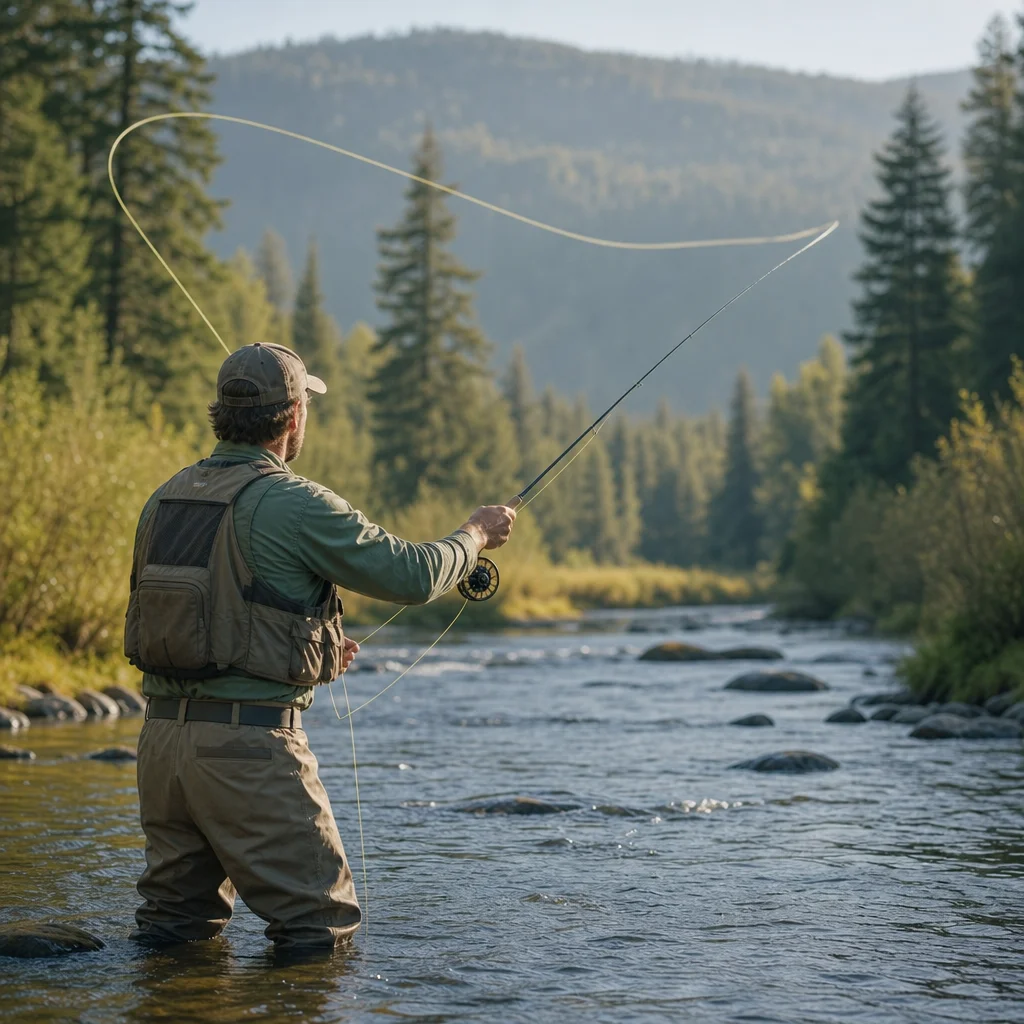
The first hour on an unfamiliar trout stream is easy to waste. You can walk too far before fishing, change flies every few minutes, or start casting at the most obvious water while overlooking the places trout actually feel secure.
A better approach is to treat the first hour as a series of low-risk decisions. You’re not trying to solve the entire stream immediately. You’re gathering clues, making a quiet first presentation, and adjusting only when the evidence says you should.
Before you make the first cast
Begin with a slow look at the access point. Avoid stepping directly into the water if you can; your entrance may disturb fish in the shallow margins and your footprints can cloud the bottom.
Take a few minutes to note:
- Water depth and clarity
- Current speed and direction
- The presence of riffles, pools, undercut banks, and pocket water
- Overhanging vegetation and likely snags
- Insects in the air, on the surface, or beneath nearby rocks
- Places where you can stand without damaging bankside vegetation
- A safe route for moving upstream or downstream
You don’t need to identify every insect or memorize the stream’s entire layout. You’re looking for a useful starting picture: where trout could hold, where you can reach them, and how quietly you can get there.
Check the conditions that change your plan
Water level and clarity often matter more than the date or the time on your watch. In clear, low water, trout may have a wide view of you and respond poorly to clumsy movement. In slightly higher or stained water, they may hold closer to banks, structure, or the softer edges of current seams.
Cloud cover, wind, and recent weather also affect how visible your approach will be. Bright conditions can make shadows and sudden movement more noticeable. Wind may make delicate casting harder but can hide some of your movements and disturb the surface enough to encourage feeding.
These aren’t rigid rules. Use them to decide how cautious your first approach should be, not to predict exactly where every fish is holding.
Confirm today’s stream conditions: Before fishing, check current local regulations, access requirements, seasonal restrictions, and any posted water-safety information for the stream you’re visiting. Rules and conditions can differ between nearby waters and can change during the season.
Spend the first ten minutes reading the water
Look for places that solve two problems for a trout: access to food and protection from strong current or predators. A trout doesn’t need to sit in the fastest water to feed. It needs a reasonable food supply without spending more energy than the meal provides.
On small streams, likely lies include:
- The head of a pool, where faster water delivers food
- The tail of a pool, especially where depth remains adequate
- The inside or outside edge of a current seam
- The soft water behind a rock
- The shaded side of a log or root wad
- An undercut bank with enough depth for a fish to retreat
- A pocket between rocks where current speed changes abruptly
- The margin beneath overhanging grass, brush, or branches
Watch the water for several minutes before deciding that it’s empty. Look for flashes, rises, drifting debris that reveals current speed, and subtle changes in surface texture. A trout may be visible only as a slight interruption in the flow.
Don’t limit your search to the deepest water. In a small stream, a trout can hold in surprisingly shallow water if the current, cover, and light are favorable. The important question isn't simply, “Where is it deep?” Ask, “Where could a fish stay comfortable and still intercept food?”
Choose one starting lie
Your first lie should be a sensible test, not necessarily the most exciting water. Pick a place that offers a reasonable chance of a trout, a manageable casting angle, and a way to make a presentation without wading through the fish’s likely holding area.
A good starting lie often has three qualities:
- A believable holding position. There’s depth, cover, a current break, or a food-delivery line.
- A quiet approach. You can get into position from behind cover or from a lower angle without crossing the lie.
- A simple first cast. You can reach the target with a short roll cast, a controlled overhead cast, or a short drift rather than a long, risky effort.
If two spots look equally promising, choose the one that lets you fish more water while moving less. On unfamiliar streams, information is valuable. A clean presentation into a likely lie tells you more than a difficult cast that lands poorly.
Start close before casting far
Many beginners assume the far bank or the deepest center channel is the first target. Often, the nearest water is worth checking first. Trout can hold beside your bank, under your rod tip, or in the shallow edge of a pool—provided you haven’t already walked through it.
Stand back from the bank and cast short. Work the water nearest you before extending the distance. This is especially important on small streams, where a long cast can put line, leader, and fly across several possible lies at once and make the drift harder to understand.
A short, accurate cast also gives you a quick test of depth and current behavior. If the fly drifts naturally beside the bank, you can gradually extend the next cast. If it immediately drags, you’ve learned that the current is more complicated than it looked.
Make your first few casts low risk
Your first cast should prioritize control over distance. Use the least complicated presentation that reaches the target and keeps your fly moving naturally.
For a dry fly, look for a current lane that carries the fly toward the suspected lie without immediately pulling it sideways. For a nymph, account for the depth and the speed of the water; a cast that lands upstream may need time to sink before it reaches the fish. For a streamer, keep the first retrieve modest and observe how the current affects its movement.
Whatever you’re fishing, watch the fly or its indicator closely enough to learn from the drift. If you can’t see the fly, track the leader or line for unusual hesitation, acceleration, or sideways movement.
Work the lie in a logical order
Instead of repeatedly casting at the same spot, divide the lie into sections:
- Fish the near edge.
- Cover the softer seam or pocket.
- Reach the deeper or farther portion.
- Test any cover, drop-off, or current break.
Change only one variable at a time when possible. If you move three feet, change flies, add weight, and cast at a new angle all at once, you won’t know which adjustment helped.
After each drift, ask a simple question: was the presentation good enough to produce a response? If the fly dragged immediately, the absence of a strike doesn’t tell you much. Fix the drift before concluding that trout aren’t there.
Decide whether to adjust or move
Give a promising lie enough time for a fair test, but don’t turn the first pool into a long negotiation. On a small stream, a handful of good drifts through each likely holding zone may be enough to make an initial decision.
Stay and adjust when:
- You can see trout or signs of feeding
- Your fly is reaching the correct depth and current line
- The water has multiple distinct holding areas you haven’t covered
- Your approach was quiet and the fish may need time to settle
- A small change in angle, depth, or fly size could improve the presentation
Move when:
- You’ve covered the likely lies with controlled drifts
- Drag or poor depth prevented a meaningful test and you can’t correct it from your position
- The water looks uniform and offers few holding features
- You’ve disturbed the area with a poor approach or repeated snags
- Another nearby section offers better depth, cover, or current breaks
Moving doesn’t mean the spot was empty. It means the next decision may offer better information. Mark mentally what you learned: perhaps trout ignored a shallow riffle, the inside seam was too fast, or the shaded bank looked much more promising than the open center.
Build a route that protects future water
On unfamiliar streams, your route matters as much as your fly. Move slowly and avoid wading when you can fish from the bank. If you must enter the water, cross at the shallowest, slowest, safest point and avoid walking through obvious holding water.
Approach from downstream when the terrain and current allow it. Trout generally face into the current, so an upstream approach keeps you behind more fish and reduces the chance that your profile will appear in their window of vision.
Keep your rod low when moving near brush, and watch where your feet will land before taking the next step. A careful route saves flies, reduces disturbance, and prevents the common small-stream mistake of reaching the next pool only after spooking it.
Safety takes priority over an attractive lie. Don’t enter water that is beyond your balance or wading ability, and don’t assume a familiar-looking current is safe under unfamiliar conditions. Slippery rocks, undercut banks, rising water, and remote access can turn a short move into a serious problem.
Edge cases that change the first-hour plan
Very clear, low water
Fish from farther back, use a lower profile, and shorten your casts. Start with the shallow margins and shadows before approaching the main pool. If the water is bright and calm, your movement may matter more than a small fly change.
High or slightly stained water
Look for softer edges, bank cover, inside bends, and places where trout can avoid the strongest current. You may be able to approach more closely, but don’t assume increased flow is harmless. Keep wading conservative and look for safe exits before entering.
A stream with no obvious insect activity
Don’t wait for a hatch to begin fishing. Trout can feed on subsurface food, terrestrial insects, or small prey that isn’t obvious from the bank. Start with a general pattern suited to the water and focus on depth, drift, and location rather than cycling through many imitations.
Heavy vegetation or tight casting lanes
Use short casts, roll casts, bow-and-arrow casts where appropriate, or simply reposition for a better angle. A fly that lands cleanly in a close lie is more useful than a longer cast that catches branches and alerts every fish nearby.
The first pool contains feeding fish but no easy cast
Don’t force it. Observe where the fish are feeding, then look for a lower or wider position. If the only route requires excessive wading or repeated false casts, leave the pool and return later from a different angle. Resting a disturbed lie can be more productive than escalating the difficulty.
A simple first-hour sequence
Use this as a starting routine:
- Minutes 0–10: Check access, safety, water clarity, current, and likely holding features.
- Minutes 10–15: Watch the water and choose one lie with a quiet approach.
- Minutes 15–25: Fish the nearest water first, then extend your casts through the lie.
- Minutes 25–35: Correct your angle, depth, or drift before changing several other variables.
- Minutes 35–45: Decide whether the lie deserves more attention or whether the next section offers better water.
- Minutes 45–60: Move carefully, preserve future holding water, and apply what you’ve learned to the next lie.
The timing is flexible. A visible riser may deserve more patience; featureless water may deserve less. The sequence is meant to prevent hurried decisions, not put your fishing on a stopwatch.
Your first-hour decision checklist
Before leaving the stream or changing sections, ask:
- Did I approach without crossing the fishable water?
- Did I test the nearest water before casting long?
- Was my drift natural enough to make the result meaningful?
- Did I cover the most likely current breaks, depth changes, and cover?
- Did I change one variable at a time?
- Is the next move worth the added wading or casting risk?
- What did this section teach me about the rest of the stream?
If you can answer those questions, the first hour has done its job—even if you haven’t caught a trout. You’ll have a better sense of where fish can hold, how the current behaves, and which presentations are worth repeating. From there, move deliberately, fish the water in front of you, and let each new section provide the next clue.