Wading Safety for Anglers Who Fish Alone
I’ll help you build a safer solo-wading routine, from choosing a manageable route and using a staff to arranging check-ins and recovering from a slip. The focus is on conservative decisions that still leave room for a productive day on the river.
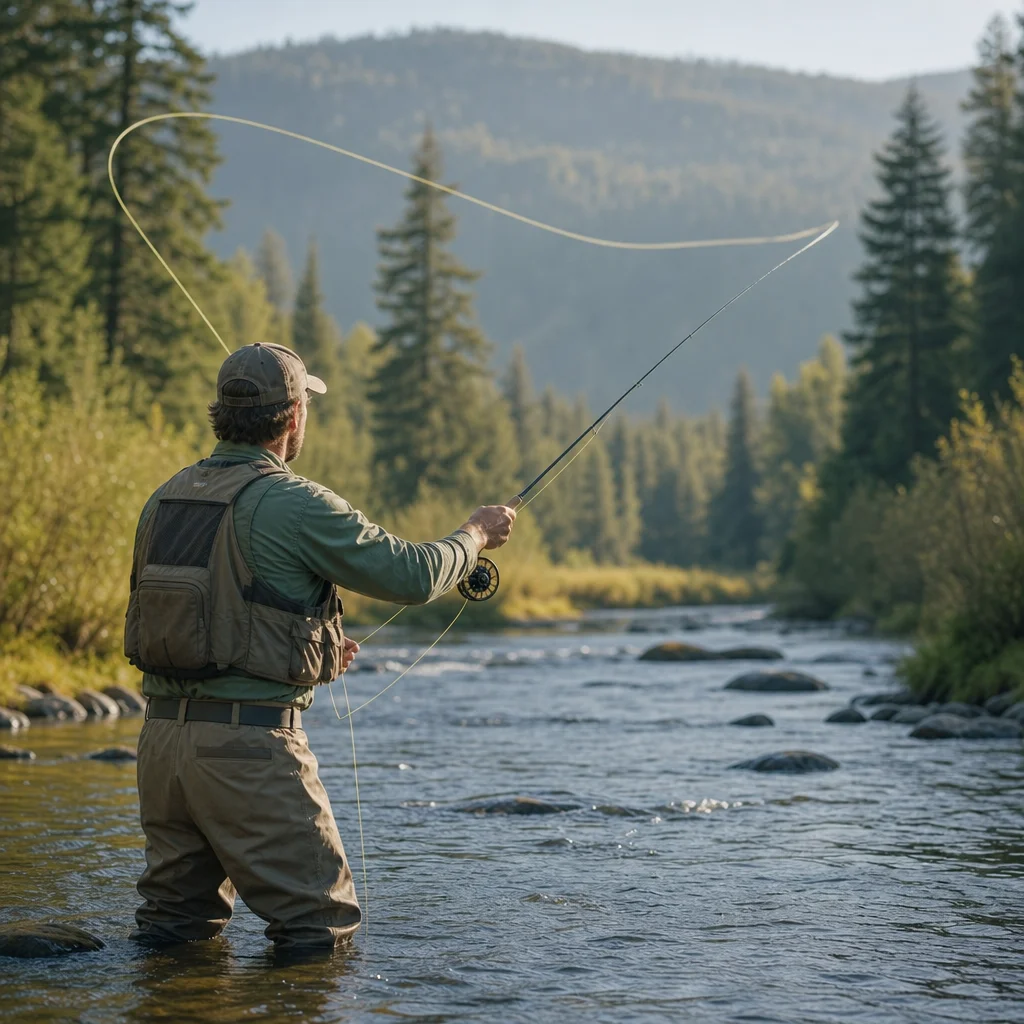
A river crossing that looks easy from the bank can become a serious problem once you’re in moving water, wearing waders, and carrying a rod. When you fish alone, there’s no partner to steady you, call for help, or notice that you haven’t returned on schedule.
Solo wading safety is therefore less about finding a magic piece of gear and more about reducing the number of bad situations you can enter. Choose forgiving water, keep your balance, make communication simple, and treat uncertainty as a reason to turn around.
Start with the route, not the fishing spot
The safest place to wade is usually the place that gives you several easy exits. Before you step into the river, look for low banks, gravel bars, broad shallows, and a route back to the vehicle that doesn’t depend on one difficult crossing.
A productive pool surrounded by steep banks may be a poor solo destination. If you slip there, you may have no practical way to get out without swimming or climbing unstable ground. A less famous stretch with open banks can offer much better margins.
When assessing a route, consider:
- Access and exit points: Identify where you can leave the water at regular intervals, not just at the beginning and end of the hike.
- Bank condition: Mud, undercut edges, loose rock, and dense vegetation can make an exit harder than it appears from a distance.
- Current geometry: Avoid routes that force you to cross above drops, logjams, waterfalls, or long stretches of deep water.
- Visibility: A clear view of the river and your intended route makes it easier to recognize rising water or a changing current.
- Return route: Ask whether you can safely retrace your steps if conditions worsen.
Walk the bank before wading whenever possible. Look at the water from several angles, because glare and surface texture can hide depth. A deep trough may be directly beside a shallow-looking riffle, and a smooth surface can indicate strong flow rather than calm water.
Check the river before you leave: Confirm current weather, forecast rainfall, river levels, access restrictions, and any local hazards through current official or local sources. Conditions can change during the drive and may make a familiar crossing unsuitable.
Make the first crossing your most conservative one
The first crossing of the day often sets the tone for the trip. You may be carrying extra gear, thinking about the fishing ahead, and still be unfamiliar with the river’s depth. If you need to cross, do it before you’re tired and while you have plenty of daylight.
Cross only when you can clearly identify the entire route and an exit on the other side. Test the bottom with your staff before committing your weight. If you can’t determine whether the next step has stable footing, don’t take it simply because the opposite bank is close.
A broad, shallow crossing with a firm bottom is generally easier to manage than a narrow crossing with a steep drop, even if both appear to be the same depth. Avoid crossing directly above or below obstacles. If you fall, those hazards can turn a manageable swim into a collision.
Keep your body angled slightly upstream and move deliberately. Place your staff first, establish a stable point, then move one foot. Small steps are easier to control than long strides. Don’t cross with your feet together, and don’t rush because the water feels cold.
If you’re unsure, look for another route or stay on your original side. A fish isn't worth a crossing that you’re trying to talk yourself into.
Use a wading staff as a third point of contact
A wading staff helps you test depth, find bottom irregularities, and maintain stability while moving. It doesn’t make fast or deep water safe, and it won’t compensate for poor route selection. Think of it as a balance and information tool rather than a license to go farther.
Keep the staff where you can reach it before you need it. A staff attached to your pack may be convenient on a trail but useless during an unexpected step into a hole. A folding staff can be practical, while a fixed staff may provide a more immediate, solid feel; either option needs to be accessible and strong enough for the way you use it.
When moving across current, plant the staff upstream or slightly to the upstream side of your body. This can help you detect changes in depth before your foot commits. Avoid leaning your full weight far downstream against the staff, where a slip or dislodged tip can pull you off balance.
Practice deploying and stowing it in shallow, calm water. If using a tether, keep it arranged so it can’t wrap around your legs or become an entanglement hazard. A staff that creates a new problem isn't doing much safety work.
Keep waders and flotation working together
Waders are useful clothing, but they can complicate a fall. Water entering a wader can feel heavy and restrict movement, particularly if you’re already off balance. Wear a properly adjusted wading belt every time you enter the water, and keep it snug according to the manufacturer’s instructions.
A belt isn't a substitute for conservative wading. It also doesn’t guarantee that waders will remain dry or buoyant after a fall. Its purpose is to reduce water exchange and help keep the garment positioned during an incident.
Personal flotation equipment may add another layer of protection, especially on larger rivers, during cold conditions, or when your route includes unavoidable deeper water. Choose equipment designed for the activity and your expected conditions, and wear it as directed rather than leaving it in a vehicle or pack.
Inflatable flotation devices have specific limitations, including activation requirements, maintenance needs, and situations in which they may not provide the protection you expect. An inherently buoyant device may be more appropriate for some anglers and conditions. The best choice depends on the water, clothing, boating traffic, local requirements, and the device’s instructions.
Confirm your flotation setup: Check current local rules and the manufacturer’s guidance for the type of flotation device you plan to use. Inspect cartridges, closures, straps, and service dates before relying on the equipment in moving water.
Wear footwear that gives you dependable traction for the bottom and banks you expect to encounter. No sole works equally well on every surface, and some traction systems may be restricted or recommended differently depending on the region. Clean and manage your wading equipment to reduce the spread of aquatic organisms between waters.
Keep your hands and attention available
A rod, net, camera, and fly box can make a simple stumble harder to manage. Use a pack or vest arrangement that keeps essential items secure and leaves at least one hand available for your staff or balance. Avoid carrying loose items that you’ll instinctively try to save during a fall.
A chest-high pack can affect balance and make swimming or climbing more awkward. Keep the load light, especially on unfamiliar routes. If you need to cross, secure or stow the rod so it can’t catch on branches or force you to twist around while moving.
Don’t wade while looking through the fly box, tying a knot, or watching a fish. Stop on stable ground for tasks that require concentration. Many wading problems begin with a divided attention rather than an extreme current.
Build a check-in plan someone can understand
A check-in plan is more useful when it contains specific information. Tell someone where you’re going, which access point you’ll use, your intended route, your vehicle description, and when you expect to return or send an update.
Agree on what happens if you miss the check-in. A vague “call me later” leaves the other person guessing. Set a reasonable escalation time that accounts for poor reception, a delayed hike, and the distance someone would need to travel. For remote areas, that may mean providing a map pin, paper map, permit information, or a local contact who understands the area.
Don't rely on a phone signal that you haven’t tested. Keep your phone in a waterproof case where you can reach it, not buried in a pack that may be difficult to open after a fall. A satellite communicator or personal locator beacon can be valuable in areas without reliable cellular coverage, but it needs a charged battery, an unobstructed view when transmitting, and a plan for using it.
Send an update when you arrive, when you change locations substantially, and when you leave. Those small messages reduce the chance that a routine delay will be mistaken for an emergency—or that a real emergency will be dismissed as a late lunch.
If you slip or fall
The safest response is usually controlled and immediate: stop trying to save the rod, turn your attention to staying above water, and avoid standing up until you’ve reached a stable position. Let go of equipment that interferes with movement.
If the current takes you, keep your feet pointed downstream and your head above water while working toward the bank or a calmer edge. Protect your head from rocks and other obstacles. Don’t try to stand in fast water if your feet could be trapped beneath you; move toward shallow, stable ground first.
Once out of the water, get clear of the current and assess yourself before deciding what to do next. Cold water, impact injuries, and exhaustion can make a person underestimate the seriousness of a fall. Use your check-in method or emergency device if you’re hurt, unable to continue safely, or unsure whether you can reach the vehicle.
If you’re wet, cold, injured, or shaken, end the fishing day. Continuing to prove that you’re “fine” isn't a recovery plan.
Know when to call for help: Save emergency contacts and learn the local emergency process before the trip. If you’re injured, trapped, becoming hypothermic, or unable to exit safely, use the most reliable available communication method and give clear location information.
Troubleshoot the plan before the river does
A quick pre-entry review can catch problems while they’re still easy to fix:
- Can you name two ways out of the water? If not, choose a different section.
- Can you see the full crossing and its landing? If not, don’t commit to it.
- Is your staff immediately accessible? Adjust it before stepping in.
- Is your phone protected and reachable? Test that you can operate it with cold or wet hands.
- Does someone know when to expect you? Send the route and the escalation plan.
- Are water, weather, and daylight working in your favor? If any answer is no, shorten the trip or stay out of the water.
The most reliable solo anglers aren’t the ones who never encounter awkward conditions. They’re the ones who recognize trouble early enough to change plans. Choose forgiving water, maintain three points of contact when you can, carry flotation and communication equipment appropriate to the conditions, and leave yourself an easy way home. That approach may cost you a few casts, but it gives you a much better chance of returning for the next outing.