What to Change First When Your Fly Lands Well but Trout Never See It
A fly that lands neatly may still be too high, fast, hidden, or unnatural for trout to notice. I’ll walk you through a sensible diagnostic order so you can change depth, drift, angle, or presentation before blaming the pattern.
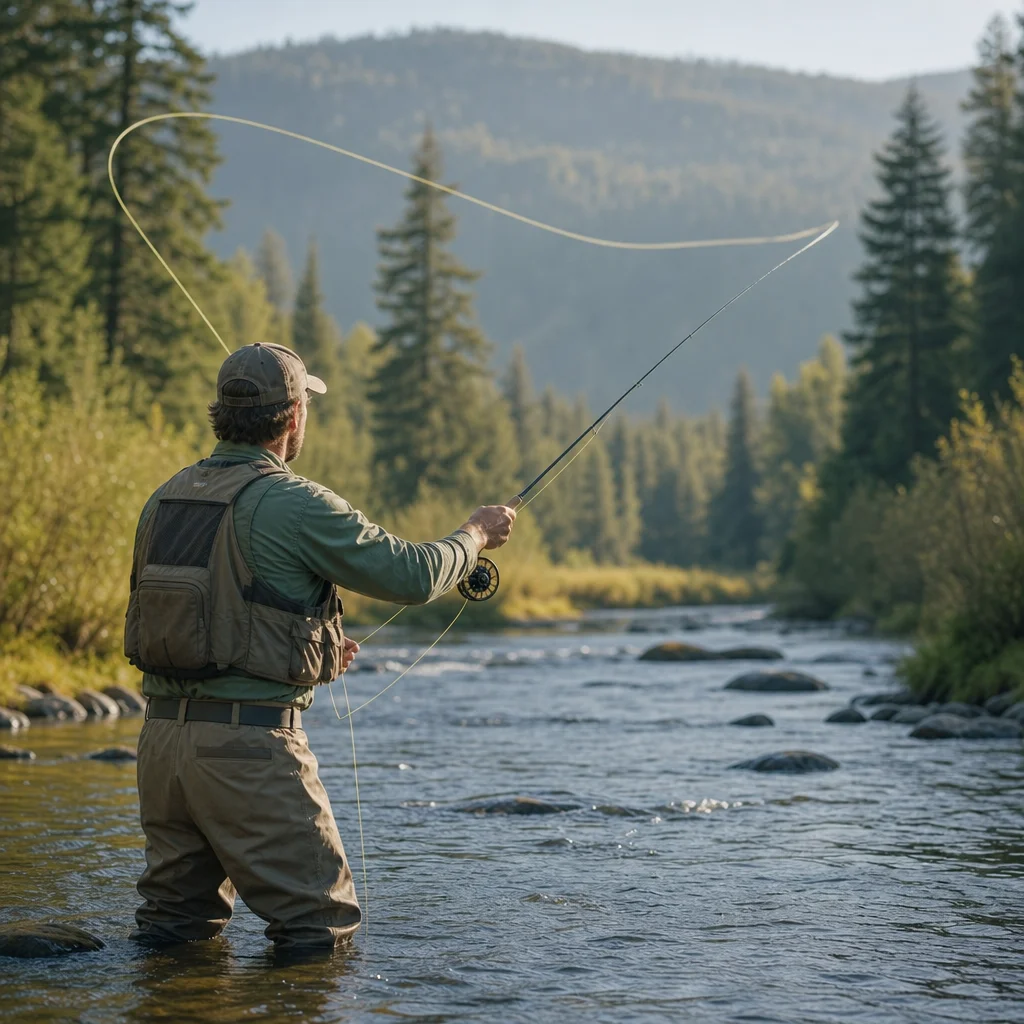
A clean cast and a tidy landing can create a misleading sense that everything is working. If trout never respond, the fly may not be reaching their feeding lane, staying visible long enough, or behaving like food. Replacing it immediately is often the least informative change you can make.
Use a diagnostic sequence instead. Change one important variable at a time, watch what happens, and keep the fly if the evidence still points to presentation rather than pattern choice.
First, decide whether trout truly had a chance to see the fly
Before changing anything, identify where the trout are likely holding and trace the fly’s path through that water. A cast can land well from your perspective while the fly passes several inches above a trout, behind a current seam, or outside the fish’s viewing window.
This is especially easy to miss in:
- Deep pools with a fast surface and slower water below
- Broken pocket water where rocks interrupt the drift
- Glare-heavy conditions that hide the surface
- Bankside cover that limits your view of the fly
- Runs where trout hold close to the bottom rather than in the obvious current
A trout can’t react to a fly it never encounters. Start by asking, “Where is the fly actually traveling?” rather than, “Which fly should I tie on next?”
Change depth before changing the pattern
Depth is usually the highest-value first adjustment. Trout often feed in a narrow layer, and a fly that drifts just above it can appear completely ignored.
For a dry fly, the issue may be that the fish are suspended below the surface film, especially when they’re taking emergers or drowned insects. For a nymph, the fly may be riding too high because the tippet, leader, or indicator setup isn’t allowing it to reach the holding depth. In a deep run, even a properly weighted nymph can spend much of its drift getting down and very little time where trout are feeding.
Make a controlled depth change:
- Add or remove weight only if doing so fits the water and your rig.
- Adjust the indicator or suspension point in small increments.
- Use a longer or shorter leader when the water depth and current call for it.
- Consider a different nymphing arrangement if the fly repeatedly fails to reach the zone.
- Recheck the drift after every change rather than assuming the setup behaves as intended.
Watch for useful clues. If the indicator hesitates, dips, or moves unnaturally near the bottom, the fly may be contacting rocks or vegetation. If nothing happens and the rig travels quickly through deep water, it may still be too high. The goal isn’t to scrape bottom constantly; it’s to spend enough time near the feeding lane to give trout a realistic opportunity.
Check your setup before adding weight: Make sure added weight, indicator use, and leader arrangements are permitted where you’re fishing, and use only equipment that you can control safely in the current.
Then protect the drift
A fly can be at the correct depth and still be effectively invisible as food if it moves differently from the surrounding current. Trout are good at rejecting unnatural motion, particularly in clear, slow water.
The common problem is drag: the fly moves faster or slower than the water carrying it. Surface drag is easy to notice when a dry fly skates across the current. Subsurface drag is less obvious. The indicator may move one way while the fly, pulled by a different current layer, moves another.
Look upstream and across the current for conflicting speeds. If the line forms a straight, tight connection from rod tip to fly, it may be transferring unwanted movement. Mend early enough to influence the drift, keep excess line off the water when possible, and use a reach or other presentation adjustment when the current demands it.
A good mend isn’t automatically a good drift. It can also pull the fly out of the feeding lane or create a sudden change in depth. After mending, watch the fly or indicator and ask whether the rig now travels at the same effective speed as the water around it.
Test the drift with a repeatable cast
Avoid changing several things at once. Make two or three casts to the same target with similar line length and angle. If one drift is clean and the next is dragged, your presentation is still the variable to solve.
If every drift is clean but trout remain uninterested, move to visibility and angle rather than immediately changing flies.
Improve the angle trout see
Trout don’t view every fly from the same direction. A fish looking upward through the surface sees a dry fly differently from a fish looking across a deep pool at a nymph. Current, depth, light, and the trout’s position all affect the fly’s appearance.
Your position can also make the fly difficult to detect. A downstream approach may put the fly in the fish’s face but expose you first. A long upstream cast may reduce that risk while leaving too much line to manage. A cross-current cast may give better reach but create drag before the fly reaches the target.
Try changing your casting angle or moving a few steps rather than changing the fly. Useful adjustments include:
- Casting slightly upstream so the fly enters the feeding lane earlier
- Approaching from a lower profile when the water is clear
- Shortening the cast to improve control and reduce slack
- Extending the drift from a new position instead of forcing a poor angle
- Targeting the edge of a seam rather than the fastest central current
The best angle is the one that gives the trout a natural look and gives you enough control to maintain it. Maximum distance is rarely the same as maximum opportunity.
Check whether the fly is actually visible
Visibility is a two-part problem: can you see the fly, and can the trout recognize it against its surroundings?
A tiny dry fly may disappear in glare, foam, or shadow. A dark nymph may blend into a deep rocky bottom. A pale pattern can vanish against a bright sky reflected on the surface. If you can’t track the fly, you may not know whether it is drifting, dragging, sinking, or sitting in the wrong place.
Improve your view before abandoning the pattern. Change your position, use a larger visible dry as part of a permitted and appropriate setup, or choose a fly with a more trackable profile. For subsurface fishing, an indicator can help you monitor the drift, but it doesn’t prove that the fly is visible or behaving naturally below it.
Visibility to the angler and visibility to the fish aren’t identical. A high-contrast fly may be easy for you to follow but look too bold in clear, shallow water. Conversely, a subtle pattern may be plausible to trout but impossible for you to monitor accurately. Choose a compromise that lets you control the presentation without making the fly obviously out of place.
Evaluate behavior, not just appearance
Fly selection is about more than color and size. Trout may be responding to how an insect rises, struggles, drifts, or disappears. A pattern can look convincing in your hand and still fail to imitate the behavior available in the current.
Watch the water for clues:
- Are trout rising within the surface film rather than breaking the surface?
- Do natural insects drift upright, trapped, or partially submerged?
- Are nymphs tumbling near the bottom or suspended in slower water?
- Do baitfish or other food items move steadily, dart, or pause?
- Are trout inspecting food and rejecting it, or simply not moving toward it?
If trout approach and turn away, the problem may be size, profile, material, or behavior. If trout never move toward the fly, depth, location, and drift deserve more attention first. A refusal is evidence, but it isn’t always evidence that the entire pattern is wrong.
One subtle issue is overactive presentation. Small twitches can make a fly appear alive in some situations, but they can also make it unlike anything drifting naturally. Add movement only when the food source or water conditions support it. In many trout situations, the most convincing action is the absence of angler-induced action.
Change the fly after the presentation tests
Once depth, drift, angle, and visibility are reasonably sound, changing the pattern becomes more useful. You’ve removed some of the major reasons a good fly can fail, so the result of the change tells you more.
Change one feature at a time when possible:
- Match the general size of the food available.
- Adjust the silhouette or stage, such as emerger versus fully emerged insect.
- Change color when light, water color, or natural insects suggest it.
- Alter weight or materials if the fly isn’t achieving the required behavior.
- Use a different pattern family when trout are clearly feeding on something else.
A smaller fly isn’t automatically more realistic, and a brighter fly isn’t automatically easier for trout to find. In clear water, a subtle change in profile may matter more than a dramatic color swap. In stained or turbulent water, contrast and movement may carry more value.
Account for edge cases
Sometimes trout are seeing the fly and rejecting the situation rather than the imitation. Bright overhead light, low water, heavy angling pressure, sudden temperature changes, and nearby wading can make fish cautious. Trout may also feed selectively for only short periods, leaving you to diagnose a quiet window as a bad fly.
A fly can also be correct for one lane and wrong for another. A pattern that works in the riffle may be too active in the tailout. A nymph that reaches depth in a fast run may hang up in a slow pool. Don’t treat the whole stream as one uniform problem.
If conditions change, repeat the sequence. The right fly and depth at midmorning may not be right after clouds arrive or the water level shifts. The goal isn't to find a permanent winning pattern; it’s to keep matching the presentation to the water in front of you.
A simple troubleshooting order
When the fly lands well but gets no response, work through this list:
- Location: Is the fly crossing a likely feeding lane?
- Depth: Is it reaching the level where trout are holding?
- Drift: Is it moving at the speed and direction of the surrounding water?
- Angle: Can trout see it naturally from their position?
- Visibility: Can you track it, and does it stand out appropriately to the fish?
- Behavior: Does it imitate how the available food moves?
- Pattern: Only now, is a different fly justified?
Change one variable, repeat the cast, and record what the water tells you. A fly that fails after a poor drift hasn’t really been tested.
Your next adjustment
On your next outing, pick one likely holding area and give the current presentation a fair test. Make small depth or angle changes first, then watch for drag and confirm where the fly is traveling. If those details look right and trout still ignore it, change one pattern feature and compare the result.
This approach saves flies, reduces random switching, and builds a more useful skill than memorizing a longer list of patterns: the ability to tell whether trout rejected your fly or never received a convincing chance to notice it.