How Trout Lies Change Between Morning Shade and Afternoon Sun
I’ll compare how trout use morning shade, midday structure, and afternoon feeding lanes so you can adjust your search through summer rivers and spring creeks instead of repeatedly fishing yesterday’s lie.
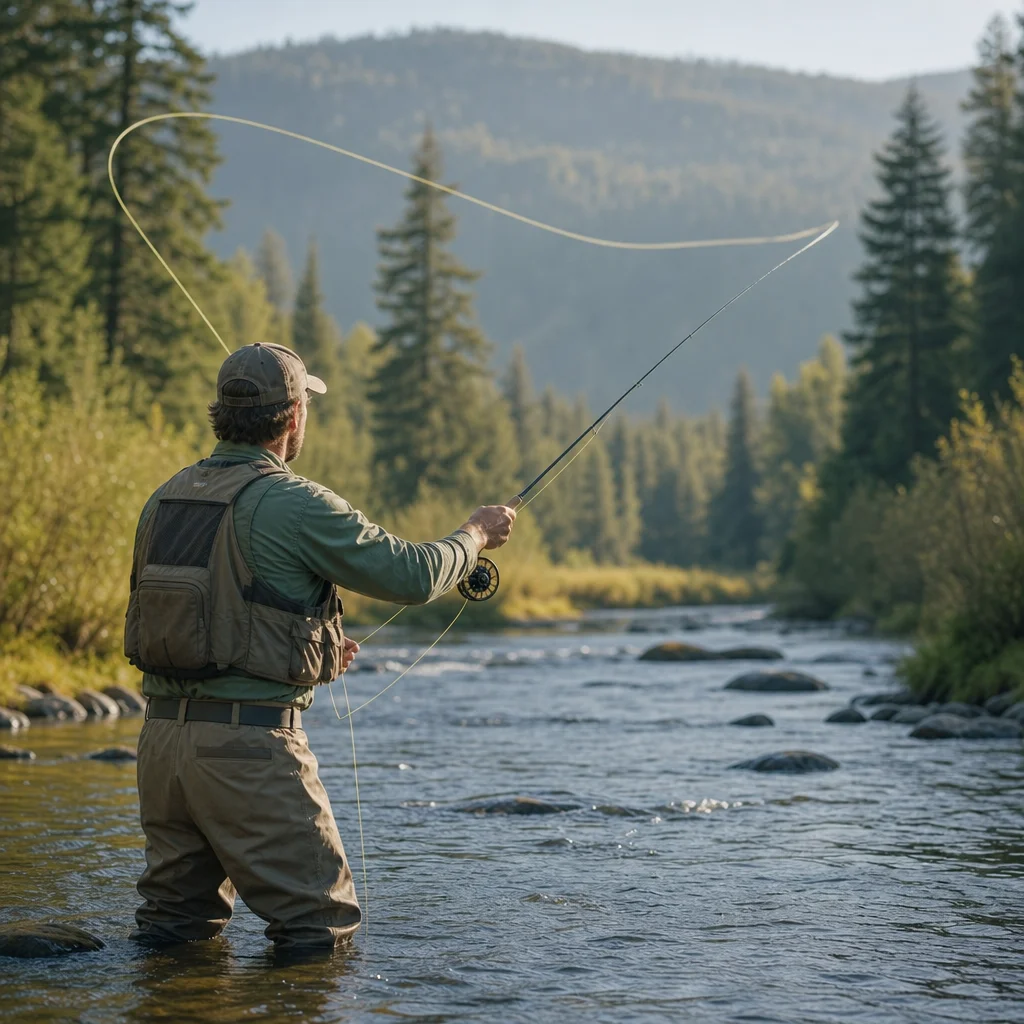
The pool that produces a trout at 7 a.m. may look empty by midafternoon. It probably isn’t empty; the useful combination of shade, temperature, current speed, and food has changed.
On summer rivers and spring creeks, trout often move only as far as conditions require. They may leave a shallow riffle when sunlight exposes them, slide beneath a bank, or abandon a dark pocket once the water warms and a nearby feeding lane becomes more efficient. Your job is to track those changes without treating every shift as a complete reset.
Start with the conditions, not yesterday’s lie
A trout lie is more than a visible patch of water. It’s a place where a fish can balance in the current, find food, and avoid spending more energy than it gains. Light and temperature influence all three.
In the morning, shade often covers a larger portion of the stream. Trout can use shallow shelves, open heads of pools, and current edges with less exposure. As the sun rises, those same spots may become bright and warm, while deeper water, undercut banks, and overhead cover become more attractive.
That doesn’t mean every trout moves at sunrise or flees direct sunlight. Cloud cover, spring influence, water level, insect activity, fishing pressure, and the stream’s depth all matter. Think in terms of changing probabilities rather than a strict timetable.
Keep three observations in view
Before changing flies or walking farther, note:
- Where the shade is: Look at banks, boulders, bridge shadows, tree cover, and the stream’s own depth.
- How the current is arranged: Identify seams, soft margins, plunge pools, and places where fast water delivers food to slower water.
- What the fish can see: A clear, shallow run may offer excellent food but little security once the sun reaches it.
These observations give you a durable way to make decisions. The clock is useful, but light and water conditions are usually more informative than a fixed “morning spot” or “afternoon spot.”
Morning shade: search the broad feeding options first
Early light often gives trout more freedom to use water that will become uncomfortable or exposed later. Begin with places that combine current and food rather than automatically choosing the deepest water.
Likely morning lies
Look closely at:
- The head of a pool, where riffle water slows as it enters deeper water
- Shallow seams beside a stronger tongue of current
- The inside edge of a bend, especially where gravel or cobble creates a food-bearing margin
- Tailouts, if the water is deep enough to provide security
- The shaded side of large rocks and woody cover
- Broken water that hides a fish from overhead views
In a spring creek, trout may hold in only a few inches of depth if the current delivers consistent food and the bottom offers concealment. A summer river with more variable temperature or lower clarity may encourage fish to stay tighter to structure.
Start with the most accessible water carefully. The first cast shouldn't be a test cast that drags through every likely lie. Approach from a low angle, avoid stepping into the current unnecessarily, and cover the near water before reaching for the far bank.
What to do when the shade begins to retreat
Watch the water you’ve already fished as the shadow line moves. If a productive seam becomes bright but the adjacent bank remains shaded, fish may slide toward that edge rather than leave the area entirely.
This is one of the most useful transitions to follow. A trout that was in open current may move behind a rock, under a cut bank, or into the softer water immediately beside the former lie. The move can be measured in inches, not yards.
If the hatch or surface activity is strong, trout may continue feeding in exposed water despite the increasing light. Keep watching for rises, flashes, or subtle changes in position before assuming the sun has ended the opportunity.
Afternoon sun: prioritize security and efficient current
By afternoon, direct sun may make shallow water less appealing, especially during warm summer conditions. Trout often become more selective about where they spend energy and how much cover surrounds them.
Likely afternoon lies
Search systematically through:
- Deep slots beside faster water
- Undercut banks with a shaded roof or root structure
- The dark side of boulders and logjams
- Pool margins where a narrow current seam delivers food
- The lower portion of a plunge pool
- Spring-influenced channels and other visibly cooler water
- Riffles that remain oxygenated and shaded by depth or streamside vegetation
Avoid assuming that “deep” means the middle of the pool. A trout may prefer a shallow shelf beside depth if that shelf receives food and the fish can retreat quickly. Likewise, a shaded bank without current may look comfortable but provide too little food to be worth occupying.
The reliable afternoon question is: Where can a trout stay protected while intercepting food with minimal effort? That question narrows your search better than simply looking for the darkest water.
Don’t overlook moving water
It’s easy to focus on shade and ignore riffles once the sun is high. That can be a mistake. A well-oxygenated riffle may remain attractive when slower water warms, particularly where depth, broken surface, or nearby cover reduces exposure.
Approach these areas with extra care. Bright, shallow water can make your profile and line more visible. A longer leader, a lower presentation, or a position downstream of the target may help, but stealth matters more than adding equipment.
How the same lie changes through the day
A useful way to understand movement is to divide a spot into components rather than label it simply “good” or “bad.” Consider a pool with a riffle at its head, a deep center, a shaded bank, and a shallow tailout.
- Morning: Trout may spread across the head, seam, and tailout while shade covers the pool.
- Late morning: Fish may compress toward the deeper center, shaded bank, and current edges as the sun reaches open water.
- Afternoon: The best targets may be the shaded bank, deepest slot, or a riffle with enough cover and current to remain comfortable.
- Late day: As shadows lengthen, trout may move back into shallower feeding areas, especially if insects become active.
This pattern is a framework, not a promise. Water temperature, insect activity, angling pressure, and cloud cover can shift the sequence. The value is in having a repeatable map of likely moves.
A reliable process for tracking changing lies
1. Mark the first productive feature
When you find a trout or see feeding activity, identify the feature that probably matters: the seam, shade edge, depth change, cover, or food lane. Don’t record only the spot’s general location.
“Trout in pool” is weak information. “Fish along the shaded inside seam below the large rock” can guide your next decision.
2. Recheck the nearby alternatives
As light changes, inspect the features within a short move of the original lie. Check the adjacent shadow, the deeper slot, the softer bank water, and the current seam leading into the pool.
Trout frequently reposition locally before abandoning a productive section altogether. Walking away too soon can turn a manageable adjustment into an unnecessary search.
3. Change one variable at a time
If the fish’s position is uncertain, avoid changing location, fly, tippet, and presentation simultaneously. First adjust your angle or target. Then consider depth. Change the fly when the evidence points to a feeding problem rather than a location problem.
This approach helps you learn what the stream is telling you and prevents a familiar angling ritual: changing everything, catching nothing, and blaming the trout for the administrative burden.
4. Keep a simple observation log
After each outing, record the month, approximate time, cloud cover, water level, productive features, and whether fish were using shade, depth, current, or cover. You don’t need a detailed diary. A few consistent notes will reveal patterns over time.
The long-term benefit is reliability. You’ll build a local decision system instead of relying on one memorable morning that may have had entirely different conditions.
Check the day’s water conditions: Before fishing a summer stream, confirm current access information, water advisories, and any local restrictions through the responsible land or fisheries authority. Warm or low water can make fish handling and location choices more consequential than the fly pattern you carry.
Common mistakes when the sun comes out
Staying on the morning lie too long
A productive early spot deserves a second look, but not unlimited loyalty. If the shade has moved and the current edge is now exposed, inspect nearby cover and depth before continuing to cast at an empty-looking patch.
Treating all shade as equal
A shaded pocket with no food delivery may hold little interest. Prioritize shade connected to current, depth, or cover rather than casting to darkness for its own sake.
Moving too far, too fast
The opposite mistake is abandoning a productive pool as soon as sunlight appears. Fish may have moved only to the bank, a rock, or a deeper line a few feet away. Search the local alternatives before relocating.
Ignoring your own shadow
As the sun changes angle, your shadow can reach water that was safe earlier. Notice where it falls, especially on spring creeks and clear, shallow rivers. Move slowly and keep your profile low when approaching bright water.
A practical decision checklist
When morning shade gives way to afternoon sun, ask:
- Has the original water become brighter, warmer, or more exposed?
- Is there nearby shade, depth, or structure that offers the same food delivery?
- Has the best current seam changed as water levels or activity changed?
- Are trout still feeding openly, or are signs pointing toward security?
- Can you adjust your target before changing flies?
- Have you covered the near water and approached the next lie without adding unnecessary disturbance?
Start with the smallest sensible adjustment. Follow the shade edge, inspect the adjacent current, and move toward deeper or better-covered water only when the conditions support it. Over a full day, that habit will help you fish the river as it is now—not as it was when you arrived.