Revive a Trout Properly Without Holding It in Fast Current
The right recovery water matters more than repeatedly pushing a trout back and forth. I’ll explain how to choose a calm, oxygenated spot, support the fish without exhausting it, and recognize when it’s ready to swim away.
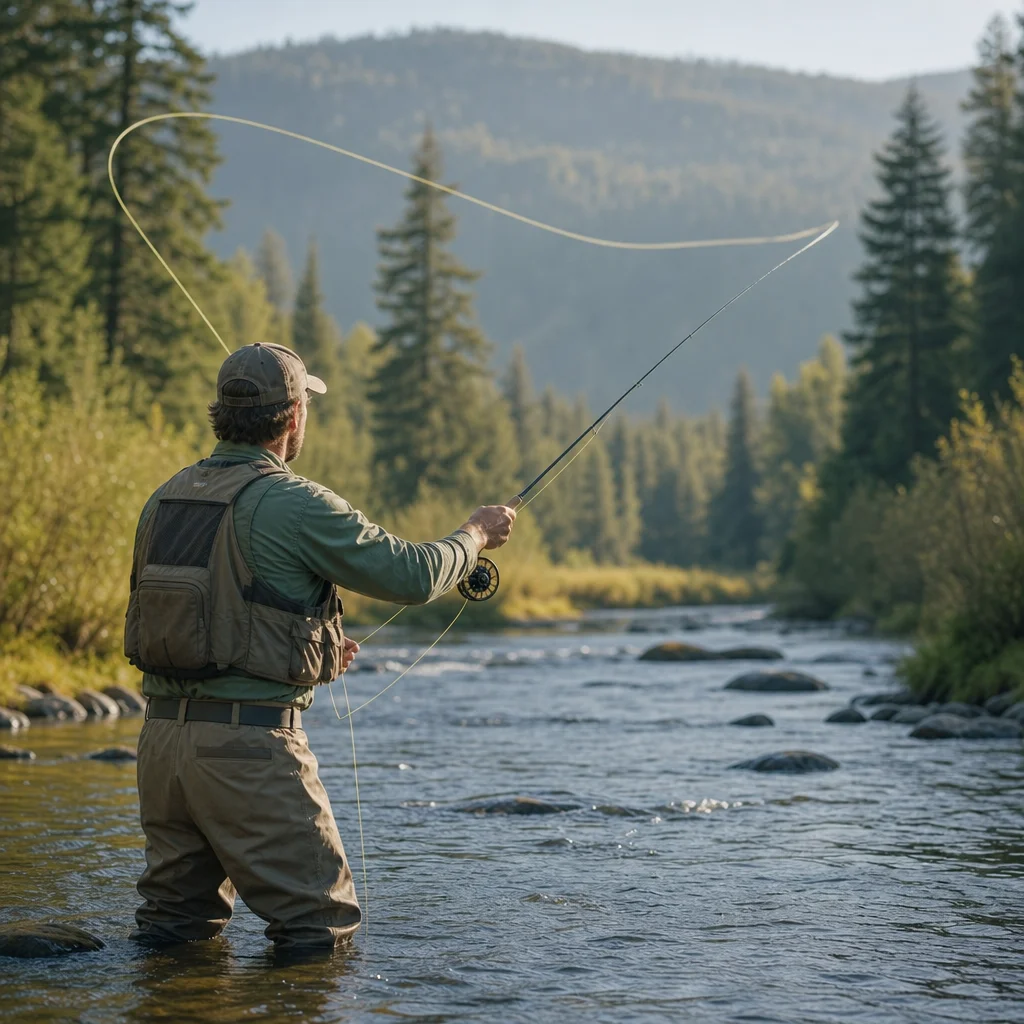
A trout that looks ready to release may still be exhausted, especially after a long fight, warm-water struggle, or awkward landing. The safest recovery usually isn’t the fastest current you can find. It’s a calm, well-oxygenated pocket where you can support the fish and let it regain its balance without spending more energy than it has.
Choose Recovery Water, Not Just Moving Water
Before releasing the trout, look for water that provides oxygen without forcing the fish to fight the current. Good options often include:
- The quiet edge of a riffle
- A slower seam beside faster flow
- A deep pocket with steady circulation
- The downstream side of a rock, where current is softened
- A shallow margin with enough depth to keep the trout upright and submerged
Avoid stagnant backwaters, very warm shallows, and turbulent chutes. Water can be moving and still be a poor recovery location if the trout must constantly brace itself against the flow.
A useful rule is to choose the gentlest water that still appears well mixed and connected to the main flow. You’re trying to give the trout access to oxygen-rich water without making it swim a workout immediately after the fight.
Check the Local Conditions: If water temperatures, low-flow restrictions, seasonal closures, or fish-handling rules may affect your river, check the current guidance from the relevant fish-and-wildlife agency before fishing or releasing trout. Regulations and temperature recommendations can vary by region and season.
Keep the Trout Supported and Submerged
Hold the trout in the water as much as possible. If you need to move it to a better recovery spot, keep the transfer brief and support its body rather than carrying it by the jaw or tail alone.
Once you’ve found suitable water:
- Face the trout upstream, with its head pointed into gentle, steady flow.
- Keep one wet hand lightly under the belly, especially behind the pectoral fins.
- Use your other hand to support the wrist of the tail if the fish needs help staying in position.
- Keep the trout upright and fully submerged.
- Allow water to pass naturally over the gills.
Your hands should prevent the fish from rolling or drifting away, not pin it in place. A trout that can balance on its own may need only light contact. Loosen your support as it becomes steadier.
Be careful around the gill covers. Don’t put fingers inside the gill opening, squeeze the throat, or press hard against the sides of the fish. The gills are delicate, and a well-intentioned grip can cause injury even when the trout appears calm.
Why Pushing a Trout Back and Forth Can Be Harmful
Many anglers were taught to move a fish forward and backward through the water to force water over its gills. That motion can look helpful, but it’s usually unnecessary and can create problems.
Moving the trout backward sends water in a direction its gill structure isn’t designed to handle. It can also push water, debris, or mucus across sensitive tissues. Repeated forward-and-back motion may stress the fish, loosen its protective slime layer, and make it harder for you to maintain a secure, gentle hold.
You generally don’t need to pump water through the gills. If the trout is facing into a mild current, natural water movement will pass across them. In nearly still water, reposition the fish in a place with gentle circulation rather than trying to create flow by repeatedly moving its body.
There are exceptions in unusual circumstances, such as a fish temporarily disoriented by handling or a difficult landing, but even then the better approach is usually controlled positioning and patience. Don’t turn recovery into a mechanical exercise.
How to Tell When the Trout Is Recovering
Recovery is a progression, not a single dramatic moment. Watch for several signs rather than relying on one movement.
A trout may be ready to leave when it:
- Holds itself upright without your hand under its belly
- Keeps its head pointed into the current
- Opens and closes its mouth in a steady rhythm
- Maintains balance when you reduce your support
- Responds to nearby movement without rolling or collapsing
- Swims away with controlled strength rather than drifting or spiraling
Normal gill movement by itself doesn’t prove the trout is ready. A fish can ventilate its gills while still being too weak to maintain position. The most useful test is to gradually reduce your support and see whether the trout remains upright in the recovery water.
When it’s ready, let it swim away on its own. Don’t throw it into the current, and don’t push it toward deeper water. A strong departure is encouraging, but even a trout that leaves slowly may be making the correct choice for itself.
What to Do If It Keeps Rolling or Drifting
If the trout can’t stay upright, don’t release it yet. Recheck your position first. It may be in water that’s too fast, too shallow, or too turbulent. Move only if you can do so without lifting the fish unnecessarily.
Try the following:
- Shift to the protected side of a rock or bank feature.
- Lower the trout into deeper water while keeping it upright.
- Reduce your grip so the fish can balance naturally, but keep it from rolling.
- Keep the head pointed into gentle flow.
- Give it time between each adjustment.
If the trout repeatedly collapses, it may have been severely stressed or injured. Look for bleeding, a damaged jaw, missing scales, abnormal curvature, or difficulty using one side of its body. Don’t attempt to repair an injury in the stream. Handle the fish as little as possible and follow applicable local guidance for seriously injured or protected fish.
A trout that swims away and immediately disappears beneath cover has usually made a better departure than one that is held in a powerful current until it is exhausted again. You can’t guarantee survival by extending the process indefinitely, but you can avoid adding more stress.
Special Cases That Need Extra Care
After a long fight
A prolonged fight can leave a trout exhausted even when the fish looks lively at the surface. Use a recovery area with enough depth for the trout to remain submerged and enough current to provide oxygen without demanding constant effort.
Next time, consider shortening the fight by using tackle appropriate for the fish and water. An undersized rod, line, or tippet can turn a routine release into a lengthy struggle.
In warm water
Warm water generally contains less dissolved oxygen, while trout may also be under greater physiological stress. In those conditions, minimize handling time and make conservative decisions about whether to continue fishing. Don’t assume that a trout’s quick escape means it has fully recovered.
Temperature thresholds and closures differ among fisheries, so use current local guidance rather than applying one universal number to every river.
After a difficult landing
A trout that has fallen onto rocks, been squeezed, or spent time out of the water deserves especially careful handling. Keep it submerged, avoid unnecessary photographs, and look for signs of injury. If you’re taking a photograph, prepare the camera first and keep the fish out of water only briefly.
In strong or deep current
You may not be able to safely wade to an ideal recovery spot. Don’t put yourself at risk to reach one. A stable position near the bank or in slower water is preferable to a perfect release attempt that involves a dangerous step, unstable footing, or a fall.
Common Mistakes to Avoid
- Holding the trout in the fastest current: More current doesn’t automatically mean better oxygenation for an exhausted fish.
- Pushing it forward and backward: Natural flow over the gills is preferable to repeated forced motion.
- Releasing it while it’s still rolling: Loss of balance is a reason to continue supporting the fish.
- Gripping the gills or squeezing the belly: Support the body with wet hands and keep pressure light.
- Keeping it out for a long photograph: Recovery begins in the water, not after an extended photo session.
- Forcing a departure: Let the trout swim away when it can maintain itself.
- Ignoring your own footing: A careful release requires a safe position for the angler as well as suitable water for the fish.
A Simple Release Sequence
Before you let go, run through this short sequence:
- Find: Choose calm, circulating water rather than the strongest current.
- Support: Keep the trout upright, wet, and submerged.
- Position: Face it upstream into gentle flow.
- Wait: Allow the fish to regain balance and steady ventilation.
- Test: Reduce your support gradually.
- Release: Let the trout leave under its own power.
If the fish isn’t ready, return to support rather than rushing the decision. Proper revival is mostly a matter of reducing demands on the trout: less handling, less current, less time out of water, and no forced water movement through the gills. Those small choices give a released fish its best reasonable chance to recover.