Recognize When a Trout Is Too Stressed for a Photograph
Warm water, a long fight, or a trout that won't hold itself upright can turn a quick photo into an avoidable risk. I’ll show you how to weigh conditions, fish posture, and handling time before deciding whether the camera should stay packed away.
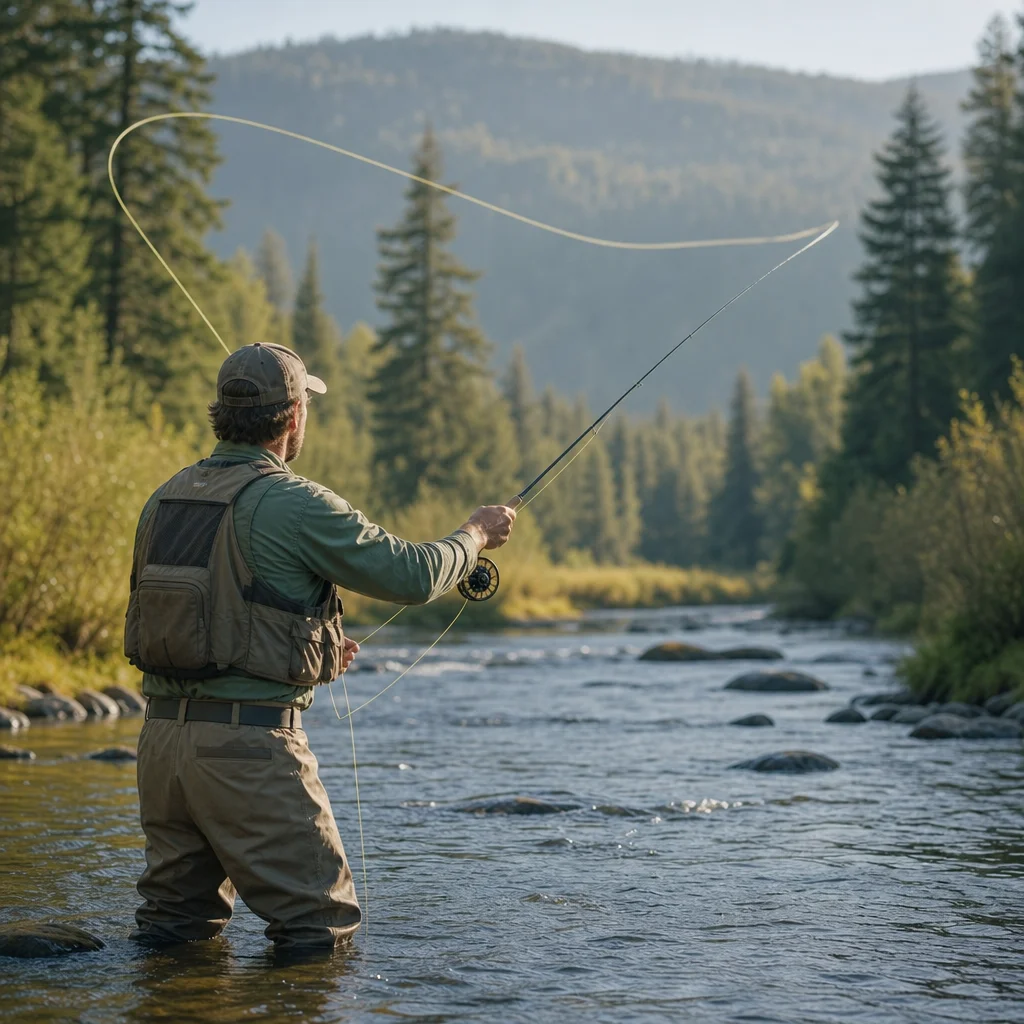
A trout can look ready for a photograph while quietly running out of the energy it needs to recover. In warm-season streams, the decision isn't simply whether the fish is large enough or whether your camera is already in your hand. You need to assess the water, the fight, the fish’s posture, and how much handling has already occurred.
For beginners, the safest approach is simple: treat a photo as optional. If any part of the release looks uncertain, skip the picture and return the trout to the water.
Start With Water Temperature, Not Air Temperature
Air temperature is an important warning sign because hot weather can warm shallow water and make a fish’s exposure above the surface more stressful. However, water temperature tells you more about the conditions the trout has been living in and the oxygen available to it.
Carry a small stream thermometer and measure water in the area where you’re fishing. Avoid taking a reading in a sun-warmed pocket or directly against a rock. Shade, depth, and current can all affect the result.
Many trout become increasingly vulnerable as water temperatures approach the upper end of their preferred range. Around 68°F (20°C) is commonly treated as a point of concern for trout fishing, but it isn't a universal “safe or unsafe” switch. Species, elevation, acclimation, dissolved oxygen, flow, and local guidance matter. A cold-water trout in a low-oxygen, shallow stream may be at risk before the thermometer reaches that number.
When water is unusually warm for the stream, consider stopping trout fishing rather than trying to make the release more efficient. A quick photograph is still extra handling, and a fish that survives the hook removal may not recover well from the additional stress.
Check the stream’s warm-water guidance: Before fishing in hot weather, review current local regulations and fisheries-agency recommendations for the specific stream. Temperature restrictions, voluntary closures, and species guidance can change with conditions.
Consider How Hard the Trout Fought
Fight duration is one of the clearest clues you can use because a long struggle can leave a trout exhausted before you ever lift it for a photo.
A short fight on suitable tackle is generally less demanding than a prolonged battle against heavy current. A larger trout may also need more time to recover than a small fish, even if both were hooked for the same length of time. A fish that runs repeatedly, thrashes at the net, or has to be chased downstream has spent more of its available energy.
Your gear and technique influence the outcome. Tackle that is too light can extend the fight unnecessarily. A properly matched rod, a reliable knot, and a drag setting that allows controlled pressure can help you land the fish promptly without horsing it through the current.
Don't judge the fight only by the clock. A two-minute battle in warm, fast water may be more taxing than a longer, calm-water fight in cool conditions. Ask yourself:
- Did the trout make several strong runs?
- Was it repeatedly swept into heavy current?
- Did it spend much of the fight near the surface or thrashing at the net?
- Did you have to handle it several times to remove the hook?
- Is it still breathing hard or failing to maintain position?
If the answer to any of these questions concerns you, the fish has already given you a reason to skip the photograph.
Read the Trout’s Posture Before Reaching for the Camera
A healthy, recovering trout should be able to orient itself in the current. It may rest briefly, but it should hold upright, keep its head pointed into the flow, and respond as its strength returns.
Signs that a trout may not be ready for a photograph include:
- Rolling onto its side or back
- Drifting rather than maintaining position
- Lying motionless on the bottom
- Weak or irregular attempts to swim
- Trouble keeping its head pointed into the current
- A limp body or poor response when you support it
- Gaping, unusually rapid breathing, or prolonged surface distress
None of these signs should be interpreted in isolation as a precise diagnosis. The important point is that a trout that can't maintain its posture isn't ready to be lifted for a picture. Keep it in the water and focus on recovery.
A fish that is upright and swimming away strongly may be ready for release, but that doesn't automatically make it a good photo candidate. Water temperature, fight length, and handling time still count. The photograph should come only after the fish has shown that it can tolerate the extra step.
Treat Handling Time as a Limited Budget
Every second out of the water adds stress, even when your hands are wet and your intentions are careful. That is why you should prepare the camera before touching the trout and decide who will take the photo before the fish reaches the net.
Keep the fish in the water while removing the hook whenever possible. Use a net made from fish-friendly, knotless material, and avoid squeezing the body. Wet your hands before touching the trout so you don't remove as much of its protective slime layer.
If you do take a photograph, keep the process brief:
- Move to calm, shallow water where you can maintain control.
- Keep the trout partly or fully submerged while the camera is positioned.
- Lift it only when the photographer is ready.
- Support the fish horizontally with both hands.
- Keep it close to the water in case your grip slips.
- Take one or two quick images, then return it immediately.
Never hold a trout by the gills, squeeze its belly, or suspend it vertically by the jaw. Avoid placing it on rocks, sand, grass, or a boat floor. A photograph isn't improved by a complicated pose, and the fish doesn't benefit from repeated attempts to get a better angle.
As a practical limit, aim for only a few seconds above the surface. If the camera isn't ready, the light is poor, or the fish is struggling, release it instead of resetting the shot.
Know When the Photo Decision Is Already Made
Some situations should end the decision-making process immediately. Skip the photo when:
- Water temperatures are high enough that local guidance discourages trout fishing
- The trout has had a long or unusually vigorous fight
- The fish is bleeding heavily or has a deep-hooking injury
- The trout can't hold itself upright
- You have already handled it for an extended period
- The fish is a species or size subject to special local protection
- You are fishing alone and can't safely control both the fish and camera
This isn't a judgment about your skill. Conditions can change during a single outing, and even an experienced angler can find a trout in worse shape than expected. Choosing not to photograph the fish is a responsible result, not a missed achievement.
Help a Stressed Trout Recover
Keep the trout in the water and support it gently with its head pointed into a moderate current. Don't push it back and forth through the water; that can interfere with its ability to move water over the gills. Instead, hold it securely enough to prevent it from drifting while allowing it to breathe and regain control.
Watch for steady posture and purposeful movement. When the trout begins to swim on its own and can maintain position, loosen your support. If it darts away strongly, let it go rather than chasing it with your hands.
If it remains weak, continue supporting it in suitable flow and reassess the conditions around it. Avoid moving it into water that is obviously warmer, stagnant, or too turbulent. Local fishery agencies may provide specific handling or reporting instructions for severe conditions, unusual mortality, or protected species.
A Beginner’s Photo-or-No-Photo Checklist
Before lifting a trout, ask four questions:
- Is the water cool enough for responsible trout handling?
- Was the fight short enough that the fish still has energy?
- Can the trout hold itself upright and breathe normally?
- Can the photograph be completed in a few seconds with no extra handling?
If the answer to any question is no or uncertain, release the trout without a photograph. When conditions are borderline, let the fish’s welfare settle the decision. You can remember the catch without making the trout carry the cost of proving it.