Why Trout Shouldn't Be Held Upright by the Jaw
An upright jaw hold can strain a trout’s mouth and body even when the fish looks calm. I’ll explain which positions reduce stress and how to identify or photograph your catch without turning a quick release into a risky handling session.
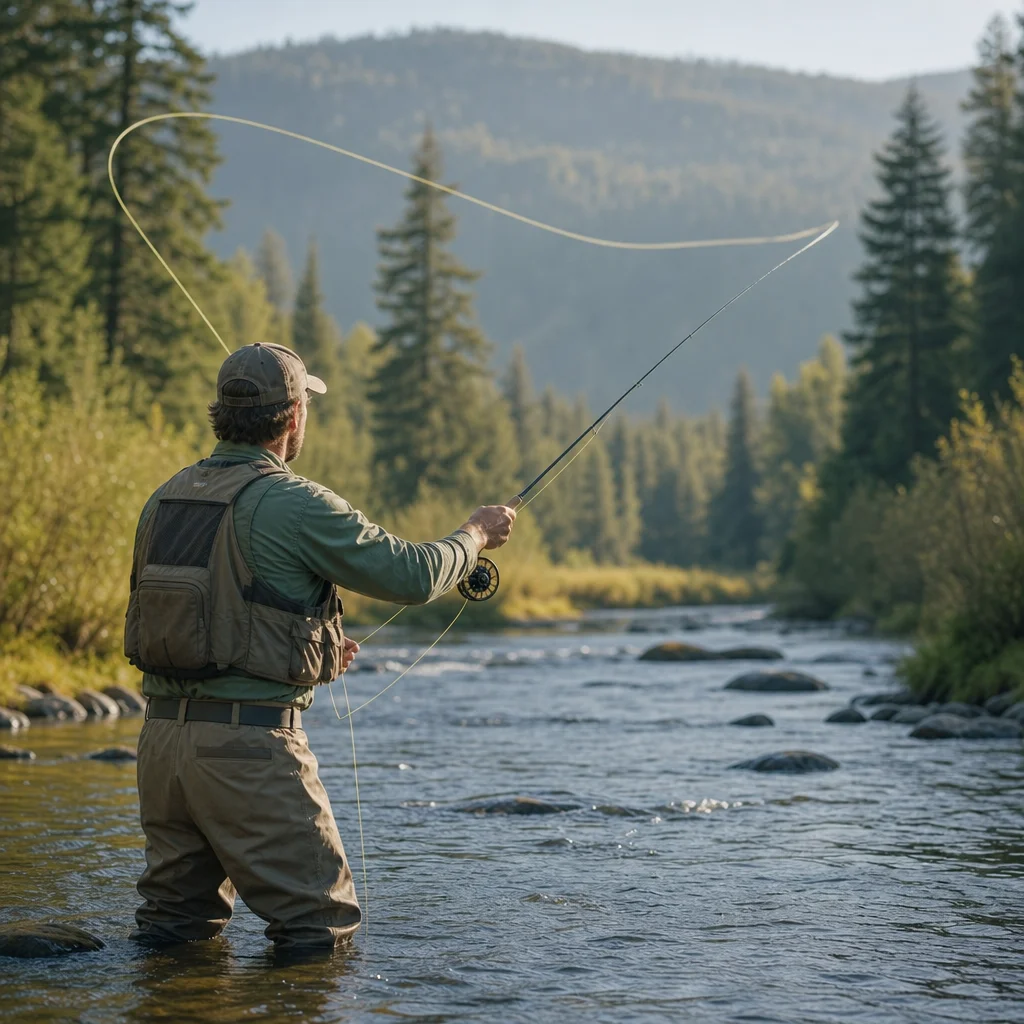
A trout can look perfectly still while you hold it by the lower jaw, but stillness isn’t proof that the position is harmless. An upright, jaw-only hold places the fish’s weight on structures designed for feeding, not for suspending its body. The risk becomes greater when the fish is large, held away from the water, or allowed to twist.
For a beginner, the sensible decision is simple: support the trout’s body with one wet hand and keep its head and jaw in a natural, mostly horizontal position. That gives you a stable grip for a quick identification or photograph while reducing unnecessary strain.
What an upright jaw hold does
A trout’s lower jaw is part of a flexible feeding structure. It opens and closes the mouth, helps the fish take food, and connects through joints and soft tissues to the skull. It isn’t a convenient lifting handle, even if its shape makes it seem like one.
When you hold a trout vertically by the jaw, the fish’s body weight pulls downward from the mouth. That can stress the jaw joint and surrounding tissue. The effect is more concerning when the fish is heavy, the jaw is pulled open, or the fish swings while you hold it.
A jaw-only grip also leaves the body unsupported. The trout’s internal organs, spine, and muscles are adapted to being supported by water. Out of water, gravity acts on the fish in a way it normally doesn’t experience. A brief, controlled lift is different from dangling a trout for an extended photograph, but neither situation improves when the jaw carries the whole load.
The fish may not thrash. Cold water and handling stress can make it sluggish, and a tired trout may simply fail to resist. Lack of movement shouldn't be mistaken for comfort.
Why the position matters more than the appearance
An upright trout often makes a neat photograph: the body is easy to see, the jaw is visible, and the fish appears securely held. That appearance can hide several problems.
First, the mouth may be forced open farther than it would be naturally. Second, the fish can rotate around the jaw if your grip shifts. Third, the lower jaw may carry the entire weight instead of sharing the load with the water and your supporting hand.
The risk isn’t identical for every fish. A small, lightly supported trout held for a moment isn't in the same situation as a large trout suspended by its jaw. Species, body shape, water temperature, condition, and the length of time out of water all matter. Still, beginners don’t need to calculate a perfect threshold. Avoiding a jaw-only vertical hold removes an unnecessary source of stress.
The same principle applies to “lip grips” and similar tools. Some are designed for certain fish and situations, but a device that clamps to the jaw doesn’t automatically make a vertical hold appropriate for a trout. Use of any such tool should follow local rules, the manufacturer’s instructions, and the welfare needs of the species.
The better position: horizontal and supported
For a quick identification or photograph, hold the trout close to the water and support its weight along the body.
A reliable basic position looks like this:
- Wet your hands first. Rinse them in the river or lake before touching the fish. Wet hands help reduce damage to the trout’s protective slime coat.
- Keep the fish in the water while preparing. Unhook it at the surface when possible, and decide where the photograph will happen before lifting the trout.
- Place one hand gently beneath the belly. Support the body around the area behind the pectoral fins, without squeezing.
- Use the other hand near the tail or behind the head. Your hand can steady the fish without forcing the gill covers or pressing on the throat.
- Keep the trout horizontal. Its head and tail should remain at roughly the same height, with the body supported rather than dangling.
- Lift only when necessary. Keep the trout just above the water and return it immediately after the identification or photograph.
Your grip should be secure enough to prevent a drop but gentle enough that the fish can breathe and move normally. Don’t squeeze the belly, cover the gills, or insert fingers into the gill openings. The gill filaments are delicate, and contact there can cause serious damage.
If the trout is large, lively, or difficult to support, skip the photograph. A picture is optional; a safe release is the point of the exercise.
Practical alternatives for identification
You often don’t need to lift a trout at all. A fish in the landing net can be identified from above or photographed partially submerged. This is especially useful when you’re learning to distinguish similar trout species or checking markings before release.
Try these options:
- Photograph the fish in the water. Keep the net submerged in shallow water and take a quick image from above.
- Use a wet, knotless net. A rubber or coated, fish-friendly net can support the fish while you look at its spots, fins, and coloration.
- Photograph identifying features separately. A close image of the adipose fin, spotting pattern, or side markings may be more useful than a full-body portrait.
- Ask a fishing partner to help. One person can manage the net and camera while the other keeps the fish supported.
- Release first and identify later. If the trout is stressed or hooked deeply, prioritize cutting the line or seeking appropriate help rather than getting a definitive photograph.
Color isn't always reliable for identification. Trout can look different depending on water clarity, season, spawning condition, depth, and lighting. A local field guide, fisheries resource, or experienced angler can often help more than a prolonged examination in your hands.
Check the local release rules: Before photographing or retaining a trout, confirm the current regulations for the water you’re fishing, including species identification requirements, bait or tackle restrictions, season dates, size limits, possession rules, and whether a particular method of handling or gear is allowed. Regulations vary by state, province, territory, waterway, and species.
When the fish is hooked deeply
A jaw hold becomes an even worse choice when the hook is lodged in the throat, gills, or deep inside the mouth. Pulling the fish upright can add pressure to an already injured area.
Keep the trout in the water and assess whether the hook can be removed quickly without forcing it. If removal would cause substantial damage, cutting the line close to the hook may be less harmful than repeatedly digging for it. The best response depends on the hook location, the fish’s condition, and the rules governing that fishery.
Barbless hooks or hooks with crushed barbs generally make release easier, but they don’t make rough handling safe. Use tackle strong enough to land the fish efficiently. An excessively light setup can create a long fight, leaving the trout exhausted before you even begin handling it.
A short photography routine
You can make the process faster by treating the photograph as a prepared sequence rather than an improvised event.
Before lifting
Have the camera ready, choose a stable position, and make sure your landing net is close. If you’re alone, consider whether you can safely operate the camera without setting the fish down or holding it awkwardly. Often, the answer is no—and that’s a good reason to keep the trout in the water.
During the lift
Support the fish horizontally with both hands. Keep your fingers away from the gills and avoid squeezing the belly. Hold the trout close to the water, not at arm’s length over rocks, a boat floor, or a dock.
Take one or two quick photographs. Don’t keep repositioning the fish to improve the composition. The longer it stays out of the water, the more its condition can deteriorate.
After the photograph
Lower the trout into the water before letting go. Face it into a gentle current, if one is available, and support it until it maintains its position and swims away on its own. Don’t push it forcefully back and forth; that can drive water into the gills in an unnatural way.
If the fish struggles to remain upright, keep supporting it in the water and allow more time for recovery. A trout that floats over, rolls, or can't maintain position needs attention rather than another photograph.
Common mistakes to avoid
Holding the jaw while supporting only the tail
This looks more careful than a jaw-only hold, but it can still leave the body hanging between two points. Support the belly so the fish’s weight is carried along its body, not transferred through the mouth and tail.
Using a dry towel
A towel can remove protective slime from the trout’s skin. It may also make the fish harder to release cleanly. Wet hands and a suitable net are better choices.
Pinching the belly for control
A firm squeeze may stop a trout from moving, but it can injure internal organs. Use broad, gentle support instead of a tight grip.
Taking measurements on shore
If length or weight matters, prepare the measuring surface and equipment first. Keep the trout wet and limit the time out of water. For many release situations, an approximate length from a quick, submerged measurement is preferable to a prolonged handling session.
Letting a fish flop on the ground
A trout can injure its skin, eyes, and internal structures when it lands on rocks, gravel, or a boat floor. Keep the net low over the water and maintain control throughout the brief handling period.
The decision to remember
If you need to identify or photograph a trout, don’t suspend it vertically from the jaw. Keep it in the water whenever possible; otherwise, use wet hands, support the belly and tail, keep the body horizontal, and make the exposure brief.
Your practical next steps are straightforward: prepare the camera before lifting, carry a suitable net, learn the current rules for the water you fish, and practice a supported horizontal hold over the water. When conditions are awkward or the fish is struggling, release it without a photograph. The best image is never worth turning a healthy release into a preventable injury.