How to Handle a Trout Quickly in Cold or Shallow Water
I’ll help you choose the least stressful way to handle a trout in cold or shallow water, from deciding whether to use a net to removing the hook and supporting the fish for release. You’ll get a simple sequence that balances speed, control, and fish safety.
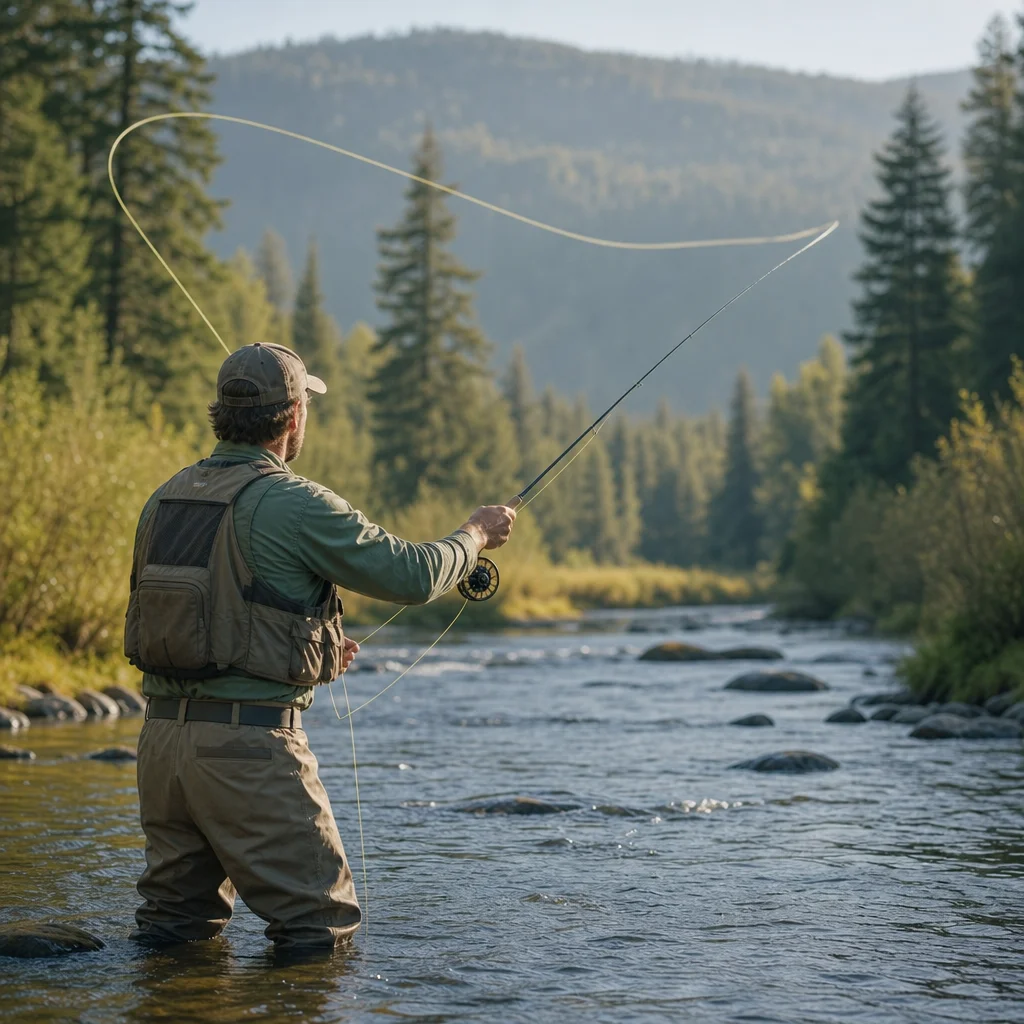
Cold, shallow water can make trout handling look easy: the fish is close, the current is manageable, and there’s no deep water to worry about. But these conditions create their own problems. A trout can thrash against rocks, lose support when lifted, or spend too long out of the water while you search for a tool.
The best approach isn't always “never touch the fish” or “always use a net.” It’s to choose the method that lets you control the trout quickly while keeping it wet, supported, and close to its release point.
Prepare before you bring the trout in
Good handling starts before the trout reaches your feet. Keep your net, forceps, and camera where you can reach them without turning the landing into a small expedition.
If you’re wading, identify a calm patch of water nearby. Look for a spot with enough depth to keep the trout submerged, a clean bottom without sharp gravel, and little risk of the fish sliding into a bank or root wad. In very shallow water, a slightly deeper pocket may be safer than trying to handle the fish on a broad, wet shelf.
Before landing the fish, loosen your drag if needed and clear loose line from around your feet. Keep the fish out of strong current when you can. Fighting directly against fast water takes more from the trout and can make a quick release harder.
Check Your Release Setup
Before the fish is within reach, confirm that your forceps, net, and camera are ready. The fewer decisions you have to make with the trout in your hands, the shorter its handling time will be.
Decide whether a net helps or gets in the way
A net can be the safest option when the trout is lively, the hook is awkwardly placed, or the current makes hand control difficult. It keeps the fish contained and lets you handle it near the water’s surface. A rubber or knotless mesh net is generally less abrasive than rough knotted mesh, especially when the fish will be released.
In very shallow water, however, a large net can drag the trout over rocks or trap it in a fold of mesh. If the net has to be lifted high to clear the bottom, it may offer less protection than a controlled hand landing.
A netless landing can work well for a small trout in calm, shallow water when you can keep the fish partly submerged. Guide the fish into your wet hand rather than grabbing at it. This approach reduces equipment, but it demands good timing and a secure plan for removing the hook.
The trade-off is simple: use the net when it improves control, and skip it when it creates more dragging, lifting, or untangling than it prevents.
Wet your hands before touching the trout
Dip your hands in the water before handling the fish. Wet hands help protect the trout’s outer slime layer, which acts as part of its natural barrier against abrasion and infection. Avoid handling the fish with dry gloves, a dry towel, or rough fabric.
Keep contact limited to what you need for control. You don’t need to rub the trout, squeeze it, or repeatedly reposition it for a better view. A wet hand under the belly and another near the tail can provide support without clamping down.
If the hook is easy to remove while the trout remains in the water, leave it there. Water is the trout’s support system and breathing environment; your hands should do as little work as possible.
Bring the trout into calm, shallow water
Once the trout is tired enough to control, guide it toward the prepared spot. Don’t beach it on gravel or hold it against the bank. Even a short slide across stones can scrape the body and fins.
Keep the trout’s head pointed into gentle current when possible. Flowing water can help move oxygenated water across the gills, but strong current can pull the fish from your grip and force it to struggle. Calm water is usually the better choice for unhooking.
In shallow water, support the fish horizontally. Place one wet hand beneath the front half of the body and the other around the base of the tail, without squeezing the tail or covering the gill covers. The fish should remain partly or fully submerged while you work.
Don't put fingers into the gill openings. The gills are delicate, and a grip behind the head can damage them even if the trout appears secure.
Remove the hook with the least movement
Have your forceps in hand before lifting the trout, if lifting is necessary. Follow the hook back to its bend and identify where it is embedded. A quick look tells you whether you can back the hook out along its entry path or whether the fish should be released with the hook left in place.
For a lightly hooked fly in the lip, keep the trout in the water and use forceps to reverse the hook’s path. A steady motion is usually better than repeated twisting. If the hook is barbless or the barb has been flattened, removal should require less force.
If the hook is deeply embedded, near the eye, or caught in the throat or gill area, don’t keep probing simply to save the fly. Cutting the line as close to the hook as you safely can may cause less immediate damage than forcing a difficult removal. Whether a remaining hook will rust away or affect survival depends on the hook, its location, and the fish’s condition, so deep-hooked trout deserve especially careful treatment.
Never yank a hook straight out when you can remove it along its entry path. That turns a small puncture into a larger tear.
Keep air exposure brief
Cold water doesn’t make air exposure harmless. A trout still needs to breathe in water, and cold conditions can make your hands numb, your movements slower, and the fish harder to control. Those delays can turn a quick release into a long one.
If you want a photograph, prepare the camera first and keep the trout in the water while the other person gets ready. Lift the fish only when the camera is pointed and the person taking the photograph is prepared. Keep the fish just above the water, with both hands supporting it, and return it immediately.
Avoid passing the trout between people, walking to a different location, or taking multiple attempts. One clear photograph is a better trade than several poses and a longer period out of water.
Use the right approach for cold conditions
Cold water can reduce your dexterity. Bulky gloves may keep your hands warm, but they can also make it harder to feel the fish, operate forceps, or maintain a gentle grip. If you wear gloves, choose a clean, smooth pair that is thoroughly wet before contact and still allows controlled handling.
Plan around your own limits. If your fingers are too numb to remove a hook safely, keep the trout in the water and use the simplest available release method. It’s better to let a fish go with a difficult hook than to extend the struggle while trying to perform delicate work without control.
In icy conditions, avoid holding the trout against snow, ice, or a frozen net. Those surfaces can damage the fish’s skin and fins. Keep the fish in water throughout the process whenever possible.
Revive and release the trout
After removing the hook, hold the trout gently facing into mild current. Keep its mouth and gills underwater. You’re not trying to force water through the fish by pushing it back and forth; that motion can drive water where it shouldn’t go and add stress.
Instead, maintain a stable, supportive hold and let the trout recover. When it begins to hold itself upright and makes purposeful movements, loosen your grip while keeping your hands nearby. Let it swim away on its own rather than tossing it into the current.
If the trout rolls, drifts sideways, or can't remain upright, continue supporting it in calm water. A fish that needs prolonged recovery may have been played too long, handled too much, or exposed to unsuitable conditions. Give it time, but avoid endlessly moving it through the water.
Common mistakes to avoid
Lifting the fish to solve a small problem
Many hook removals can happen with the trout submerged. Lifting it often makes the fish harder to control and adds unnecessary air exposure. Raise it only when that genuinely improves your ability to remove the hook or take a brief photograph.
Holding the trout vertically by the jaw
A vertical grip can place stress on the jaw and doesn't support the body’s weight well. A horizontal, two-handed hold is safer when the fish must leave the water.
Letting the trout touch dry surfaces
Rocks, sand, clothing, and dry netting can remove protective slime and abrade the skin. Keep the trout in the water or supported by wet hands and wet, fish-friendly mesh.
Spending too long looking for equipment
If the fish is already in hand, the next step should be obvious. Organize your kit so forceps are accessible, and make photographs optional rather than part of every release.
A simple cold-water handling sequence
- Choose a calm, clean landing spot before bringing the trout in.
- Prepare the net, forceps, and camera within easy reach.
- Wet your hands and net before contact.
- Keep the trout in the water while deciding whether a net is helpful.
- Support the body horizontally and avoid the gills.
- Remove an accessible hook along its entry path with forceps.
- Cut the line close to a deep or dangerous hook rather than forcing removal.
- Keep any photograph brief and planned.
- Support the trout in mild current until it can swim upright.
- Release it facing into calm water and let it leave under its own power.
The fastest handling method is the one that prevents extra decisions and unnecessary movement. In cold or shallow water, that usually means preparing early, keeping the trout wet, choosing control over convenience, and accepting that a perfect photograph or recovered fly is less important than a clean release.