How to Recognize and Avoid Trout Spawning Gravel in Spring
I’ll help you distinguish trout spawning gravel from ordinary spring streambed, explain why a careless step can damage eggs, and show you how to fish nearby water without turning a productive redd into a boot-shaped disaster.
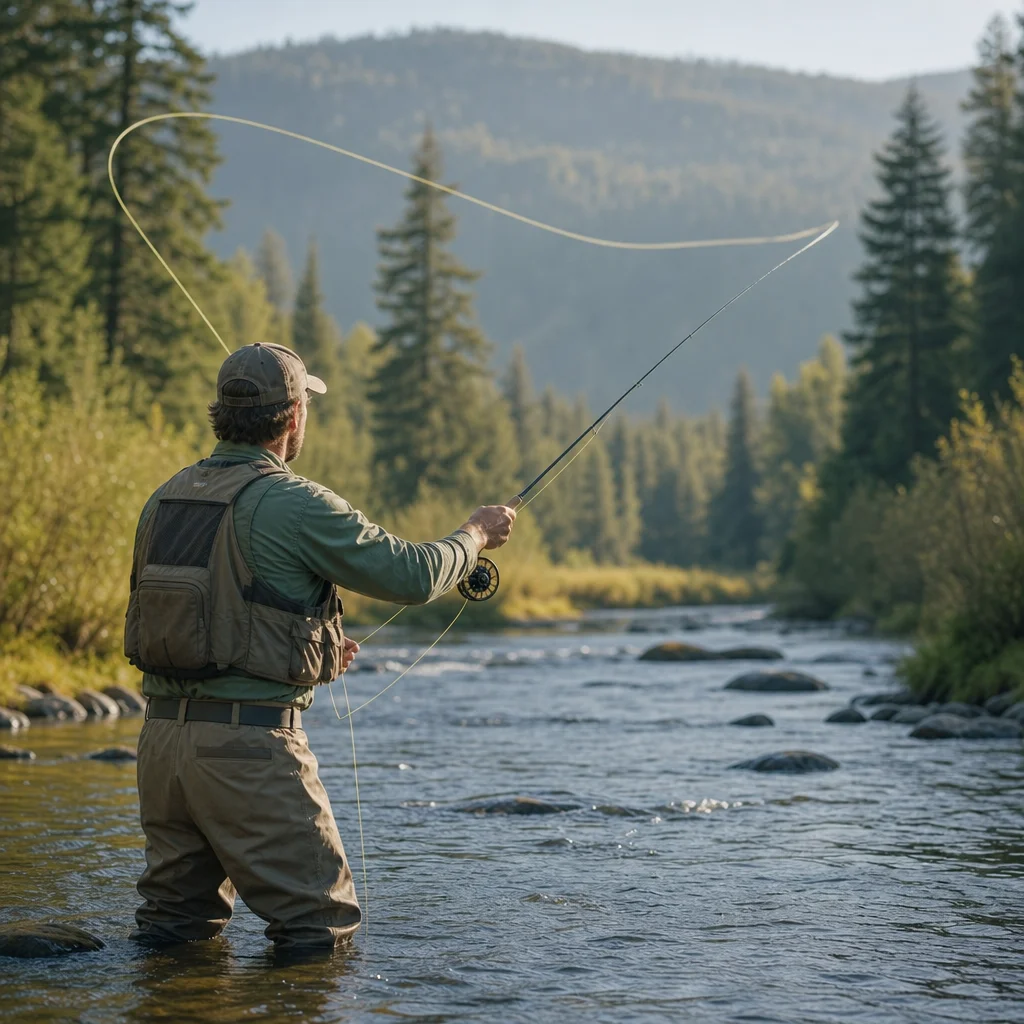
Spring fishing can put you beside trout spawning areas before you realize what you’re looking at. A patch of pale, clean gravel may be an ordinary riffle—or a redd, the nest where trout have buried their eggs. The safest approach is to learn the clues, assume uncertainty matters, and keep your boots and lure away from the gravel when in doubt.
What a trout redd looks like
A redd is a shallow depression that a trout creates by sweeping its tail over the streambed. The female deposits eggs in the cleaned area, and the current carries fine sediment away. After spawning, the site often has a noticeable depression with a low mound, or “tailspill,” of gravel immediately downstream.
Look for several clues together rather than relying on one feature:
- Unusually clean gravel: The stones may look brighter, lighter, or less covered in algae and silt than the surrounding streambed.
- A distinct depression: The center of the redd can appear slightly scooped out.
- A downstream gravel mound: The excavated gravel often forms a low ridge below the depression.
- A patch of suitable-sized stone: Redds commonly occur where the gravel is stable and water flows through it, often in shallow riffles, pool tails, or the heads of runs.
- Trout behavior: Trout may hold near the site, defend it, or repeatedly move across the same patch. Fish hovering over clean gravel are a strong reason to give the area extra room.
A redd may be several feet long, but its size varies with the trout species and the fish using it. Some are obvious from the bank. Others are subtle, partly covered by new sediment, or obscured by glare and changing water levels.
Don’t treat every clean patch as a redd
Spring runoff, high flows, recent rain, and ordinary current can also move sediment and expose bright gravel. A clean-looking patch without a depression, tailspill, or spawning activity isn't automatically a redd.
That uncertainty isn't a reason to investigate by walking across it. It’s a reason to observe from the bank or from a stable position that doesn’t require crossing the suspected area. You can use polarized sunglasses to reduce glare, but even good visibility won’t always reveal a redd.
Spawning timing also varies. Rainbow, brown, brook, cutthroat, and other trout populations may use different seasons, and the timing can shift with elevation, water temperature, latitude, and annual conditions. In some waters, spring means active spawning; in others, it means incubating eggs or newly emerged fry. A stream that looks quiet may still contain vulnerable eggs beneath the gravel.
Check this spring’s local rules: Before wading or fishing a spawning water, check the current regulations from the responsible fish-and-wildlife agency, land manager, or other official source. Look specifically for seasonal closures, protected reaches, bait or tackle restrictions, and rules about targeting spawning fish.
Why stepping on a redd is harmful
Trout eggs develop in the spaces between gravel pieces, where clean, oxygenated water can flow over them. A boot, wading shoe, or rock moved by your weight can crush eggs directly. It can also bury them in fine sediment, expose them to the current, or reduce the flow of oxygenated water through the redd.
The harm isn’t limited to one visible step. Wading can loosen gravel and send a cloud of silt downstream. That fine material may settle into other redds, cover eggs, and reduce the spaces needed for water circulation. Repeated traffic through a popular access point can damage a much larger area than any one angler intends to affect.
Eggs and very young fry are especially difficult to see. They don’t need to be visible for the streambed to be important habitat. A clean depression may contain eggs even when adult trout have moved away.
How to avoid spawning gravel while wading
The best way to protect a suspected redd is to stay out of the water around it. Fish from the bank when practical, and plan your route before entering the stream rather than discovering a crossing after you’re already standing in it.
If you must move through the water where regulations and conditions allow it, use these habits:
- Scan before stepping. Look for clean depressions, gravel mounds, spawning fish, and shallow pool tails.
- Avoid the entire suspected area. Don’t step on the depression, the downstream tailspill, or the clean gravel immediately around it.
- Use established crossings. A hardened ford, bridge, or designated access point is preferable to creating a new route across the streambed.
- Stay on less-sensitive surfaces. Bedrock, large stable cobble, and deep water may be less likely to contain redds than clean spawning gravel, but they still require careful footing and local judgment.
- Don’t drag your feet. Sliding a boot can disturb more gravel than a deliberate step.
- Turn around when the route is uncertain. A longer walk along the bank is usually a better trade than a shortcut through potential spawning habitat.
Wading also introduces ordinary hazards such as slippery rocks, changing flows, cold water, and unexpected drop-offs. Wear appropriate flotation and wading equipment where needed, avoid crossing water that exceeds your ability, and don’t let conservation-minded route planning push you into an unsafe crossing. Protecting a redd is important; so is getting home safely.
Fish the water beside a redd, not the redd itself
Spawning trout can attract attention because they are visible in shallow water. They may also be less interested in feeding while focused on reproduction. Casting repeatedly at them adds stress and can disrupt spawning behavior, even when your tackle is legal.
Instead, move your attention to nearby holding water:
Fish the downstream edge
Trout may hold below spawning gravel to recover, watch for drifting food, or intercept dislodged insects. Give the redd a wide berth and present your fly or lure to the adjacent current seam rather than across the clean gravel.
Work deeper water nearby
Pools, deeper runs, and the edges of riffles can hold trout that aren’t actively spawning. Approach slowly from downstream when possible, keep your profile low, and make casts that avoid dragging line or leader across the redd.
Try the margins
The edge of a spawning area may have productive water, but “edge” doesn’t mean the first inch beyond the clean gravel is automatically safe. Leave room for uncertainty, avoid wading into the margin, and cast from a position that lets you keep your feet on durable ground.
Choose another section
If the best access requires crossing multiple suspected redds, or if spawning fish are present throughout the reach, move. A different pool or downstream section may offer better fishing and less disturbance. Sometimes the most skillful presentation is the one you decide not to make.
Handle fish carefully near spawning water
If you hook a trout near a spawning area, keep the fight controlled and as short as conditions allow. Avoid pulling the fish across the redd or dragging it through shallow gravel. Guide it toward deeper, unobstructed water for release when possible.
Keep the fish in the water while removing the hook. Wet your hands first, support the trout without squeezing it, and avoid touching the gills. If a photograph is permitted and practical, prepare the camera before lifting the fish briefly; otherwise, release it without a photo.
Don't move rocks, rearrange gravel, or clear a “better” landing spot. Those actions can damage habitat even if your boots never touch the redd. If the fish is deeply hooked or badly stressed, follow the applicable local handling guidance rather than extending the encounter for a perfect release.
Common mistakes to prevent
Assuming a redd is only where fish are visible
Adult trout may leave, move between redds, or become difficult to see in glare and high water. Treat the physical features of the streambed as important even when no trout are present.
Wading through a shallow riffle because it looks empty
Riffles and pool tails can provide exactly the gravel and current trout need. A shallow, easy-looking crossing may be the most sensitive route in the reach.
Fishing directly over visible spawners
Seeing a trout doesn't mean it is available for ethical targeting. Leave spawning fish alone and focus on nearby water that doesn’t require casting over or standing on their nest.
Relying on a fixed calendar
“Spring” isn't a universal spawning window. Water temperature, elevation, species, and local conditions all matter. Use seasonal dates as a prompt to pay attention, not as permission to ignore habitat.
Believing one careful step can't matter
One step may seem insignificant, but repeated use of the same crossing adds up. Choose routes that keep your impact away from clean spawning gravel whenever you can.
A simple redd-avoidance checklist
Before entering a spring stream, ask yourself:
- Is this reach known for spawning or subject to a seasonal closure?
- Can I fish from the bank instead of wading?
- Do I see clean gravel, a depression, a tailspill, or spawning behavior?
- Is my planned crossing on durable ground or through potential redd habitat?
- Can I reach nearby holding water without walking through the spawning area?
- Do current rules permit the method, access, and species targeting I have planned?
When the answer is unclear, give the gravel space. You can observe from shore, fish a nearby pool, or choose another section of river. Recognizing a redd isn’t about proving exactly what happened on the streambed; it’s about noticing enough warning signs to make the low-impact decision.