How to Avoid Damaging Trout in a Shallow, Rocky Stream
Shallow, rocky streams leave trout exposed to impact, heat, and poor release choices. I’ll show you how to prioritize stable footing, gentle net placement, wet-hand handling, and a suitable release spot so a quick catch does less harm.
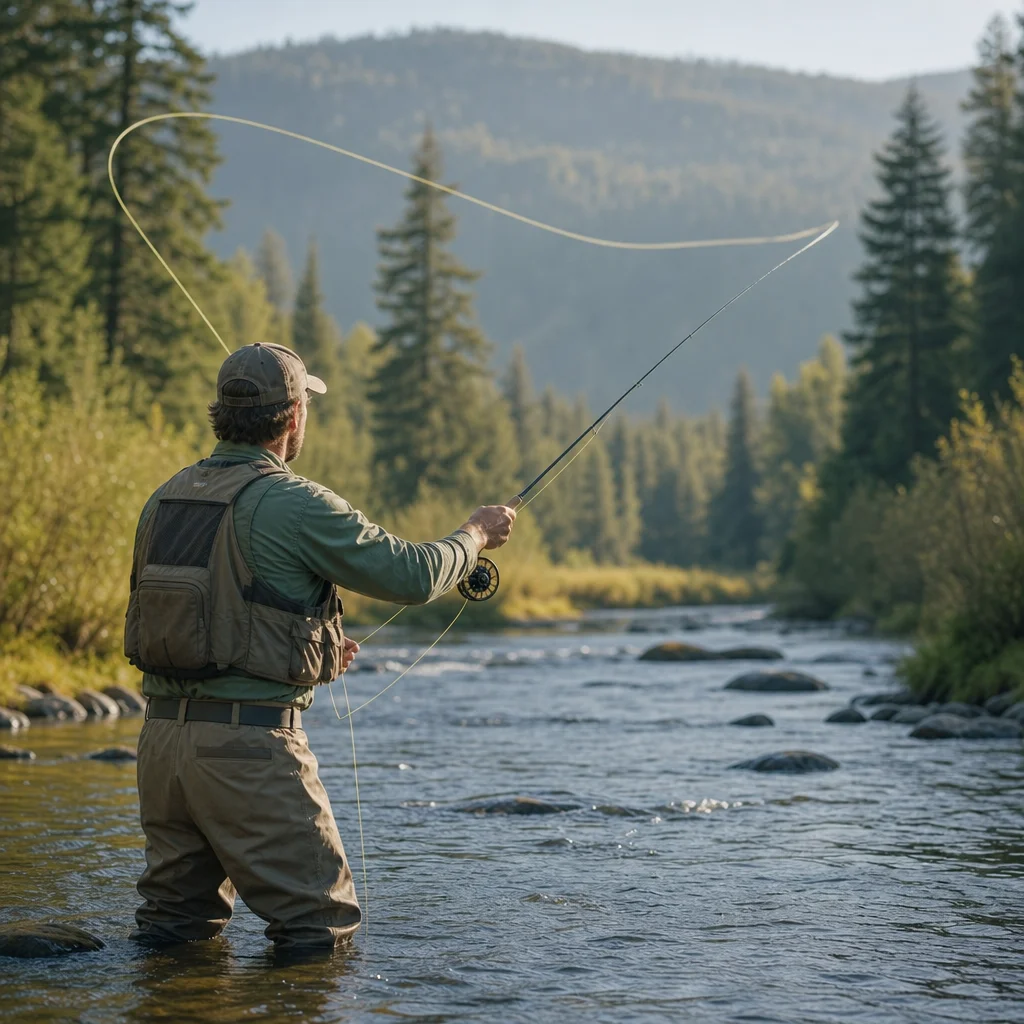
A trout in a shallow, rocky stream has fewer places to escape your boots, net, and hands. Even a careful angler can cause harm by chasing a fish across stones, lifting it into the air, or releasing it into water that offers little cover.
The goal isn’t to handle every trout perfectly. It’s to reduce avoidable stress and injury by planning the catch before it happens. In these streams, your position, equipment, and release location matter as much as the hook removal.
Start with the stream, not the fish
Before wading, look for the water you’ll need to reach a trout and the water where you’ll release it. A little planning can prevent a frantic chase later.
Identify:
- Stable rocks or gravel where you can stand without sliding
- Deeper pockets, undercut banks, or shaded edges that can provide refuge
- A clear path for moving a fish without dragging it over rocks
- A calm but flowing release area nearby
- Places where fish may be spawning or holding in fragile habitat
Shallow water often looks easy to cross, but algae-covered stones can be unstable. If you fall while holding a rod and fish, the trout may be crushed against rocks or held out of the water while you regain your balance. Keep your center of gravity low, take short steps, and use a wading staff if the streambed is difficult.
You don’t need to enter the water every time. Fish from the bank when the angle works, and avoid wading through productive water simply because it’s in your way. Fewer steps usually mean less disturbance to both trout and streambed.
Protect the streambed as well as the trout
Repeatedly stepping on loose gravel can disturb insects, dislodge aquatic life, and damage areas where fish may lay eggs. Avoid walking through clean gravel beds when you can go around them. If you must cross, use the same route rather than spreading your impact across the stream.
Be especially cautious around redds, the cleaned or slightly depressed gravel areas where trout may spawn. Their appearance and protection rules vary by species and location, so don’t step on suspicious patches simply because no fish is visible.
Set up your net before the fish is tired
A net is useful when it lets you control a trout quickly and keep it close to the water. It becomes harmful when you start searching for it after the fish is already exhausted.
Before casting, make sure the net is accessible. A small rubber or rubber-coated, knotless net is often easier on a trout than rough knotted mesh, particularly when the fish’s fins or hook become entangled. Check that the handle, frame, and release mechanism work smoothly. A broken or awkward net can turn a short landing into prolonged handling.
When a trout is ready, position yourself so the net can enter the water without scraping the fish across stones. In moving water, place the net downstream and guide the trout toward it headfirst when possible. Don’t stab at the fish from above or pin it against the bottom. Keep the net submerged and let the current help guide the trout into the bag.
A long-handled net may keep you from kneeling directly in the stream, but it can also encourage you to reach too far and lose your footing. Choose equipment that gives you control without requiring a risky stretch.
Don’t net every fish automatically
Very small trout can sometimes be unhooked in the water without a net, especially when the hook is easy to reach and the fish remains calm. A net is more useful when the current is strong, the fish is energetic, the hook is difficult to remove, or you need extra control to prevent a fall.
If you do use one, keep the trout in the water while preparing to remove the hook. The mesh should support the fish rather than leave it hanging above the rocks.
Wet your hands before touching the trout
Dry hands can remove the protective slime coating on a trout. That coating helps protect the fish’s skin from abrasion and some pathogens. Wet your hands in the stream before touching the fish, and keep them wet throughout the release.
Don't use a towel, dry glove, or shirt to get a better grip. If gloves are part of your handling kit, they should be designed for fish handling and thoroughly wet before use. Even then, the least handling is usually the safest handling.
Handle the trout with both hands when it needs to be lifted briefly:
- Support the body gently with one wet hand
- Keep the other hand around the wrist of the tail, without squeezing
- Keep fingers away from the gill covers and gill openings
- Avoid pressing the fish against rocks, gravel, or the net frame
- Keep the fish horizontal rather than dangling it vertically
Never put fingers inside the gills. The gill filaments are delicate, and a grip that feels secure to you can cause serious injury. Avoid squeezing the abdomen as well; trout are built to swim, not to be held like a tool handle.
Keep the trout in the water for photographs
If you want a photograph, prepare the camera before lifting the fish. Tell your fishing partner where to stand, check the light, and clear the background first. Then lift the trout only briefly, keeping it just above or partly over the water so an accidental slip isn't a drop onto rocks.
A photograph is optional; the fish’s condition isn't. If the trout is breathing heavily, rolling, bleeding significantly, or difficult to control, skip the picture. Keep it in the water and focus on release.
Air exposure should be as brief as possible. A fish that is repeatedly lifted, posed, and returned is experiencing several stressful events, even if each one seems short. One quick image is less harmful than a long series, but the best choice in challenging shallow water is often no image at all.
Remove the hook with the fish supported
Keep the trout in the net or water while removing the hook whenever possible. Use forceps or hemostats that match the hook size and give you a firm grip. Work deliberately rather than pulling hard.
If the hook is deeply embedded in the throat, gills, or other sensitive tissue, cutting the line close to the hook may cause less immediate damage than trying to extract it. Whether that is appropriate can depend on the species, hook type, and local rules, so learn the accepted practice for the stream you’re fishing. Don’t yank a deeply lodged hook simply to save a few seconds of tackle.
Barbless hooks, or hooks with the barb pinched down where permitted, generally make unhooking faster and reduce the force needed for removal. Regulations may require particular hook types in some waters, so treat local rules as the starting point rather than assuming your usual setup is allowed.
Check the stream’s handling rules: Before fishing, confirm the current regulations for the specific stream, including hook restrictions, bait or lure rules, species protections, seasonal closures, and any requirements for releasing trout. Rules can differ between nearby waters and may change between seasons.
Choose a release spot with enough water
A trout can look ready to go and still be vulnerable if you release it into a shallow, slack pocket. Don’t simply place it wherever your feet happen to be.
Look for water that is:
- Deep enough for the trout to remain upright without rubbing the bottom
- Moving enough to provide oxygen, but not so forceful that the fish is swept into rocks
- Free of immediate obstacles such as exposed gravel, branches, or a narrow chute
- Close to where you landed the fish, when that location is safe and suitable
Avoid warm, stagnant margins during hot weather. Water temperature and local conditions affect trout stress, and a shaded, flowing pocket may be a better choice than the nearest puddle. Don’t move the fish long distances unless necessary; carrying it over rough ground adds handling time and can disrupt its return to familiar cover.
Face the trout into the current
Support the trout upright with its head pointed into gentle current. Hold it lightly until it maintains its balance and begins to swim with purpose. You may need to move it a few inches to find water that flows cleanly over the gills, but don’t push it back and forth. That motion can damage the fish and isn't a substitute for proper oxygenated water.
When the trout holds itself upright and responds normally, loosen your hands and let it leave. If it darts away, watch for a moment to make sure it doesn’t immediately roll or wash into shallow rocks. If it struggles, recover it gently and return it to the same suitable flow.
Common mistakes in shallow, rocky water
Chasing a fish across the stream
A trout that runs through ankle-deep water is at risk of contact with rocks and may be harder to control. Follow calmly if you can do so safely, but avoid sprinting, stomping, or forcing it into a shallow edge. Adjust your position before the next cast so the fish has fewer routes into dangerous water.
Letting the net drag on the bottom
A submerged net should support the trout, not scrape it along the streambed. Lift the frame just enough to clear rocks while keeping the fish in water.
Holding the trout by the tail alone
A tail grip without body support can strain the fish and cause it to thrash. Use a gentle tail hold only as part of a supported, horizontal grip when lifting is necessary.
Releasing it where it was easiest to stand
The shallowest spot is often the worst release location. Take a few seconds to identify nearby water that offers depth, flow, and protection.
Continuing to fish after a poor release
If a trout leaves your hands weakly, pause and observe. Give it time to recover, and consider changing tactics or stopping during especially warm or stressful conditions. Continuing to handle more fish when conditions are marginal increases the risk of cumulative harm.
A simple shallow-stream routine
Before the cast, place your net where you can reach it, identify stable footing, and notice a suitable release pocket. During the fight, keep the trout away from rocks when possible and avoid unnecessary pressure that prolongs the landing.
Once the trout is within reach, wet your hands, submerge the net, and remove the hook with the fish supported. Keep it in the water while you decide whether a photograph is genuinely worthwhile. Release it facing gentle current, and don’t let go until it can remain upright on its own.
Those steps are modest, but they address the main risks in shallow, rocky streams: falls, abrasion, dry handling, gill injury, excess air exposure, and releases into poor water. Plan the landing before the trout is tired, and your best release will usually be the quietest one.