How to Wet Your Hands and Net Before Landing a Trout
I’ll explain how wet hands, a properly prepared net, and a calm landing sequence can protect a trout’s slime coat while speeding up hook removal. You’ll also learn when net material, hook placement, water temperature, or fish size changes the safest approach.
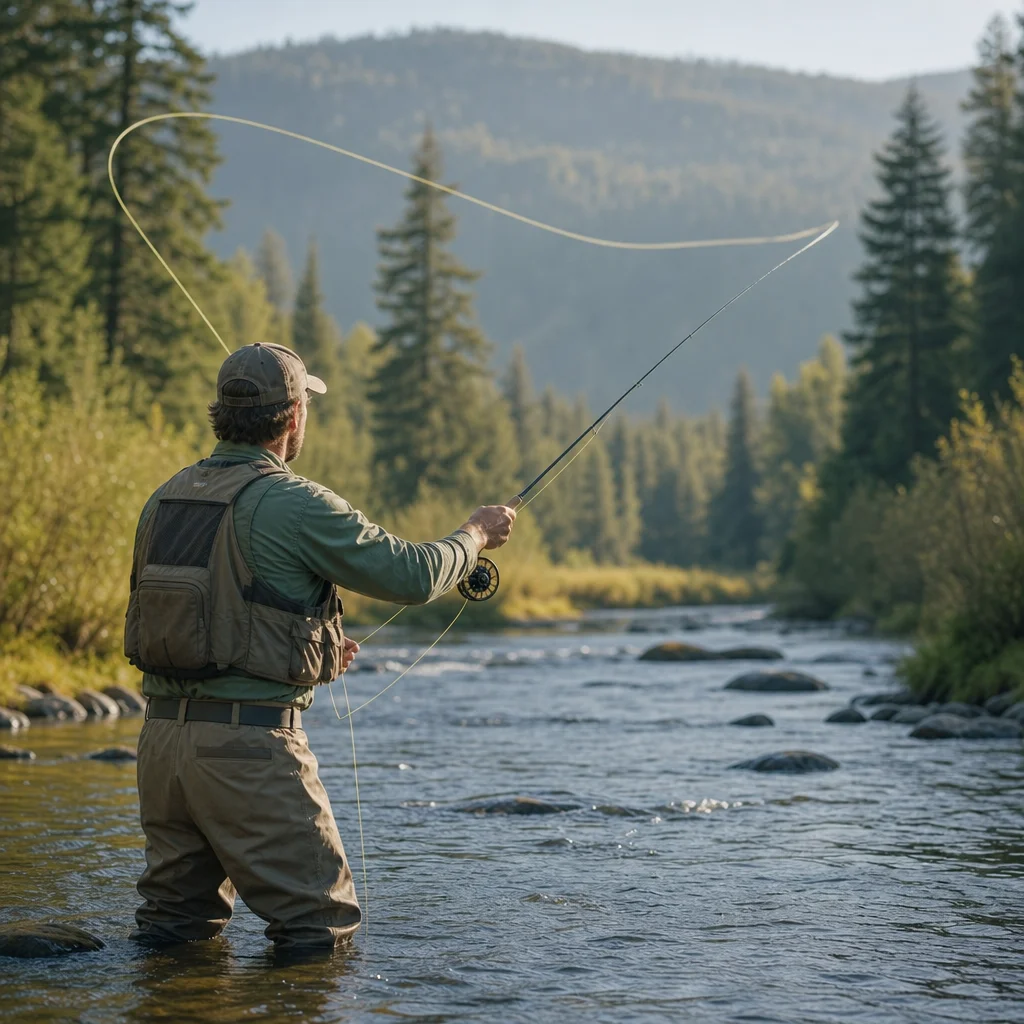
Landing a trout is where a simple catch can become unnecessarily stressful. Dry hands, a dry net, a long pause for photographs, or a rushed grab can remove protective mucus and leave the fish struggling at the worst possible moment.
The preparation takes only a few seconds. Before the trout reaches you, wet your hands, wet the inside of the net, and decide how you’ll remove the hook. Those small steps make the landing calmer for you and less damaging for the fish.
Why wet hands and nets matter
A trout’s slime coat is a layer of mucus covering its skin. It helps protect the fish from abrasion, parasites, and some pathogens. It isn’t armor, and wetting your hands doesn’t make rough handling harmless, but it reduces the amount of protective mucus that dry surfaces can pull away.
Dry skin, towels, gloves, and some net materials can stick to the fish. When you grab a trout with dry hands, the contact can remove more mucus than a brief, gentle hold with wet hands. A dry net can have a similar effect, especially if the fish rolls against it.
Wetting the equipment also gives you better control. A damp rubber net is less likely to catch on a fish’s fins, and a wet hand is less likely to slide unpredictably when you support the trout.
Prepare before the trout arrives
You won’t have much time to organize yourself once the fish is at your feet. Prepare while it’s still under control.
1. Decide where the landing will happen
Choose a calm, shallow spot with enough water to keep the trout supported. Avoid rocks, mud, exposed roots, and steep banks where you’ll need to lift or drag the fish. In a boat or kayak, clear loose gear and make sure you can reach the net without leaning dangerously.
A landing spot should serve both you and the fish. If reaching it requires awkward wading or a long walk along the bank, bring the trout closer only as far as you can do so without exhausting it.
2. Wet your hands
Dip both hands in the same water where you’ll release the trout. Keep them wet until you’re ready to touch the fish. If your hands dry while you’re dealing with the net or hook, wet them again.
Don’t use soap, sunscreen, hand sanitizer, insect repellent, or other chemicals on your hands immediately before handling a trout. Even products that seem mild can contaminate the fish’s water or irritate its sensitive surfaces. If you need sunscreen or repellent, apply it well before fishing and rinse your hands in clean water before handling a fish.
3. Wet the net thoroughly
Submerge the net bag rather than merely splashing the outside. Make sure the mesh is wet throughout, including the bottom and the area where the trout will rest.
A rubber or rubber-coated net is usually easier on fish than coarse knotted mesh because it is less likely to catch scales, fins, and hooks. It also tends to be easier to control during release. That doesn’t excuse dragging a trout across dry ground; a wet net still needs to stay in the water.
If your net has a long handle, keep the bag submerged and positioned in the trout’s path. Avoid chasing the fish around with the net. Guide it calmly, headfirst, into the opening when it is ready to come in.
Check your local handling rules: Regulations may specify whether a net is required, which hooks are permitted, or how a fish must be released. Confirm the current rules for the water you’re fishing, especially if you’re traveling or fishing a managed stream.
Use a calm landing sequence
Once the trout is near you, keep the process short and deliberate.
- Lead the trout toward the submerged net. Keep steady pressure rather than repeatedly jerking the rod.
- Net the fish headfirst. Trout usually move more easily into the net this way. Don’t stab at the fish from behind.
- Keep the net in the water. Lift only as much as needed to control the fish or reach the hook.
- Wet your hands again if necessary. A few seconds in the air can dry them quickly.
- Remove the hook promptly. Use forceps or hemostats suited to the hook size, and avoid squeezing the trout just to keep it still.
- Release the fish in the water. Let it regain balance before allowing it to swim away.
For many trout, you can remove the hook while the fish remains partly submerged in the net. This is often better than lifting it onto the bank for a photograph or a closer look.
Support the trout without overhandling it
When you need to hold a trout, use wet hands and support it horizontally. One hand can support the body beneath the pectoral area, while the other supports the belly and rear portion of the fish. Keep your fingers away from the gills.
Don’t squeeze the fish, hold it by the gill covers, or place fingers into the gill opening. The gills are delicate, and contact there can cause serious injury even when the fish appears calm.
Avoid gripping the trout by the tail and lifting it vertically. A tail grip may be useful for briefly controlling a larger fish in the water, but hanging a trout by its tail puts stress on its body. If you use a tail hold, keep the fish supported and close to the water rather than displaying it at arm’s length.
The best photograph is usually the quickest one. Have your camera ready before lifting the fish, and keep the trout over the water so a slip doesn’t become a fall onto rocks.
Edge cases that change the approach
A deeply hooked trout
If the hook is lodged deep in the throat or gills, don’t keep probing with forceps just to recover the fly. Cutting the line close to the hook may cause less immediate damage than repeated manipulation, although the appropriate choice depends on the hook, the fish, and local rules.
Some waters require particular hook types or prohibit leaving hooks in released fish. Check those requirements before fishing rather than trying to improvise at the landing spot.
A large or exhausted trout
A large trout needs more support and usually more recovery time. Keep it in the water, use a net large enough for its body, and avoid lifting it repeatedly for measurements or photographs. If the fish is tired, hold it facing into gentle, clean current and allow it to regain its balance. Don’t push it back and forth through the water.
If the current is strong, move to quieter water when that can be done safely. Don’t stand in unstable current while trying to revive a fish.
Very cold or warm water
Temperature can affect how much handling and recovery a trout can tolerate. In unusually warm conditions, shorten the landing and release process further, keep the fish submerged, and consider stopping if the trout is repeatedly becoming exhausted. Local fisheries guidance may provide specific advice for seasonal heat or low flows.
In icy conditions, wet hands are still important, but prolonged exposure can make your fingers less reliable. Prepare the net and tools before touching the fish, and avoid letting wet hands freeze against metal equipment.
No net available
A net isn’t always practical, particularly on a small stream. If you’re releasing the trout without one, keep it in shallow water and use wet hands only when necessary. Don’t beach the fish or drag it onto gravel. For larger trout, consider changing your setup so a net is available on future trips.
Common mistakes to prevent
- Wetting the net only after the fish is trapped: Prepare it before the final approach.
- Using a dry towel to hold the trout: Towels can remove mucus and increase abrasion.
- Holding the fish by the gills: Keep all fingers outside the gill covers.
- Removing the fish for every photograph: Many trout can be photographed while partly submerged.
- Spending too long on a stubborn hook: If removal is causing injury, reassess rather than continuing indefinitely.
- Walking around with the fish in the net: Keep the net in the water or move yourself first.
- Assuming wet hands solve everything: Gentle pressure, clean water, short air exposure, and proper support still matter.
A simple landing checklist
Before the trout reaches you, ask yourself:
- Are both hands wet?
- Is the net bag fully wet and in the water?
- Are forceps or hook-removal tools within reach?
- Is the landing spot free of rocks and obstacles?
- Can you remove the hook without lifting the fish?
- If you take a photograph, can you do it in a few seconds?
The goal isn’t to make landing a trout ceremonial. It’s to remove avoidable problems before the fish is vulnerable. Wet your hands, wet the net, keep the trout supported in the water, and have the next step ready. That preparation usually makes the entire encounter quicker, calmer, and kinder to the fish.