How to Reduce Pressure on a Popular Trout Run
Popular trout runs can become crowded, noisy, and surprisingly fragile when anglers repeat the same water. I’ll show you how to rotate productive spots, reduce disturbance, and share limited public water without turning a fishing day into a traffic problem.
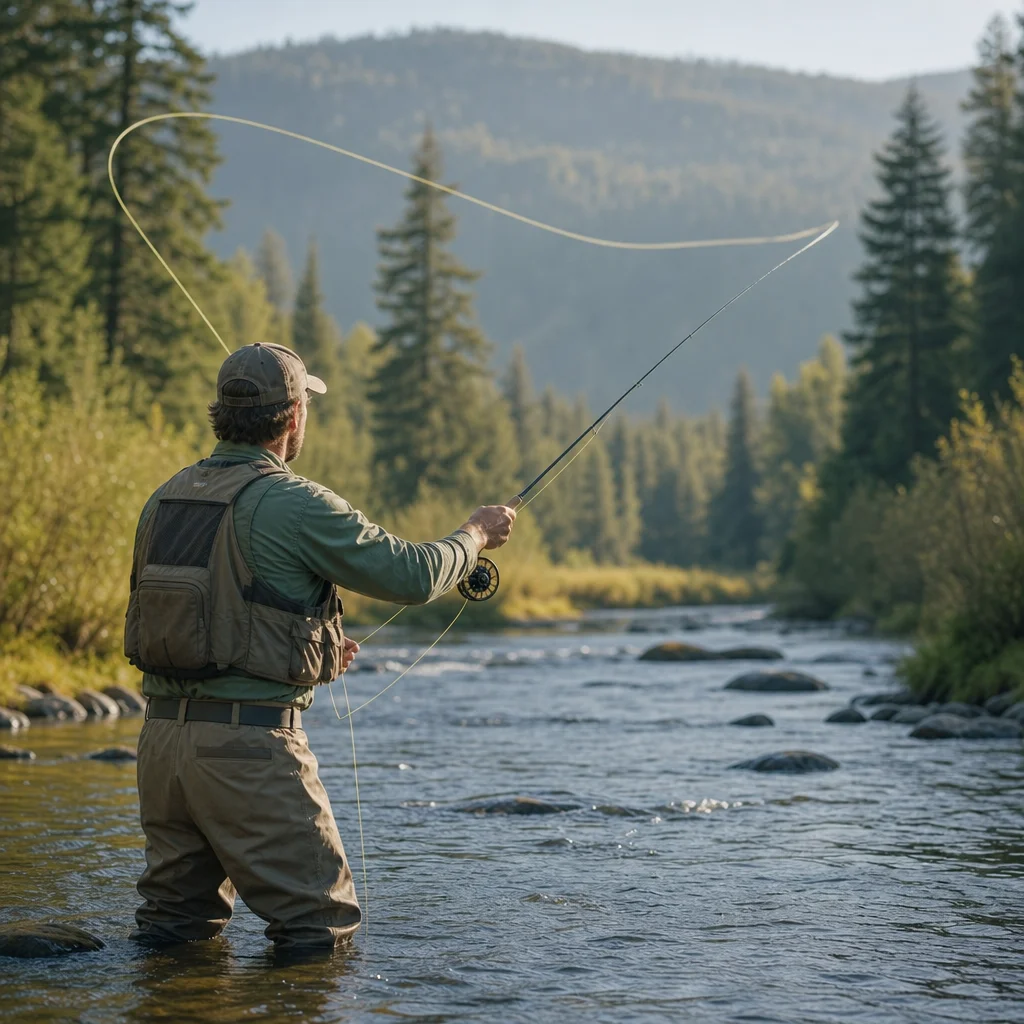
Crowded trout water creates two problems at once: the fish become harder to approach, and anglers can easily interfere with one another. The usual mistakes are rarely dramatic. Someone wades too far, fishes a run for too long, steps into another angler’s line, or returns to the same productive pocket before it has had time to settle.
You can reduce that pressure without giving up good fishing. The key is to treat a popular run as a shared, changeable resource rather than a single piece of water that must be claimed and exhausted.
Start by understanding what “pressure” means
Fishing pressure isn’t only the number of hooks in the water. Trout also respond to repeated wading, shadows, movement on the bank, falling gear, displaced rocks, and fish being caught and released in the same small area.
Pressure can affect anglers, too. A crowded run encourages rushed decisions and poor spacing. People cast over one another, move unpredictably, and feel compelled to stay in place because leaving may mean losing their opportunity.
Reducing pressure therefore has three parts:
- Give trout time and space to settle.
- Limit how much habitat you disturb while fishing.
- Make your movements predictable to the anglers around you.
These goals usually support one another. A quieter approach helps the fish, while a clear rotation helps everyone understand where the next opportunity will come from.
Divide the water into manageable sections
A popular run is easier to share when you stop thinking of it as one indivisible spot. Break it into sections based on current seams, depth changes, structure, and casting angles.
For example, a long run might include:
- The shallow entry riffle.
- The main seam along the bank.
- A deeper center trough.
- The tailout below the pool.
- A bank-side pocket that can be reached without wading.
Treat each section as a separate opportunity. Fish one area thoroughly enough to learn from it, then move rather than repeatedly covering the same few yards. This prevents the common mistake of standing in the most comfortable position and casting to the most visible fish until both the trout and nearby anglers have had enough.
You don’t need to divide the river with perfect precision. The purpose is simply to create a mental map that makes rotation possible.
Use a rotation instead of defending a position
On a crowded river, rotation is usually fairer than trying to hold a favorite lie indefinitely. A simple rotation might mean starting at the head of a run, taking a few careful casts, and moving downstream or out of the way so another angler can work through.
The exact distance or number of casts depends on the water and local custom. What matters is that your progress is understandable. Move at a steady pace, and avoid leapfrogging someone who is already working through the same section.
If anglers are waiting, acknowledge them. A brief “I’ll work through this section and move on” can prevent uncertainty. If someone arrives behind you and seems unsure of the local pattern, explain your intended direction rather than silently occupying the best water.
A rotation works poorly when one person moves several hundred yards while another claims a pool for an hour. It also fails when anglers move in opposite directions without communicating. Before entering a run, look for the pattern already in use and follow it when possible.
Don’t crowd the angler in front of you
A useful rule is to leave enough water between anglers that the person ahead can fish without feeling hurried. The right spacing depends on the river, the casting style, and whether anglers are moving or holding positions.
Watch the angler’s progress before stepping in. If they’re covering water downstream, wait until they’ve created a clear gap. If they’re stationary and focused on a particular lie, choose a different section rather than casting close beside them.
Avoid crossing another angler’s line or wading through the water they intend to fish. Even if you believe the fish have already seen your fly, the other angler may be working a specific drift, depth, or angle that you can’t see from behind.
When bank access is narrow, give extra consideration to anglers who are already in the water. Walking behind someone can be less disruptive than passing in front of them, but only if the bank is stable and you aren’t brushing through vegetation or dislodging loose material.
Let rested water actually rest
A productive lie can remain occupied in your mind long after you’ve finished fishing it. Returning immediately is one of the easiest ways to add unnecessary pressure.
Instead, mark the location mentally and move to a different section, walk to another run, or take a break. Resting water doesn’t guarantee that trout will become catchable, but it does remove repeated disturbance from the equation.
The same principle applies after landing a fish. Keep the release efficient, step away from the immediate holding water when practical, and avoid repeatedly targeting the same fish simply because you know where it is. A visible trout isn't automatically an invitation to make every available cast.
Resting a run can also improve your fishing decisions. When you return later, you may approach from a better angle, use a smaller pattern, or discover that the fish have shifted with changing light and current.
Minimize wading and protect the bottom
Wading is sometimes necessary, but it should solve a specific problem rather than become the default way to reach every cast. Start from the bank when conditions allow, and use the shallowest route that gives you a workable position.
Repeatedly crossing a run can disturb holding lies and dislodge aquatic insects. It can also increase the risk of slipping, especially when water levels or footing change. Move slowly, keep your balance, and avoid stepping on visible gravel beds or areas that appear to support spawning activity.
Check the local water rules: Before fishing a heavily visited river, confirm current regulations for seasonal closures, spawning areas, wading restrictions, bait or fly requirements, access points, and artificial-lure rules with the relevant fish-and-wildlife agency or land manager. These details vary by location and can change.
If you must cross, do it once and plan your route. Don’t wade back and forth merely to follow a fish or reach a slightly better casting angle. A modest increase in casting skill often creates less disturbance than another trip across the river.
Reduce disturbance from your approach
Trout in popular water often become alert to movement before they respond to a fly. Keep your profile low when approaching shallow runs, avoid unnecessary bank noise, and use available cover. Bright clothing isn’t automatically a problem, but sudden movement is usually more important than color.
Organize your equipment before stepping into the run. Loose line, dropped forceps, and repeated trips to a vehicle create noise and movement that can affect both fish and people. Carry only what you expect to use, and secure tools where they’re easy to reach.
If you’re fishing with a group, spread out rather than moving as a cluster. One person approaching the water at a time can be less disruptive than several anglers wading in together.
Choose methods that fit the crowd
Crowded water rewards control more than spectacle. A shorter cast with a clean drift is often less disruptive than repeated long casts that land heavily or cross multiple lanes.
Adjust your method to reduce false casts and line disturbance. Position yourself so you can mend without sweeping line across another angler’s water. If overhead casting is unsafe or impractical, a roll cast or a controlled short presentation may be more considerate.
Fly selection matters as well, but it shouldn’t become a race to use the smallest possible pattern. Choose a presentation you can control and see well enough to detect a take. Poorly controlled casts lead to more snags, more wading, and more disturbance.
When a run is busy, consider fishing less obvious water: the edge of a riffle, a shaded bank, a small pocket, or a transition below the main pool. These areas may hold fish and usually attract less competition than the spot everyone can identify from the parking area.
Handle fish efficiently in shared water
A fish being played in a popular run affects every angler nearby. Keep the fight controlled without unnecessarily extending it, and move to a safe edge or shallow margin when possible. Don’t drag a fish through someone else’s line or hold it in the main current while deciding where to take a photograph.
Wet your hands before touching the fish, keep it close to the water, and support it without squeezing. Remove the hook promptly with appropriate tools. If the fish is deeply hooked or appears exhausted, follow local guidance for the most responsible response rather than repeatedly handling it for a better picture.
After release, give the fish time to recover in suitable current. Then clear the landing area so the next angler can continue without stepping around you.
Recognize when leaving is the better choice
Some popular runs are simply too crowded to fish responsibly at a particular moment. If anglers are packed into every section, bank access is deteriorating, or people are arguing over position, forcing your way in rarely improves the day.
Walk farther, change your target water, or return during a quieter period. Early or late access may be useful, but timing depends on local rules, safety, land access, and conditions. Don’t enter closed areas or fish at times when visibility and footing make the risk unreasonable.
Leaving can also protect a place from cumulative damage. A heavily visited access point may need recovery from trampling, litter, and repeated wading. Choosing a less-used location spreads pressure across more water only when that alternative can legally and responsibly handle additional use.
A simple pressure-reduction checklist
Before entering a busy trout run, ask yourself:
- Which section will I fish first?
- What direction are other anglers moving?
- Where can I stand without crossing another person’s water?
- Can I reach this lie without wading?
- How will I rotate or make room?
- Where will I land and release a fish safely?
- What will make me leave this run and try another one?
The goal isn’t to eliminate every sign of human presence. Popular public rivers will always involve shared space and some disturbance. The goal is to prevent avoidable pressure: unnecessary crossings, prolonged occupation, unpredictable movement, and repeated attention on the same small group of fish.
Choose a section, fish it with purpose, communicate your movement, and give the water time to settle. Those habits make crowded trout runs more productive, safer to navigate, and considerably more pleasant for everyone standing beside them.