How to Plan a Trout Trip When Wildfire Smoke Is in the Forecast
Wildfire smoke can change a trout trip through air quality, heat, visibility, roads, and closures—not just fish activity. I’ll show you how to connect those checks into a minimalist go/no-go plan with realistic backup options.
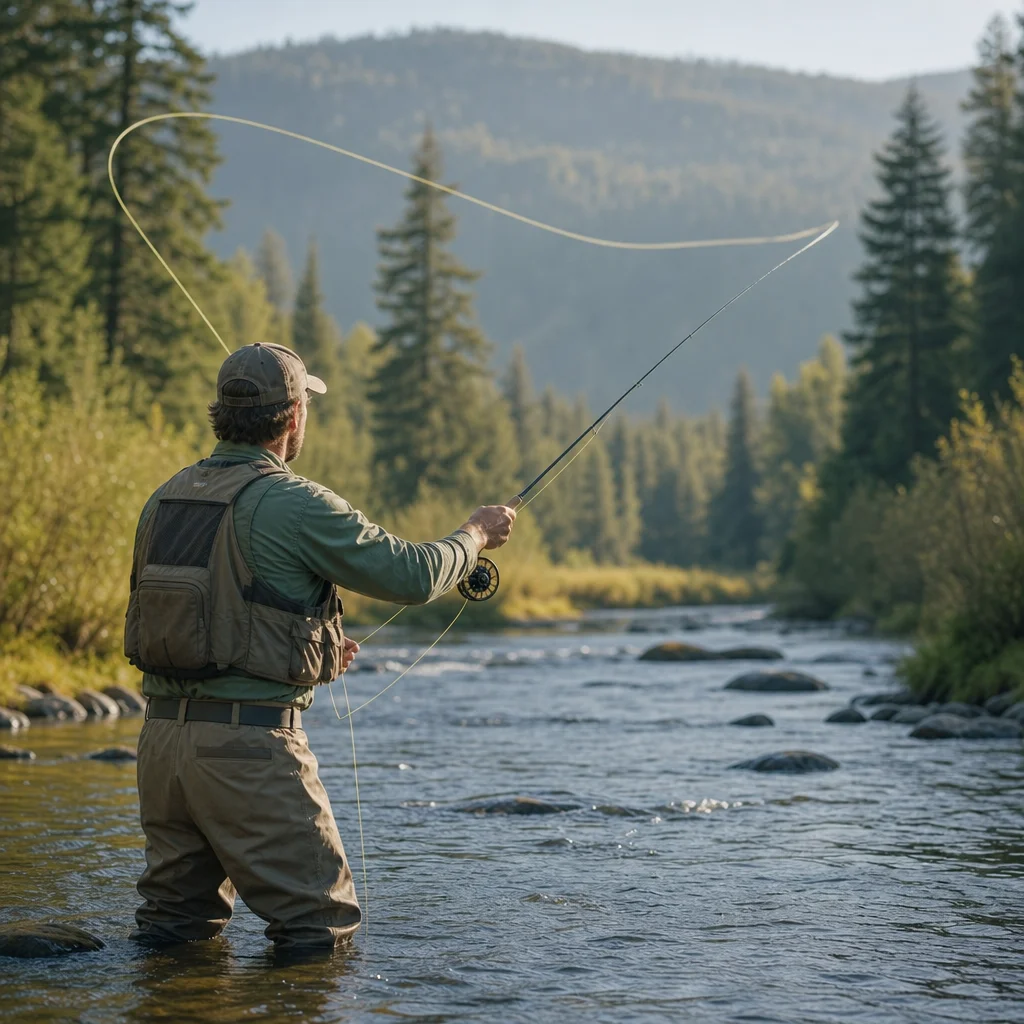
Smoke in the forecast doesn’t automatically cancel a trout trip, but it does change the decision. A destination that looks reasonable on a map may have unhealthy air, a closed access road, poor visibility, extreme heat, or no safe way out if conditions worsen.
The simplest approach is to treat the trip as a chain of dependencies. Check the air, the route, the regulations, the weather, and your fallback plan in that order. If one link fails, you should be willing to change destinations or stay home.
Start with the air, not the fishing report
Wildfire smoke can vary sharply over a few miles and from one hour to the next. A forecast for the nearest town may not describe conditions in a canyon, at a higher elevation, or downwind of an active fire. Smoke can also settle overnight in valleys and improve temporarily during the afternoon before returning later.
Check both the current reading and the forecast for the exact community or area closest to your fishing access. In the United States, AirNow and the relevant state or local air-quality agency are useful starting points. In Canada, check the applicable provincial or territorial air-quality service. Official wildfire dashboards can help explain why the air is changing, but an air-quality reading is more useful for deciding whether your group should be outside.
Use the air-quality index as a screening tool rather than a permission slip. The color category, the pollutant involved, the duration of exposure, and the people in your group all matter. Children, older adults, pregnant people, and anyone with asthma, heart disease, or other respiratory or cardiovascular conditions may need a more conservative plan. If someone develops coughing, wheezing, chest tightness, unusual fatigue, dizziness, or trouble breathing, leave the smoky area and seek appropriate medical help.
Check the air before you load the rods: Compare the current and forecast air-quality categories at the fishing area, your overnight stop, and the route between them. Recheck them on the morning you leave and before starting a longer hike.
A good minimalist rule is to avoid building a family outing around a borderline forecast. You may be able to fish briefly in light smoke, but a full day beside the water is a different exposure than a short stop. If the forecast is deteriorating, make the trip shorter or choose an indoor or low-exposure alternative.
Confirm the fire and road situation
Air quality tells you about exposure. It doesn't tell you whether you can safely reach the river.
Look for current information from the agency managing the land, the local sheriff or emergency-management office, the state or provincial transportation department, and the relevant fire agency. Check the actual road or trail, not just the name of the nearby forest or town. A fire may be many miles away while a road is closed because of evacuation zones, falling trees, firefighting traffic, flooding after suppression work, or the risk of renewed fire activity.
Pay attention to the difference between a closure, an evacuation warning, and a general advisory. They don't mean the same thing, and boundaries can change. Don't drive around a gate, enter a closed area, or assume that a familiar access point is open because another entrance to the river is available.
Road information deserves a second check because online map apps can lag behind official notices. Save the phone numbers or websites for the transportation and land-management agencies before you leave. Cell service may disappear near the water.
Visibility is part of the road decision. Smoke can obscure curves, wildlife, cyclists, signs, and stopped vehicles. If you’re towing a trailer, driving a narrow mountain road, or traveling with children who may need frequent stops, poor visibility can turn a marginal route into an unreasonable one. Headlights can help you be seen, but they don’t make an obscured road safe to drive quickly.
Add heat to the smoke assessment
Smoke and heat create a more demanding day than either condition suggests on its own. Warm weather increases dehydration risk and can make wading, hiking, and carrying equipment more tiring. It can also make the water less suitable for trout, even when the air looks clear at the stream.
Check the forecast for air temperature, overnight lows, wind, and the timing of the hottest part of the day. A shaded canyon may feel comfortable at the parking area while an exposed trail becomes difficult later. Plan around the least comfortable part of the outing, not the cool temperature you expect at dawn.
For a smoke-affected trip, pack less fishing equipment but more basic support: sufficient drinking water, sun protection, extra food, a small first-aid kit, and a way to communicate or navigate if the route changes. A lightweight mask designed for particulate filtration may reduce inhaled smoke for some people, but it isn’t a substitute for leaving unhealthy air. Fit, local guidance, and the wearer’s health matter.
Never make a family member keep fishing because the vehicle is far away or the day’s permit, reservation, or travel cost feels wasted. A short walk back to the car is preferable to turning discomfort into an emergency.
Decide whether the water is worth the trip
Once air, roads, and heat look acceptable, evaluate the fishing itself. Smoke can reduce visibility for you, but the more important question is whether the stream is under additional stress from warm water, low flows, or recent fire impacts.
Check current streamflow and water-temperature information when it’s available. Local fisheries agencies, river gauges, fly shops, and land managers may have useful updates, but treat informal reports as supplemental. In warm conditions, trout can be vulnerable even when they are still willing to take a fly. Avoid extended fights, heavy handling, and repeated casting to the same fish when conditions are stressful.
Fire can also affect access after the visible smoke clears. Burned slopes may shed ash, mud, and debris during rain. Trails can be unstable, and stream conditions can change quickly below recently burned areas. If the water looks unusually silty, smells contaminated, or carries floating debris, choose another activity and consult local authorities rather than guessing.
The minimalist choice may be a short, early outing on familiar water near your lodging. That reduces driving, keeps the exit simple, and limits the amount of gear and exposure you need to manage.
Build a backup plan with a real trigger
“Try somewhere else” isn’t much of a backup plan unless you decide where, how far, and under what conditions you’ll switch.
Choose one nearby alternative that has a different smoke or weather outlook, not merely another access point in the same valley. Confirm that it’s open, legal to fish, appropriate for your group, and reachable without passing through a closure or evacuation area. A pond, short riverside walk, museum, scenic drive outside the affected area, or family picnic can be a better fallback than forcing a difficult fishing day.
Set a departure-time decision and a second decision point during the day. For example, you might agree that worsening air quality, a new road notice, reduced visibility, or heat-related symptoms means you stop fishing and leave. The exact thresholds should follow current official guidance and the needs of your group; the important part is deciding while everyone is calm and the route is still clear.
Verify the route before committing: On departure morning, check the latest closure and evacuation notices, transportation updates, fire perimeter information, and weather along the entire route. Don’t rely on yesterday’s map screenshot or a social-media post.
Tell someone outside the group where you’re going, which access point you expect to use, and when you plan to return. If you change destinations, update that person. Carry offline maps, keep the fuel tank comfortably above empty, and don’t count on a charging point or mobile signal at a remote trailhead.
A compact smoke-trip checklist
Before leaving, confirm these essentials:
- Current and forecast air quality at the destination and overnight location
- Fire, evacuation, closure, and road information from official sources
- Visibility and weather for the driving route
- Heat, wind, and water conditions at the planned fishing time
- A nearby alternative with a different risk profile
- Water, food, sun protection, basic first aid, and navigation tools
- A departure time and clear reasons to cancel or leave
- A person at home who knows the itinerary
If several items are uncertain, the trip is no longer minimalist. You’re carrying the extra complexity of a changing emergency environment, and that may not be a sensible trade for a day of fishing.
Make the decision early
A successful smoke-season trout trip may involve fishing fewer hours, driving less, or not fishing at all. That isn’t wasted planning. Checking air quality, road access, heat, closures, and backup options gives you a way to make a calm decision before your group is tired, committed, or standing beside unsafe water.
Recheck official conditions before departure, keep the plan flexible, and choose the simplest outing that leaves everyone with an easy way home. The trout can wait for clearer air.