How Many of Each Fly Pattern Belong in a Working Fly Box
A crowded fly box can still leave you short on the one size that matters. I’ll show you how to balance loss risk, local conditions, hook sizes, and dependable backup patterns without carrying a small tackle shop.
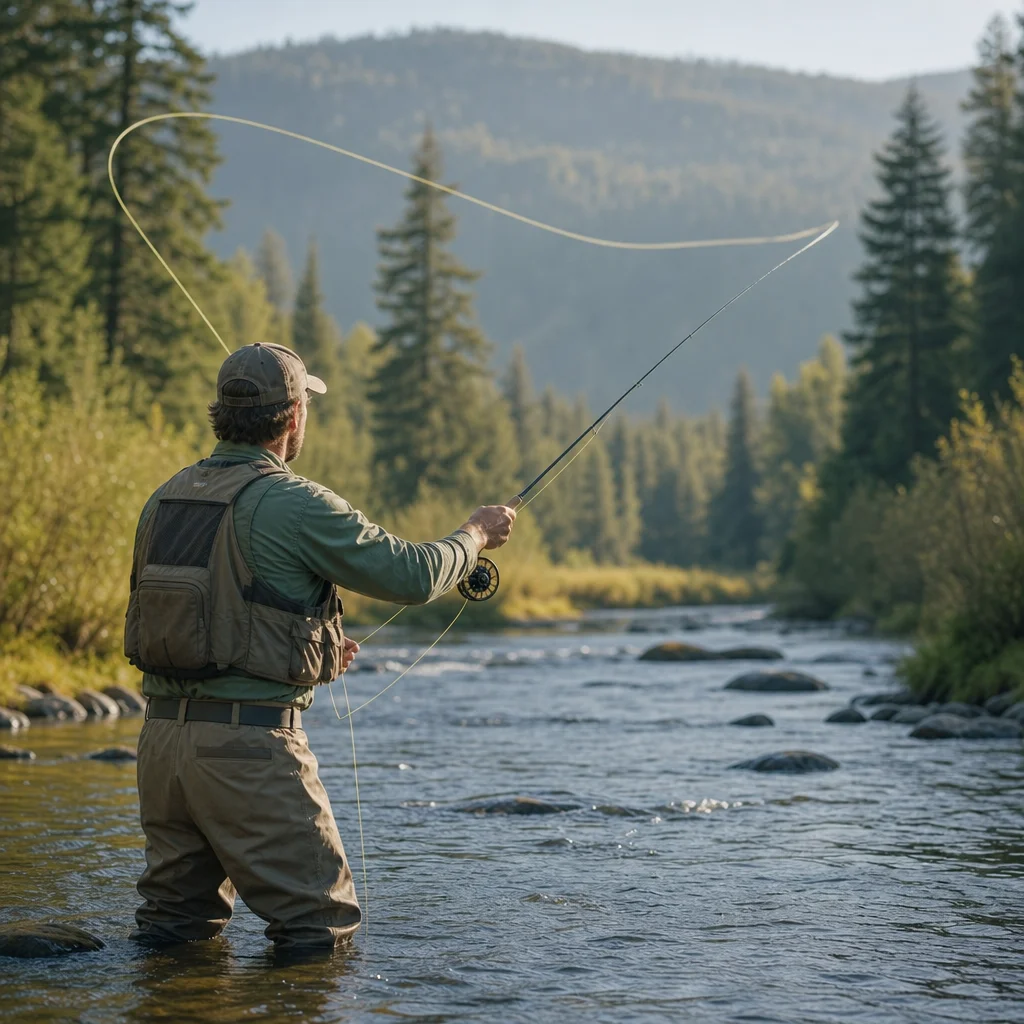
You can own dozens of fly patterns and still discover, at the stream, that you have only one useful nymph in the right size. The opposite problem is just as common: several rows of flies that look different in the box but perform nearly the same job.
A working fly box should give you enough coverage to fish confidently without turning every outing into a packing exercise. The right number of each pattern depends less on tradition or superstition than on four practical questions:
- How likely are you to lose the fly?
- How often does that pattern match the water and season you fish?
- How many hook sizes do you need?
- Does another pattern provide a reliable backup?
Start with roles, not pattern names
Before deciding whether you need two, four, or eight of a pattern, identify what that fly does. A pattern may be an attractor, a hatch imitation, a searching nymph, an anchor fly, an emerger, or a dry-fly indicator-style point fly. Its role tells you more about the appropriate quantity than its name does.
For example, a durable bead-head nymph used as the bottom fly in a two-fly rig may deserve a larger reserve than a delicate dry fly used only during a short evening hatch. The nymph may catch fish consistently, but it also spends more time near rocks, branches, and snags. The dry may be more fragile, yet you might cast it less often and lose fewer of them.
A useful working box usually contains three levels of importance:
- Primary patterns: flies you expect to use regularly in the conditions you’re targeting.
- Backup patterns: flies that solve a similar problem when the first choice fails.
- Specialty patterns: flies for less common conditions, unusual water, or a specific hatch.
Quantity should rise from the third group toward the first. Specialty flies are often best kept in small numbers, while primary patterns need enough depth to survive a full day or several outings.
Use a simple quantity range
For most patterns, start with a range rather than a fixed rule. A practical baseline looks like this:
| Pattern role | Suggested starting quantity per size | Why |
|---|---|---|
| Frequent-use searching nymph | 4–6 | High use and moderate loss risk |
| Common dry fly | 3–5 | Regular use, but often easier to protect from snags |
| Delicate emerger or adult imitation | 2–4 | More specialized and often fragile |
| Heavy stonefly or anchor fly | 4–6 | Used often and exposed to the bottom |
| Specialty or rare-condition fly | 1–3 | Limited opportunity to use it |
| Proven emergency backup | 2–4 | Valuable when a primary pattern stops working |
These numbers are starting points, not commandments. If you fish a tight, brushy stream where flies disappear into branches, five may be the minimum for a primary dry. If you fish open water with few snags and change flies carefully, three may last a long time.
The important distinction is between quantity per pattern and quantity per pattern and size. Six flies in mixed sizes may look adequate, but they don’t give you six options when the fish are taking a particular size. Count each important size separately.
Treat hook size as its own decision
A pattern name doesn’t fully describe a fly. Hook size, body profile, weight, and color can all change how it fishes. For stocking purposes, a size 12 hare’s-ear nymph and a size 18 hare’s-ear nymph should usually be treated as different tools.
You don’t need every size sold for every pattern. Instead, select the sizes that match the water you actually fish. A useful approach is to assign each pattern a primary size and, when conditions justify it, one adjacent size.
For example:
- A common mayfly nymph might earn sizes 14 and 18.
- A general caddis pupa might earn sizes 12 and 16.
- A blue-winged olive dry might earn sizes 18 and 20.
- A stonefly nymph might earn sizes 6 and 10.
You may need three sizes when your region has especially wide seasonal variation, but adding sizes quickly multiplies the number of flies you need. Two patterns in three sizes at four flies each already require 24 flies. That may be sensible for a core group, but it’s wasteful for every pattern in the box.
When uncertain, stock more depth in the size you use most and keep fewer examples of the less common size. A 4-2 split is often more useful than a 3-3 split when one size clearly dominates your fishing.
Adjust for loss risk
Loss risk is one of the strongest arguments for carrying multiples. Flies used near the bottom, around woody cover, or with a long leader through tight pockets tend to disappear more often than flies drifted over open water.
Consider increasing your quantity when a pattern is:
- Weighted and regularly fished near the streambed
- Tied on a fragile hook or with easily damaged materials
- Used around submerged branches, weeds, or rocks
- Frequently attached to a lighter tippet
- Difficult to replace with a similar fly
- Essential to a rig that you fish for long periods
You don’t necessarily need more of every high-risk fly. Give priority to flies that are both easy to lose and hard to replace. If a generic nymph can substitute for your favorite pattern, you may be better served by carrying a few of each rather than ten of one.
Durability matters, too. A well-glued, robust fly may last through several fish, while a delicate pattern can become unusable after one take. Inspect flies after catching fish, especially when foam, CDC, fine hackle, or thread bodies are involved. Replacing damaged flies before they reach the stream is cheaper and less frustrating than discovering the shortage beside the water.
Build around local conditions
A fly box for small spring creeks shouldn't be stocked like one for large rivers, stillwaters, or high-gradient mountain streams. The conditions you encounter determine both the patterns you need and how many variations are justified.
Ask yourself:
- Which insects or forage types appear most often where you fish?
- Do you usually fish clear, low water or stained, high water?
- Are your typical sessions short and hatch-focused, or long and exploratory?
- Do you fish mainly from the bank, a boat, or while wading?
- Are snags and brush a constant problem?
If one hatch dominates your local fishing, it makes sense to carry more sizes and a few more copies of its important patterns. If you mostly fish changing conditions, invest in versatile patterns that cover several situations.
For example, a general-purpose nymph with a natural profile may work during multiple seasons and serve as a backup for several hatch-specific flies. A simple dark dry may cover more situations than a collection of narrowly matched color variations. The goal isn’t to imitate every possibility equally; it’s to carry enough options for the conditions you’re likely to meet.
Give backup patterns a defined job
A backup pattern earns its place when you know what problem it solves. “It looks useful” isn’t quite enough. Write the connection in your own notes or remember it as a simple pairing:
- If the fish refuse a slim mayfly nymph, try a darker, more heavily weighted searching nymph.
- If a high-floating dry gets ignored, switch to a smaller emerger or a lower-profile imitation.
- If a hatch-specific fly is gone, use a similar size and silhouette in a more durable pattern.
- If the water rises and visibility drops, move from a subtle imitation to a larger or more visible option.
A dependable backup doesn’t have to be visually similar. It may work because it changes the presentation, depth, contrast, or movement. That makes one backup pattern potentially more valuable than several minor variations of the same fly.
For each primary pattern, aim for one practical backup before adding a third or fourth alternative. This keeps your box flexible without filling it with redundant choices.
Use a box structure that limits overstocking
Separate your inventory into a core box, a seasonal box, and a reserve if your collection has grown large.
Core box
Carry the patterns and sizes you use on most outings. Stock these more deeply—often four to six per important size—because they do the daily work.
Seasonal box
Keep flies tied to a particular hatch, water level, or time of year here. Two to four per size is often enough until your fishing history shows that a pattern deserves promotion to the core box.
Reserve
Store extras at home or in a larger vehicle kit. This prevents your stream-side box from becoming overloaded while ensuring that a productive pattern can be replenished.
Labeling compartments by pattern and size can expose gaps immediately. It also prevents a familiar fly from quietly consuming space in four colors and five sizes when one or two versions would cover most of your fishing.
Review what you actually use
After each outing, make a brief note of patterns you used, lost, damaged, or wished you had. You don’t need a complicated spreadsheet. A few marks on a phone note or box card will reveal useful trends after several trips.
Promote a pattern when you repeatedly run short of it. Reduce its quantity when it returns untouched season after season. Keep at least a small number of underused specialty flies if they serve a real local purpose, but don’t confuse familiarity with usefulness.
A good restocking rule is to replace flies that fall below your minimum rather than automatically refilling every compartment to the same number. Your minimum might be two for a specialty pattern, three for a common dry, and five for a high-use nymph. This creates a box shaped by your fishing rather than by empty space.
A practical starting checklist
For each pattern you’re considering, decide:
- What role does it fill?
- Which one or two hook sizes matter most?
- How often will I likely use it?
- How easy is it to lose or damage?
- What is its dependable backup?
- Can another pattern already in the box do the same job?
Then stock the most important size first. Add a second size only when local conditions or past outings justify it. Add more copies when use and loss risk are both high, not simply because the pattern is popular.
A working fly box doesn’t need every pattern you might encounter. It needs enough of the right tools to handle your usual water, plus a few sensible alternatives when conditions change. Start with four to six copies of core flies, two to four of specialized or backup patterns, and adjust those numbers as your own loss and usage records provide better evidence. That approach keeps the box ready without asking you to carry every trout’s possible opinion.