How Can You Protect Trout Habitat While Fishing Around Stream Improvement Work?
I’ll compare the choices you face when fishing near stream restoration, from staying outside a work zone to moving downstream, so you can protect new habitat, avoid unstable banks, and check whether temporary access rules change where you may cast.
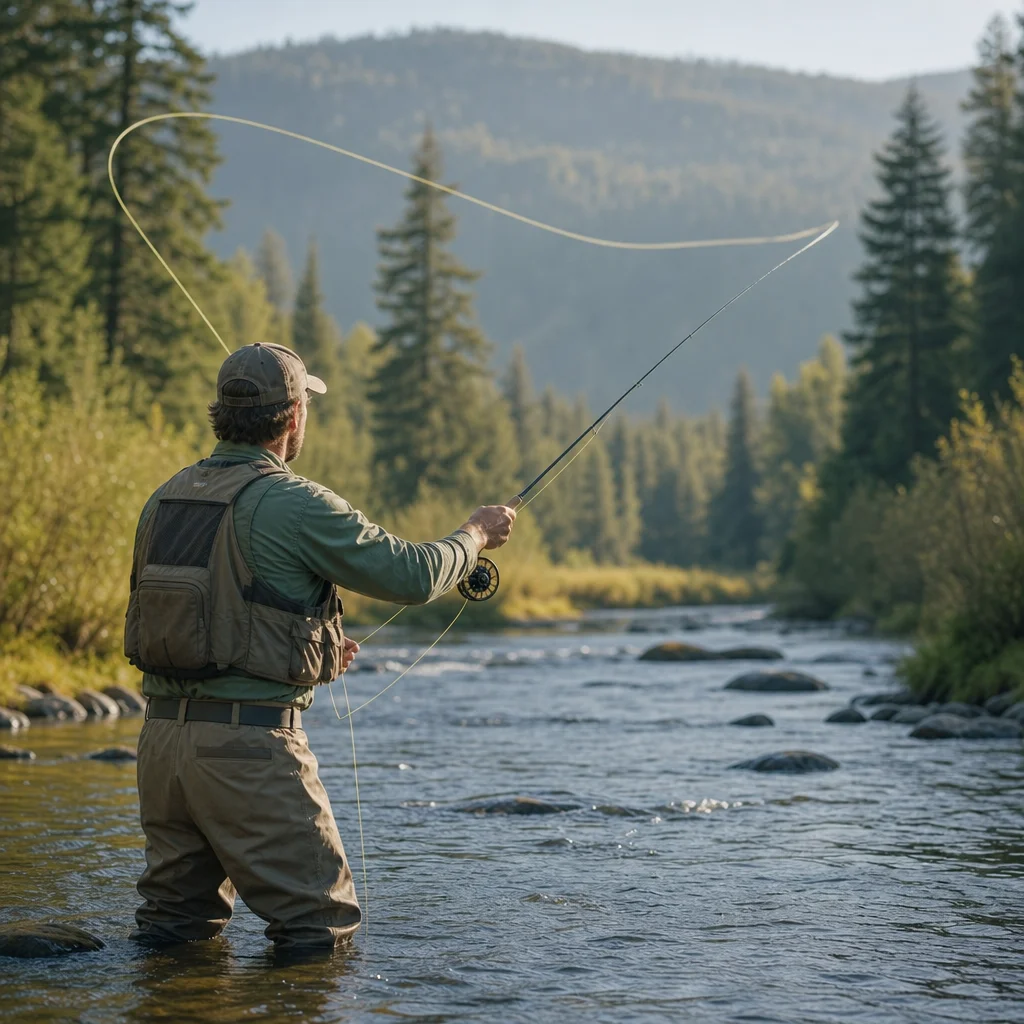
Stream improvement work can make a familiar trout stream look temporarily inconvenient: bare soil, equipment tracks, fresh plantings, tree bundles, rock structures, or signs directing anglers away from a favorite run. The temptation is to step around the disturbance and fish as usual. That’s often where the greatest damage happens.
Your best choice is usually not simply “fish” or “don’t fish.” It’s deciding how close you can reasonably get, which parts of the bank and channel are vulnerable, and whether the project has changed the rules for access. A few minutes spent assessing the site can protect work that took months of planning while still leaving you with productive water to fish.
Start by identifying the actual work zone
Stream improvement projects vary widely. Some stabilize eroding banks or replace undersized culverts. Others add woody habitat, reconnect floodplains, restore streamside vegetation, or reshape a channel. The visible work may be limited to one bank, but equipment access and planting areas can extend well beyond the water’s edge.
Look for signs such as:
- Temporary fencing, orange construction netting, stakes, flagging, or rope
- Posted notices from a state agency, county, municipality, conservation district, or landowner
- Freshly graded soil or exposed roots
- Newly planted trees, shrubs, plugs, or protective tubes
- Rock vanes, log structures, brush bundles, or other features placed in the channel
- Heavy equipment, tire tracks, staging areas, or piles of stone and woody material
- Freshly seeded ground covered with straw, erosion-control fabric, or wattles
- Closed gates, blocked paths, or signs directing visitors to another access point
Don’t assume that an area without a sign is open to wading. A project may be marked at the main entrance but not at every sensitive planting area. Likewise, a line of flagging can mark a work boundary rather than a general invitation to step over it.
Choose between the main fishing approaches
The practical trade-off is between convenience, fishing quality, and the chance of harming the project. You’ll usually have four options.
Fish outside the marked zone
This is often the best compromise when the project occupies only part of the reach. Stay on established paths, keep your feet out of planted areas, and cast from ground that is firm and clearly intended for access.
Fishing from outside the work area can still disturb a stream if your casting position causes repeated trips through fresh soil or forces you to brush against plantings. Pick one stable position and make the most of it rather than moving constantly along a fragile bank.
Fish the water but avoid the improved bank
Sometimes the far bank or an unaffected side channel remains accessible. This option requires careful attention to your route. A healthy-looking bank can still be soft after grading, and a newly installed structure may be designed to redirect current in ways that make nearby footing unpredictable.
If reaching the water requires climbing over a planted bank, walking through a seeded buffer, or crossing a construction entrance, the route isn’t truly low impact. Find another entry point or choose a different section.
Move to an adjacent reach
Moving a short distance is often the most resource-efficient decision. You avoid damaging restoration work, reduce your own risk around unstable ground, and may find trout responding to water that receives less pressure.
Look for a continuous public access route rather than creating a new path. If the next reach is private, posted, or managed under different regulations, treat it as a separate access decision. A stream can cross several ownerships and jurisdictions within a short walk.
Skip the site for now
A temporary closure is a clear reason to leave, but you may also decide to leave when the site is technically open yet physically unsafe or unusually vulnerable. Fresh banks, active machinery, high water, and incomplete structures are poor conditions for casual exploration.
Restoration work is meant to improve the stream over time. Giving a site room during its most delicate stage is a useful conservation choice, even when no one is standing there to enforce it.
Check today’s access details: Before you wade or walk beyond the obvious trail, read every project sign and confirm current restrictions with the managing agency, landowner, or posted contact. Temporary closures, permitted entry, and fishing rules can differ by project and may change as construction progresses.
Protect the bank before you protect your fishing position
Many anglers focus on avoiding the water structures and overlook the bank itself. That’s a mistake because freshly graded soil, new plantings, and erosion-control materials can be damaged by a single shortcut repeated by many visitors.
Stay on durable surfaces
Use established trails, rock, gravel, mature sod, or other firm surfaces. Avoid bare soil that crumbles under your boots, even if it appears to be a convenient path to the pool. Don’t walk on straw mats, coir logs, erosion-control blankets, or planted terraces unless a sign specifically identifies them as a path.
Keep your approach as short as practical. A narrow route used once is less harmful than a wandering line that creates several informal trails between the parking area and the stream.
Give new plantings wide space
Young trees and shrubs can be easy to miss, especially when they are small stakes, tubes, or clusters of low vegetation. Don’t use protective tubes as handholds, place a rod against them, or step between plants to reach a casting lane.
Plant roots also need time to establish. Even when a plant looks insignificant, the surrounding soil may have been prepared specifically to reduce erosion. Treat the entire planted strip as off-limits unless the project provides a designated path through it.
Don’t rearrange project materials
Logs, rock, brush bundles, and other structures aren't obstacles for anglers to move. They’re part of the design, and shifting one can change current direction, expose a bank, or undermine adjacent material. Leave stakes, flags, fencing, irrigation lines, and protective devices in place as well.
If a branch blocks a trail, go around it where possible rather than dragging it into the channel. Report damaged structures or hazards to the contact listed on the project sign.
Minimize wading near restored habitat
Wading can be appropriate in some streams, but the timing and location matter. Newly placed gravel, shallow riffles, and reconnected side channels may be especially vulnerable to repeated foot traffic. Trout eggs and other aquatic life can also occupy gravel beds that look like ordinary walking surfaces.
When you must wade in an open area, plan your route before entering the water. Cross once at the narrowest practical point, avoid shallow spawning-looking gravel, and don’t walk through areas where fish are actively spawning or where signs request no entry. Keep your movement slow and deliberate rather than shuffling through a broad section of stream.
A long rod, careful positioning, and casting from the bank can often replace several unnecessary crossings. If the only way to fish a pool requires repeated wading through a restored riffle, choose another pool or another reach.
Handle trout carefully around disturbed water
Construction can change current speed, depth, and escape cover. Trout may be concentrated in a small area, and landing a fish beside a fresh bank can pull you into unstable ground or force the fish onto abrasive material.
Use tackle strong enough to bring the fish in without an unnecessarily long fight. Keep the fish in the water whenever possible, wet your hands before touching it, and avoid dragging it across gravel, soil, or vegetation. If the bank is unstable, don’t pursue a fish into a dangerous position just to take a photograph.
A net can help when used thoughtfully, but it isn’t a reason to stand in sensitive habitat. Land the fish from firm footing, support it in the water while removing the hook, and release it facing into gentle current. If conditions make responsible handling difficult, stop fishing that spot.
Balance curiosity with project goals
Restoration sites naturally attract attention. You may want to inspect a new log feature, see whether a culvert was replaced, or understand how the current has changed. That curiosity is reasonable, but it doesn’t justify entering a closed work area or walking along a fragile bank.
If observation is allowed, view the project from a designated trail or a stable public vantage point. Keep clear of machinery and never assume an unattended site is inactive. Equipment can move unexpectedly, excavations can be hidden by vegetation, and recently disturbed ground can fail under your weight.
You can also learn about the project without entering it. Posted signs may identify the sponsoring agency or contractor. Local watershed groups, conservation districts, and public land managers sometimes provide project maps, access updates, or explanations of the work. Those sources can help you understand which features are intentional and which areas are still being stabilized.
Common mistakes to avoid
“The water is open, so the whole bank is open”
Access to the stream doesn't automatically authorize access to every bank, path, or construction area. Follow posted boundaries and landowner instructions.
“One step won’t matter”
One step may not visibly damage a project, but repeated steps create a path. If the ground looks newly disturbed or planted, stay off it.
“I’ll just move this branch or rock”
Project materials are placed to manage flow and protect habitat. Moving them can cause damage that isn’t obvious from shore.
“There’s no sign, so there’s no risk”
Signs can be incomplete, weathered, or positioned only at formal entrances. Use the condition of the site as information, not just the presence or absence of a notice.
“The usual access is still the easiest access”
A familiar route may be the least suitable route after grading or planting. Take the established alternative, even if it adds a few minutes to the walk.
A simple decision checklist
Before fishing near stream improvement work, ask:
- Where are the project boundaries, staging areas, and sensitive plantings?
- Is the route to the water firm, established, and clearly permitted?
- Are there temporary closures or special access instructions?
- Can you reach fish without walking through new gravel, planted soil, or erosion-control materials?
- Is the current footing and water level safe enough for the approach?
- Can you land and release a trout without damaging the bank or prolonging the fight?
- Would moving to the next established access point be the better trade-off?
When the answers are uncertain, create more distance rather than less. Fish the unaffected edge, use a designated path, or leave the reach for another day. Protecting a restoration site doesn’t require abandoning the entire stream; it requires recognizing where your presence has the greatest cost and choosing the lower-impact option.