How to Decide Whether a Forecast Is Too Windy for a Small Stream
When a calm forecast turns gusty under a forest canopy, deciding whether to go involves more than checking one wind number. I’ll show you how to separate frustrating casting conditions from tree, visibility, and access hazards on a small stream.
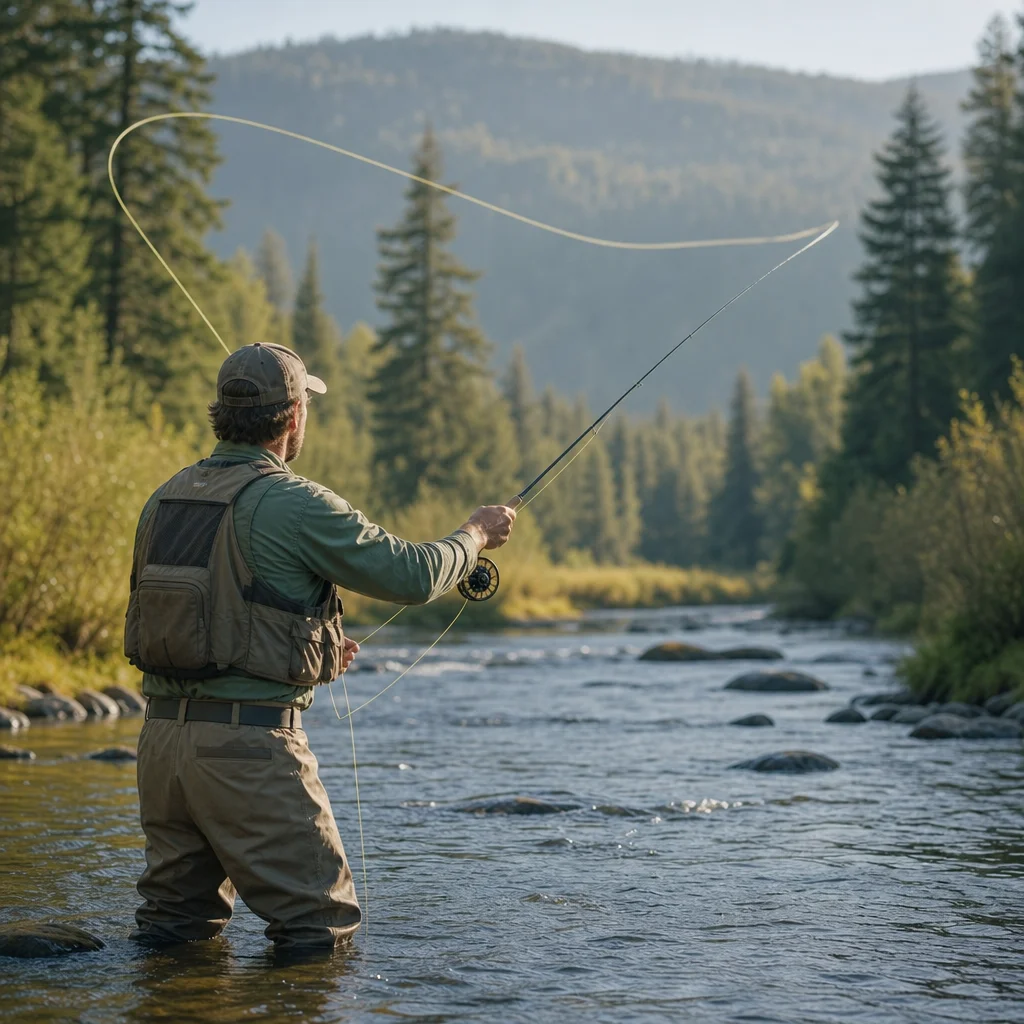
Small streams can look protected on a forecast map and still feel unpleasant—or unsafe—when wind moves through the surrounding trees. The deciding factor isn’t simply whether the forecast says 10, 15, or 20 miles per hour. You need to consider gusts, tree conditions, stream width, casting room, visibility, and how easily you can leave if conditions worsen.
For a minimalist approach, focus on the few factors that can change the trip from manageable to unwise. You don’t need a complicated weather model or a bag full of backup gear. You do need a realistic plan for wind moving through a forest.
Start with the right question
Instead of asking, “Is this forecast too windy for fly fishing?” ask three narrower questions:
- Can you cast without placing the fly or line near people, trees, or yourself?
- Are falling branches, unstable trees, or poor visibility a realistic hazard?
- Can you move safely along the stream and leave without depending on conditions improving?
The first question is about enjoyment and control. The second and third are about risk. A trip can be annoying without being dangerous, but a forecast that creates tree or access hazards deserves a different decision.
Read sustained wind and gusts separately
A forecast’s sustained wind describes the general wind speed over a period of time. Gusts describe short bursts that may be considerably stronger. On a narrow, wooded stream, gusts often matter more than the average because they can suddenly move branches, collapse your cast, or turn a controlled backcast into a collision.
Wind direction matters, too. A crosswind can push your fly toward your casting-side shoulder, while a tailwind may make the forward cast feel easy but drive the backcast into branches. Wind that funnels along a valley or open bank can be much stronger at stream level than the broad forecast suggests.
Treat forecast numbers as a starting point rather than a guarantee. Terrain, ridges, gaps in the canopy, and exposed sections can create conditions that vary from one bend to the next.
Check the exposed sections before you leave: Compare sustained wind, gusts, wind direction, and any wind-related alerts with the actual character of your access road, parking area, and stream corridor. If the forecast is borderline, check it again close to departure and follow current local warnings or land-manager closures.
Separate casting trouble from tree danger
Casting trouble is usually manageable
Wind becomes a fishing problem when it makes basic control unreliable. Signs include:
- Your leader repeatedly collapses or lands in a pile.
- The fly drifts sideways before it reaches the target.
- You can’t keep the line away from branches and brush.
- You’re using more force and larger movements to compensate.
- You’re rushing because each cast feels like it might snag.
On a small stream, you may be able to adapt by shortening the cast, staying low, using a roll cast, or moving to a bank with more room. You might also fish sheltered pockets rather than trying to cover every likely lie.
These adjustments can preserve a useful outing when the wind is inconvenient but predictable. They don’t make a dangerous forest safe.
Tree danger is a separate decision
Wind can create hazards even when you decide not to cast. Be cautious around dead trees, cracked limbs, leaning trunks, and branches that are already moving sharply. Recent storms, saturated ground, ice, wildfire damage, and disease can make trees less stable than they appear.
Avoid standing beneath questionable limbs, especially when gusts are increasing. Don’t assume a tree is safe because it hasn’t fallen yet. If you hear repeated cracking, see large limbs dropping, or notice trees swaying in a way that concerns you, leave the area rather than trying to find a better casting position.
A forested stream also has a delayed hazard: branches can fall after the strongest gust passes. If the route to the water requires walking beneath unstable trees, the casting quality isn't the important part of the decision.
Use the stream and the banks as part of the forecast
The same wind can produce very different conditions on two small streams. Consider the physical setting before choosing your destination.
More sheltered conditions
A stream may remain fishable when:
- The banks are densely vegetated but the trees appear healthy and stable.
- There are frequent low-clearance casting lanes.
- You can stay below the worst exposed ridges and gaps.
- The water is clear enough to see your footing and likely obstacles.
- You have safe places to turn around or exit.
Shelter doesn’t eliminate risk. It simply reduces the amount of wind reaching your casting lane.
More exposed conditions
A forecast deserves more caution when the stream includes:
- Open meadow crossings or broad gravel bars.
- Steep slopes beneath tall trees.
- Narrow paths with no easy retreat.
- Bridges, blowdowns, or unstable banks along the route.
- Long stretches where you’ll need to walk under large limbs.
Small streams can be especially awkward in these settings because the bank may leave little room to step away from a bad cast or falling branch. A short approach can be more important than the stream’s fishing potential.
Set a personal casting limit without pretending it’s universal
There is no single wind speed that makes every small stream unsafe or every cast impossible. Your skill, rod, fly, line, casting side, terrain, and experience all change the result. A beginner with limited roll-casting practice may reasonably turn back in conditions an experienced angler can manage.
A useful personal limit is the point at which you can no longer make a controlled cast with a safe backcast. Test that limit in a low-risk area, not beside other anglers or under questionable trees. If you’re repeatedly hitting branches, losing track of the fly, or allowing the line to approach your face or another person, the conditions are beyond your comfortable limit.
You can make a trip worthwhile by changing the objective. Fish shorter distances, use a simple dry fly or small nymph setup that you can control, and skip exposed pools. But don’t let a minimalist tackle plan encourage you to ignore a worsening forest hazard.
Factor in visibility and footing
Wind often affects more than the cast. Blowing debris, shifting branches, rain, spray, and changing light can make it harder to see the fly, wading hazards, or the route along the bank. On unfamiliar water, reduced visibility can turn a minor navigation mistake into a difficult exit.
If you’re wading, keep the wind decision separate from the water decision. Strong gusts can affect your balance while you’re carrying a rod, stepping over deadfall, or moving across slick rocks. Don’t wade simply because the stream looks shallow; depth, current, slippery surfaces, and exit options still matter.
When visibility or footing is poor, stay out of the water and consider whether the bank route is safer. If you can’t clearly identify where you’ll step next, the day may be better suited to scouting from a safe area or postponing the trip.
Choose a simple go, modify, or skip plan
Go as planned when
- Wind is light enough for controlled casting.
- Gusts aren’t causing significant tree movement or debris.
- The route has stable footing and clear exit options.
- You can identify safe casting lanes without forcing awkward positions.
Modify the trip when
- The wind is frustrating but consistent and the trees appear stable.
- One section is exposed but nearby water offers shelter.
- You can fish from the bank with short casts and avoid wading.
- You’re willing to shorten the outing and leave at the first sign of worsening conditions.
Modification might mean choosing a lower-elevation stream, a more enclosed stretch, or a destination with an easier walk back to the vehicle. It might also mean bringing one dependable setup instead of trying to compensate with extra flies and equipment.
Skip or leave when
- Current warnings advise against travel or outdoor activity in the area.
- Large branches are falling, trees are cracking, or the canopy is moving violently.
- You can’t maintain safe control of the line and fly.
- Visibility, footing, or access has deteriorated.
- The only way to reach the water requires moving beneath visibly unstable trees.
Fishing quality is a poor reason to accept a hazard you can’t control. The stream will still be there under better conditions.
Recheck conditions during the trip
A forecast isn't a promise that conditions will remain steady. Wind can build during the day, shift direction, or arrive in waves. Pay attention to what is happening around you rather than continuing because the original plan sounded reasonable.
Before moving to a new section, look at the trees and route ahead. If the new area is more exposed, reassess it instead of carrying the same decision forward automatically. Keep your vehicle, a safe access point, or another known exit in mind as you move upstream or downstream.
For a small-stream outing, the essentials are straightforward: a forecast that you understand, a route you can leave safely, a casting plan suited to limited space, and the willingness to stop when conditions change. If the wind only makes the fishing less elegant, simplify your casting and choose sheltered water. If it threatens trees, visibility, footing, or your ability to retreat, call it a day.