How to Build a Simple Dry-Fly Leader for Windy Mountain Streams
Wind turns a delicate dry-fly leader into a pile of slack and crossed sections. I’ll show how to combine butt material, tippet length, knots, and small adjustments for better turnover on gusty mountain streams.
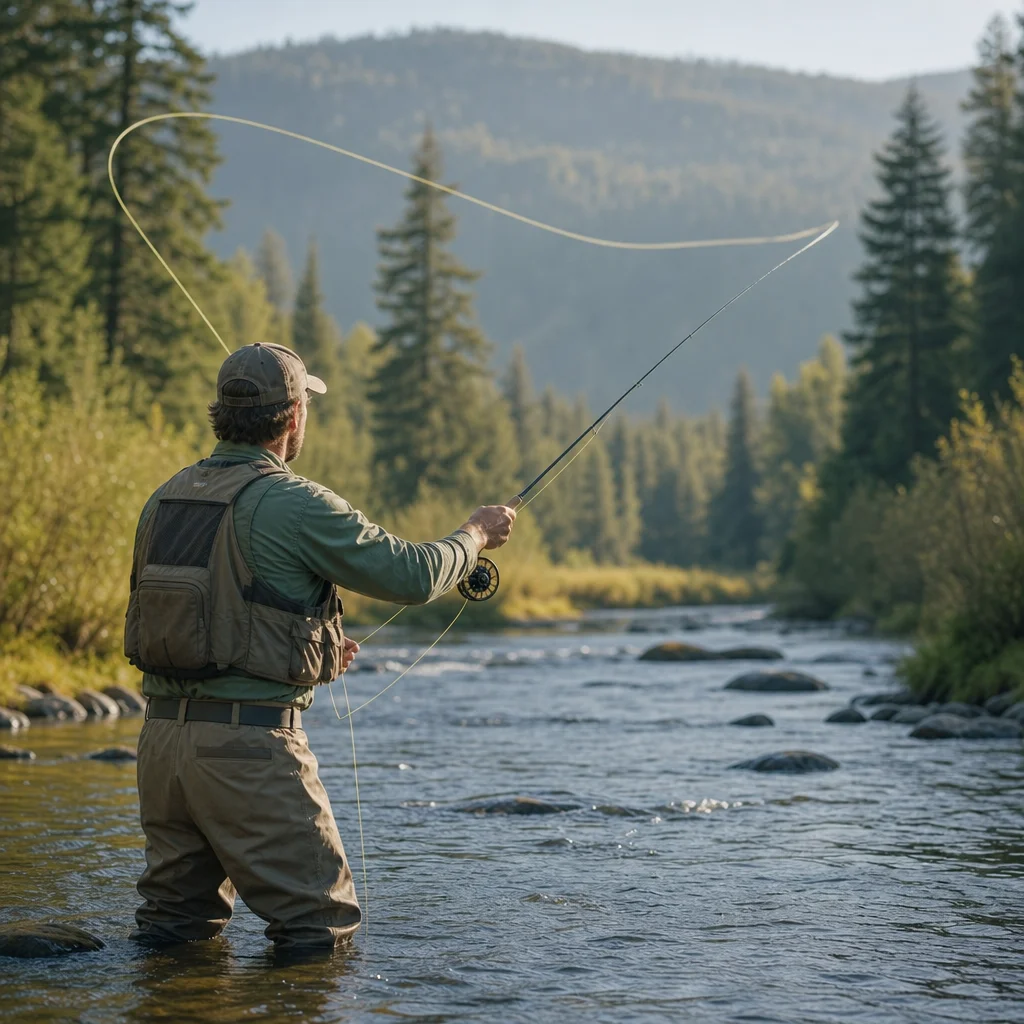
Windy mountain streams expose every weakness in a dry-fly leader. A leader that works beautifully on a calm meadow can collapse, twist, or drag when gusts meet short casts, overhanging branches, and uneven current seams.
The solution usually isn’t a complicated formula. You need a leader with enough stiffness and mass to turn over, a short enough tippet to stay manageable, and a simple way to recover when the first design doesn’t behave.
Start with a Shorter, More Powerful Design
For mountain-stream dry flies, a leader between 7 1/2 and 9 feet is often easier to control in wind than a long, fine leader. Shortening the system reduces the amount of material the wind can move and makes it easier to land the fly in a tight pocket.
A simple starting design is:
- 4 feet of 20-pound monofilament for the butt section
- 2 feet of 12-pound monofilament for the middle section
- 1 foot of 8-pound monofilament for the front section
- 2 feet of 4X or 5X tippet for the fly
This creates a leader of roughly 9 feet, including the tippet. You can shorten the tippet to 18 inches when brush, wind, or very short casts make the fly difficult to control.
The exact breaking strengths aren’t sacred. What matters is the progression from a relatively stiff, heavy butt to a finer tippet. Each step should be noticeable but not extreme. A leader that jumps abruptly from heavy butt material to fine tippet can hinge at the connection instead of transferring energy smoothly.
For larger dry flies, such as foam attractors or heavily hackled patterns, you can use 3X or 4X tippet. For smaller flies and cautious trout, 5X may be appropriate, provided the fly turns over and the surrounding structure allows it. Finer tippet can improve the fly’s appearance, but it also gives wind and current more influence.
Choose Materials That Help Turnover
Use relatively stiff nylon monofilament for the butt and middle sections. Stiffer material resists folding and helps the cast carry energy toward the fly. Very soft material can be useful for delicate presentations, but it tends to form loose hinges when gusts interrupt the loop.
The tippet should be softer and thinner than the sections above it. That gives the fly some freedom to settle on the water while preserving enough structure for the leader to straighten.
For a floating dry fly, nylon tippet is generally the straightforward choice. Fluorocarbon sinks more readily, which can pull a dry fly down or place the tippet below the surface in a way that changes the presentation. If you’re building a leader specifically for dries, nylon keeps the system simpler.
A tapered commercial leader with a short section of nylon tippet can also work well. Building your own is useful when you want to change the butt length, replace a damaged section, or create a repeatable design for a particular stream. It isn’t automatically better than a knotless leader.
Build the Leader in Manageable Sections
1. Prepare the sections
Cut the butt, middle, and front sections slightly longer than your target lengths. After tying the knots, trim the tags and account for the small amount of material consumed by each connection.
If you’re making several leaders, write the dimensions on a small card or in your fishing notes. Consistency makes troubleshooting much easier. Otherwise, every problem starts with a new guess about what you built.
2. Join the heavier sections
A blood knot is a compact connection for joining the butt to the middle section and the middle to the front section. It passes cleanly through the guides when tied neatly and trimmed closely.
A double surgeon’s knot is easier to tie on the stream, particularly with cold fingers or fading light. It’s a practical choice for a field-built leader, although it creates a larger connection than a well-tied blood knot.
Moisten the knot before tightening and pull the standing sections gradually. Check that the coils seat evenly rather than crossing over one another. Uneven coils can weaken the connection and create a rough spot that catches on the guides.
3. Add the tippet
Use a double surgeon’s knot or a tippet ring to attach the final tippet section. A tippet ring makes replacement quick and preserves more of the tapered section, but it adds a small piece of hardware that can catch vegetation or distract you if it isn’t seated neatly.
For a simple stream setup, tying tippet directly to the leader is perfectly adequate. Leave a short but usable tag while tying, then trim it close enough that it won’t collect moss, hackle, or grass.
4. Attach the fly
A non-slip loop knot gives the fly some movement, while an improved clinch knot is compact and quick. Either can work for a dry fly. The important points are that the knot is seated correctly, the tag is trimmed, and the tippet hasn’t been damaged while tying.
Adjust the Leader When It Fails
A leader’s behavior tells you which section needs attention. Change one variable at a time so you know what solved the problem.
The leader piles up behind the fly
This usually means the front of the leader is too soft, too long, or receiving too little energy from the cast. In wind, start by shortening the tippet by 6 to 12 inches. If the fly still lands in a heap, replace the front section with slightly heavier or stiffer material.
You can also shorten the whole leader. A 7 1/2-foot leader may be easier to turn over than a 9-foot leader when casts are short and the fly must land quickly in a pocket.
Avoid solving every turnover problem by casting harder. Extra force often creates a wider loop, more spray, and more slack. A compact loop with an abrupt stop usually transfers energy more efficiently.
The fly lands straight but drags immediately
A shorter leader can improve turnover but doesn’t remove conflicting currents. If the fly lands in fast water beside a slower seam, the current may pull the leader before the fly has traveled very far.
Try a reach cast, an aerial mend, or a small downstream repositioning of the rod tip as the line lands. Keep the leader short enough to control, but don’t expect leader design alone to create a drag-free drift across multiple current speeds.
A long tippet can sometimes help with drag, but in gusty mountain water it may also add slack and reduce control. Add length only when you can still turn the fly over and see where the tippet lands.
The leader twists around the fly
Twisting can come from an oversized or air-resistant fly, an uneven leader taper, or repeated false casting with too much line speed. A heavily dressed dry fly can act like a small parachute in the wind.
First, shorten the tippet and check the knot. If the twisting continues, use a slightly heavier tippet or a less bulky fly. Inspect the leader for a damaged section that has curled into a permanent spiral, then replace that section rather than trying to cast through it.
Keep false casts to a minimum. On a small stream, one controlled pickup and delivery is often more useful than a long series of casts that gives the wind more chances to reorganize your leader.
The fly won’t turn over at all
The leader may be too long for the amount of line you’re carrying outside the rod tip. Mountain-stream casts are often short, so the fly line may not load the rod enough to deliver a long leader.
Move closer when possible, shorten the leader, or carry a little more line before the forward cast. If the fly is large, switch to a heavier tippet and check that the leader butt isn't excessively fine or limp.
The cast itself matters too. A low, compact backcast can help keep the system below the worst of the wind, but don’t force the line so low that it catches grass or rocks behind you.
Match the Leader to the Fly and Water
A single leader can cover much of your dry-fly fishing, but small adjustments make it more useful.
For a small, sparse dry fly on relatively open water, start with the full 9-foot version and finer tippet. For a larger attractor in broken water, shorten the tippet and use stronger material. The fly should turn over without needing a violent stop, and the tippet should be strong enough for the likely fish and nearby obstacles.
In very tight pocket water, a short leader can be more precise than a long one. You’re usually trying to place the fly into a small feeding lane, not make a long presentation across several current bands. A compact setup also gives you better control when a trout turns toward undercut banks or submerged branches.
Remember that the leader is only part of the system. A floating line, a clean fly, and a properly dressed leader all help a dry fly remain visible and buoyant. If the tippet is coated in water or the fly is clogged with debris, changing leader dimensions won’t solve the immediate problem.
Check Your Streamside Setup: Before the next cast, stretch the leader gently, inspect each knot, and confirm that the fly, tippet strength, and leader length suit the wind and the available casting space.
A Simple Adjustment Sequence
When conditions change, use this order rather than rebuilding everything immediately:
- Shorten the tippet by 6 to 12 inches if the fly or leader collapses.
- Use heavier tippet if the fly is bulky or the wind keeps folding the front section.
- Shorten the entire leader if you’re making very short casts or fishing cramped pockets.
- Change the cast with a tighter loop, a controlled stop, or a reach cast if current is causing drag.
- Rebuild a section only after checking knots, wind direction, fly size, and line control.
This sequence preserves the useful parts of the rig while addressing the most common causes first.
Keep Two Versions Ready
For a day of mountain-stream fishing, carrying two simple leader lengths can save time. Keep one around 9 feet with 4X or 5X tippet for open pockets and calmer wind. Carry a shorter version around 7 1/2 to 8 feet with heavier tippet for gusts, brush, and larger flies.
You can build both from the same basic section pattern. The shorter version might use 3 feet of 20-pound butt material, 1 1/2 feet of 12-pound material, 1 foot of 8-pound material, and 2 feet of tippet. Adjust the lengths rather than treating the formula as fixed.
Store finished leaders in labeled sleeves or small zip bags. Keep knots from rubbing against hooks, split shot, or other sharp items. A leader that was carefully built at home can still arrive streamside with a permanent kink if it’s wrapped loosely around a fly box.
Practical Next Steps
Build one 9-foot leader and one shorter leader before your next windy trip. Test both in an open area with the fly you expect to use, then watch whether the leader straightens, piles up, or lands across conflicting currents.
If the fly collapses, shorten or stiffen the front. If it drags, improve your cast and line position before adding length. If the leader twists, inspect the taper, knot, and fly size. A simple design works best when you treat it as an adjustable tool rather than a permanent recipe.