How to Build a Dry-Fly Leader That Turns Over Small Flies
Small dry flies need a leader that transfers energy smoothly without landing like a snapped twig. I’ll show you how to balance butt diameter, taper, tippet length, and knot transitions for controlled presentations on technical water.
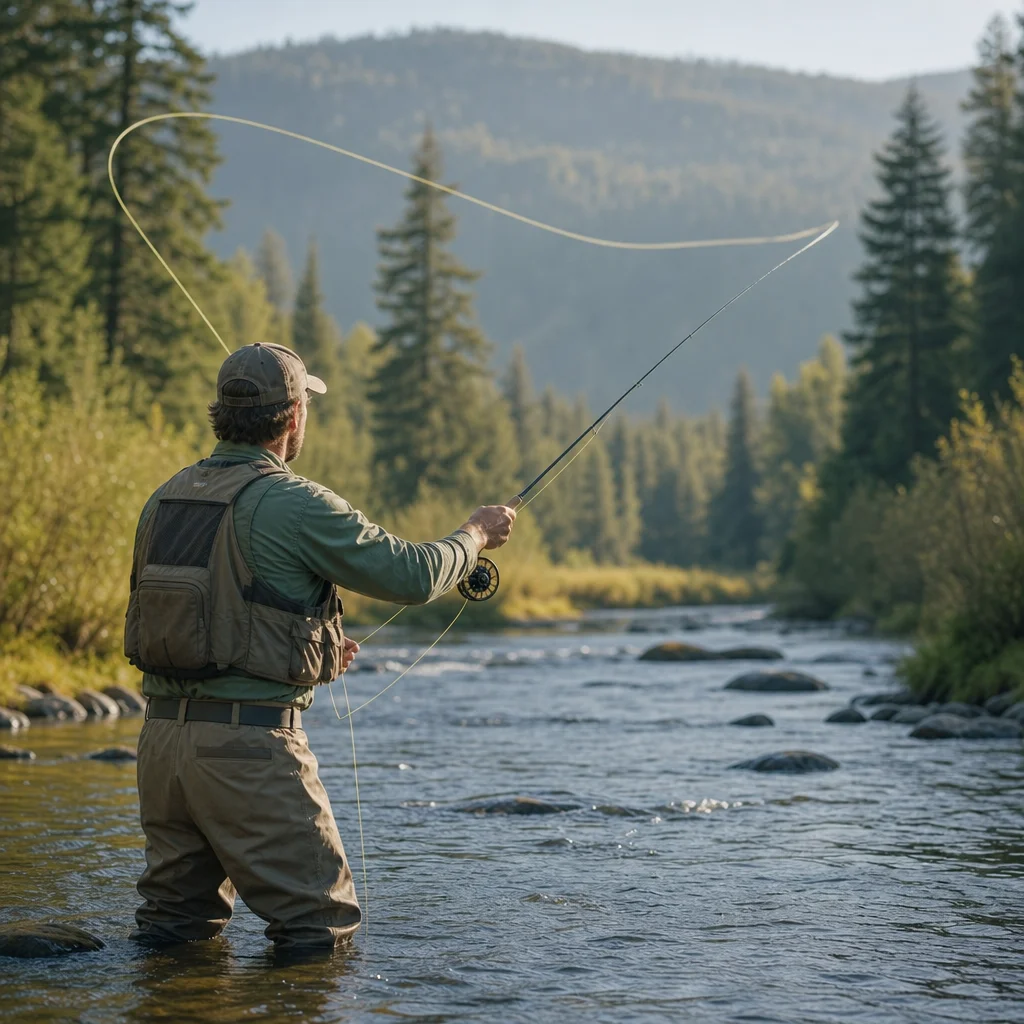
Small dry flies expose weak points in a leader quickly. If the butt section is too soft, the leader collapses before the fly turns over. If the taper is too abrupt, the fly lands hard or the tippet piles up in a coil. If the tippet is too long for the available energy, the fly may never straighten at all.
Building a useful dry-fly leader is less about copying one perfect formula than creating a smooth progression from the fly line to the fly. You want enough stiffness and mass in the upper sections to transfer energy, followed by a fine, flexible tippet that lets a small dry drift naturally.
Start with the job the leader must do
A leader for small dries on a spring creek usually has three competing requirements:
- Turn over cleanly: The fly should travel to the end of the leader instead of arriving attached to a loose series of curves.
- Land gently: The final sections should dissipate enough energy that the fly doesn’t slap down.
- Drift naturally: The tippet should be fine and flexible enough to avoid dragging the fly across slow currents.
A long, fine leader can help with wary fish and flat water, but length reduces the energy available at the fly. That means a 12-foot leader with a very long tippet may be harder to turn over than a carefully balanced 9-foot leader, especially with a small, low-resistance dry.
For many technical situations, begin with a 9- to 12-foot leader and adjust from there. Use the shorter end when you need dependable turnover, are casting into wind, or are fishing a fly with little aerodynamic help. Use the longer end when fish are cautious and you can still straighten the leader without forcing the cast.
Build a smooth diameter progression
The butt section connects the fly line’s relatively large diameter to the smaller material used near the fly. It provides the mass and stiffness that start the transfer of energy. The taper then reduces diameter gradually until it reaches the tippet.
A useful starting distribution is:
- About 50 to 60 percent butt section
- About 20 to 30 percent tapered midsection
- About 20 to 30 percent tippet
These percentages aren't a rule that every leader must obey. They’re a way to prevent the common mistake of attaching a very long, fine tippet directly to a short, heavy butt section.
For a 9-foot leader, you might use roughly 4 1/2 to 5 feet of butt material, 2 to 2 1/2 feet of intermediate material, and 18 to 30 inches of tippet. A 12-foot leader can use the same general proportions while adding length to the butt and midsection rather than putting all the extra length at the tip.
The exact diameters depend on your fly line, rod weight, casting tempo, and tippet size. As a general concept, the butt should be stiff enough to carry the cast, while each following section should be noticeably—but not dramatically—smaller than the one before it.
Choose the butt for turnover, not tradition
A butt section that is too fine won’t transmit enough energy to the taper. The leader may straighten partially, then fall short with the tippet hanging in a loose curve. This is especially common when anglers lengthen a leader by adding fine material to a design that was already marginal for turnover.
A butt that is too heavy or stiff creates the opposite problem. It can transfer energy too efficiently into a short tippet, causing the fly to land sharply. It may also make the end of the leader kick or hinge instead of flowing smoothly.
For small dries, the right butt is usually the lightest one that still turns over the chosen length and tippet under your normal casting conditions. If the leader collapses repeatedly, increase butt stiffness or shorten the leader before immediately shortening the tippet.
Select the tippet length and diameter together
Tippet length and tippet diameter are linked. Fine tippet is flexible and creates less drag, but it also absorbs more energy. Long, fine tippet can be excellent when the cast has enough line speed and the current demands separation from the thicker leader sections. It can be frustrating when the fly is light, the wind is present, or the cast must be made with a short stroke.
For small dries, 18 to 30 inches of tippet is a useful starting range. Add length when the fly is landing too close to the heavier leader material or when fish are inspecting the presentation. Shorten it when turnover becomes unreliable or when you need to make repeated, accurate casts in limited space.
Tippet diameter should match the fly, the fish, and the water rather than the fly’s size alone. A tiny dry may need fine tippet in calm, clear water, but a slightly heavier tippet can be sensible when the current is broken, the fish aren't as cautious, or you need more dependable turnover.
Remember that X sizes describe diameter categories, not a guaranteed breaking strength. Strength and stiffness vary between brands and materials. For a delicate presentation, compare the actual diameter and flexibility of the material when possible instead of treating a label such as 5X or 6X as a complete specification.
Make the knot transitions behave like part of the taper
Every knot creates a change in diameter and stiffness. Poorly matched knots can act like hinges, interrupting the energy transfer even when the leader sections themselves are well chosen.
Match similar diameters with a blood knot
A blood knot creates a relatively smooth transition when the joined materials are reasonably close in diameter. It works well for connecting butt and midsection materials or successive taper sections.
The mistake is asking it to join materials that are too different. A blood knot between a heavy butt and very fine tippet may be difficult to seat cleanly and can create an abrupt step. Use it where the diameters overlap naturally, then use a different connection for the final tippet if necessary.
Use a surgeon’s knot when simplicity matters
A double surgeon’s knot is quick and practical, particularly when changing tippet on the water. It tolerates some diameter mismatch better than a blood knot and is easy to tie with cold or wet hands.
Its drawback is bulk. A poorly tightened surgeon’s knot can catch debris, spray more water, or behave like a hinge. Seat it carefully, moisten the knot, and trim the tags close without cutting into the wraps. For a permanent leader build, a neatly tied blood knot may produce a slimmer transition.
Keep the fly connection compact
Use a small, reliable fly knot that suits the tippet and fly eye. An improved clinch knot is familiar and compact, while a non-slip loop can give the fly more freedom of movement. The loop knot is useful when the fly benefits from a little extra motion, but its added loop isn't always an advantage in a tight, delicate presentation.
Whichever knot you choose, inspect the eye and seating point. A knot that slides, jams against the eye, or leaves a large tag can undermine an otherwise balanced leader.
A practical starting build
For a small dry on a technical river, begin with a commercial knotless leader that already has a reasonable taper, then replace or extend only the final section. This is often more consistent than constructing the entire leader from scratch while you’re still learning how different materials behave.
If you’re building from separate sections, use this process:
- Choose the final tippet first. Decide whether the water and fish call for a fine or moderately fine diameter.
- Set the tippet length. Start around 18 to 24 inches, then add length only if the presentation needs more separation.
- Add a gradual midsection. Use one or two diameters that step down toward the tippet without a dramatic jump.
- Make the butt long and stiff enough to carry the leader. If the leader will be longer than about 9 feet, add length here and in the midsection rather than extending only the fine tip.
- Tie and seat every knot carefully. A crooked or incompletely tightened knot is a mechanical problem, not merely a cosmetic one.
- Test the leader before approaching fish. Make a few casts and watch whether the leader straightens, piles up, or lands too forcefully.
A leader that lands in a loose, controlled curve may be preferable to one that straightens violently, but it still needs enough extension for the fly to reach the intended lane. The goal is controlled energy, not maximum turnover at any cost.
Fix the common failure patterns
The tippet piles up short of the fly
The leader is probably too long for the available casting energy, the butt is too soft, or the final section is too fine and long. Shorten the tippet first. If that doesn’t solve the problem, shorten the overall leader or increase the stiffness of the butt and midsection.
The fly lands hard
The taper may be too abrupt, the butt may be too stiff, or the leader may be too short for the cast you’re making. Add a gradual intermediate section or lengthen the tippet modestly. Avoid simply switching to a much finer tippet; that may reduce impact while making turnover unreliable.
The leader turns over but drags the fly
This is often a presentation or current problem rather than a construction problem. Still, a short, heavy tippet can pull the fly across conflicting currents. Add a little tippet length, use a finer diameter if appropriate, and check whether the leader is landing on the water in a straight line instead of a useful curve.
The knot becomes the hinge point
Look for a large diameter jump, an oversized surgeon’s knot, or a knot that hasn’t seated correctly. Rebuild that connection with closer diameters, a slimmer knot, or a shorter transition. A small perfection loop or tippet ring can be useful in some systems, but it also adds another connection and shouldn't be treated as an automatic cure.
Test the finished leader before changing everything
Make one change at a time. If you shorten the tippet, change the fly, and alter the casting stroke simultaneously, you won’t know which adjustment helped.
Start by casting the actual fly you plan to fish. Small dries differ significantly: a bushy pattern catches air and helps turnover, while a sparse midge pattern offers very little resistance. Test both the straightening of the leader and the fly’s landing behavior at the distance you expect to fish.
The best small-fly leader is the one that turns over predictably, lands with limited disturbance, and leaves enough fine tippet between the fish and the heavier sections. Build that result through gradual diameter changes, restrained tippet length, and clean knot transitions. Then make small adjustments for wind, fly design, and the particular current in front of you.