How to Build a Simple Emerger Rig for a Trout Rise You Can See but Can't Reach
I’ll clarify how to rig a visible dry fly with an emerger or small nymph when trout are rising beyond easy reach, including leader length, tippet choices, casting adjustments, and fixes for common tangles.
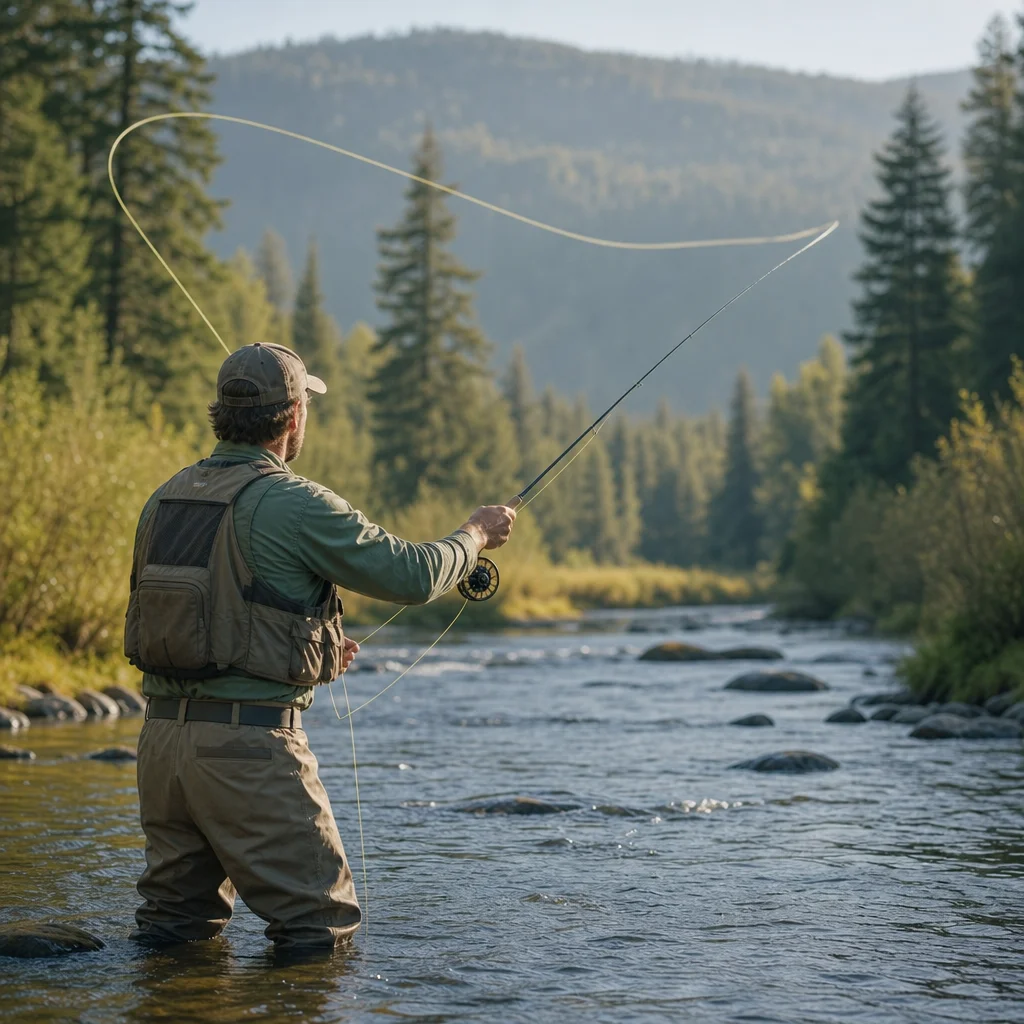
A trout is rising in the flat water across the creek, but your single dry fly keeps landing short—or reaching the fish with too much disturbance. A simple emerger rig can extend your presentation while giving you a visible reference point, provided you keep the leader balanced and the dropper short enough to cast cleanly.
The goal isn’t to build a complicated two-fly system. It’s to place a buoyant or visible fly where you can track it, then suspend an emerger or small nymph below it in the trout’s likely feeding lane.
Start with the simplest two-fly arrangement
For clear spring creeks and flat tailouts, begin with this layout:
- A tapered leader connected to your fly line
- A visible dry fly tied to the end of the leader
- A short piece of tippet tied to the dry fly’s bend
- An emerger or small nymph attached to the end of that tippet
The dry fly serves two jobs. It imitates a surface insect, and it gives you a target to watch when the emerger is too small or submerged to see. When a trout takes the lower fly, the dry may dip, pause, or move sideways. It won’t behave like a perfect bobber, so watch for changes rather than waiting for it to disappear completely.
This arrangement works best when the lower fly is intended to fish in or just below the surface film. If you need to reach much deeper water, a heavier nymph and a more deliberate indicator setup may be better. Adding weight to a light emerger rig usually creates more tangles than trout.
Choose leader and tippet sizes conservatively
A nine-foot tapered leader is a useful starting point for an intermediate angler. In clear, low water, a 4X or 5X leader can provide a reasonable balance between turnover and delicacy. Continue with lighter tippet only when the flies, current, and fish behavior call for it.
A practical starting combination is:
- Leader: 4X or 5X tapered leader
- Dry-fly connection: the leader’s existing tippet section, or a short matching section
- Dropper tippet: 12 to 20 inches of 5X or 6X
- Lower fly: a small emerger, pupa, or lightly weighted nymph
Use the strongest tippet that still allows the flies to behave naturally. Going immediately to very fine tippet can make the rig harder to turn over and more vulnerable to break-offs around weeds, submerged branches, or a strong fish.
For tiny flies, the diameter matters less than the finished knot and the way the rig lands. A small emerger on stiff, thick tippet may twist or sit unnaturally. A very fine dropper can present well but demands a softer hook set and careful handling.
Tie the dry fly first
Tie the visible fly to the end of the tapered leader using a knot you can inspect easily, such as a clinch knot or improved clinch knot. Leave enough tag end to trim neatly without cutting into the knot.
Choose a dry fly that is visible to you, not necessarily the largest pattern in the box. A high-contrast wing, pale post, or slightly brighter thorax can help in glare and broken reflections. It still needs to be small and natural enough for the water you’re fishing. A bulky, heavily dressed fly may float well but can land too hard in a flat tailout.
Before adding the dropper, test the dry fly’s buoyancy. Floatant can help, but too much paste or gel can make a small fly look unnatural and can transfer to the tippet. Treat the fly according to the material it’s made from, and keep the lower fly free of products that prevent it from breaking through the surface film.
Add the emerger from the dry-fly bend
Attach the dropper tippet to the bend of the dry fly’s hook. A clinch knot is usually sufficient. Use 12 to 20 inches of tippet at first, then adjust based on the water depth and the trout’s feeding position.
Keep the dropper short when you’re troubleshooting tangles. A short section is easier to cast, less likely to wrap around the leader, and usually adequate for an emerger meant to fish near the surface. Lengthen it gradually if the trout are clearly feeding below the film and the shorter version is riding too high.
A few details make this connection more reliable:
- Tie the dropper to the hook bend rather than the hook point.
- Pull the knot tight while holding the tippet in line with the bend.
- Leave a small, clean tag end, then trim it close.
- Check that the dropper exits without crossing over the dry-fly hook.
- Replace the connection if the tippet becomes kinked or abraded.
Some anglers prefer tying the dropper to a tag from the leader above the dry fly. That can provide a strong attachment point, but it requires a different leader arrangement and may leave the lower fly positioned beside rather than directly below the reference fly. For a simple rig, the dry-fly bend is easier to assemble and adjust.
Match the rig to the trout’s feeding lane
A visible rise tells you where a trout came up, not necessarily where its mouth was when it fed. The fish may be taking adults from the surface, emergers trapped in the film, or nymphs drifting just beneath it.
If the rise is soft and the trout barely dimples the surface, keep the dropper short and use a sparse emerger. If the fish’s head and shoulders are showing, it may be taking food higher in the water column, so a long or heavy dropper could be counterproductive.
In a flat tailout, start with the lower fly 12 to 16 inches below the dry. Watch how the dry lands and how quickly the emerger settles. If the dry tracks naturally but the lower fly repeatedly catches the bottom, shorten the dropper or choose a lighter pattern. If the emerger never seems to enter the feeding lane, add a few inches before changing to a heavier fly.
Cast the rig with an open loop
Two flies require a little more space than one. Use a smooth stroke and a wider, more open loop rather than adding power. A sharp, narrow loop can drive the lower fly into the leader or wrap it around the dry.
Try this sequence:
- Lift the line smoothly and allow the rig to straighten behind you.
- Use a controlled forward stroke with the rod tip traveling on a slightly higher path.
- Let the leader and tippet extend fully before the flies touch down.
- Land the dry fly first, followed by the lower fly.
- Keep the rod tip high enough to avoid dragging the rig immediately after the cast.
A reach cast is often more valuable than extra distance. Cast slightly upstream or across the current, then reach the rod upstream as the line settles. This places slack in the line and delays drag without forcing you to add another ten feet of leader.
If the target is genuinely distant, don’t automatically lengthen the dropper. A longer dropper makes the rig harder to turn over and gives the current more line to move. Extend the main leader only when you can still control the flies and detect a take.
Troubleshoot the common failures
The dropper wraps around the leader
This usually comes from too much casting force, a narrow loop, excessive dropper length, or a tippet section that has been twisted by a previous cast. Cut the dropper back to 12 inches, slow down, and make a wider loop.
Check the knot at the dry-fly bend as well. If the dropper leaves at an awkward angle, it can fold back toward the leader. Re-tie it so the tippet exits cleanly from the bend.
The dry fly sinks
A small emerger can pull down a lightly dressed dry, especially after several casts. Dry the reference fly thoroughly, apply the appropriate floatant, and replace it with a more buoyant pattern if necessary. Avoid making the dry excessively large just to support the lower fly; that can defeat the purpose on a wary spring-creek trout.
The lower fly keeps snagging bottom
Shorten the dropper first. If it still hangs up, switch to a lighter or slimmer pattern. In shallow tailouts, a fly that rides just under the film is often more useful than a heavier nymph that spends every drift in the gravel.
You see rises but can't detect takes
Watch the dry for unnatural movement, but also observe the leader and the water around the fly. A small hesitation, sideways slide, or sudden straightening can indicate a take on the emerger. Keep the rod low enough to maintain contact without pulling the flies across the current.
Set gently by lifting the rod rather than making a hard strip set. Fine tippet and small hooks don't benefit from a dramatic response, particularly at short range.
The rig lands in a heap
The leader may be too long for the available casting space, the flies may be poorly balanced, or the loop may be too tight. Shorten the dropper, remove unnecessary split shot, and make a slower back cast. If the dry can't turn over the lower fly, use a slightly more substantial reference pattern or reduce the size and weight of the emerger.
Check the local two-fly rules: Before fishing this setup, confirm that your water allows two flies and that any requirements for hooks, droppers, or artificial flies are satisfied. Regulations can differ between streams and may change by season.
Make the next adjustment small
When a visible rise remains out of reach, change one variable at a time. Start by improving the cast and adding reach-cast slack. Then adjust the dropper length by a few inches. Only after those changes should you alter tippet diameter, fly size, or leader length.
A reliable starting rig is a nine-foot 4X or 5X leader, a visible but reasonably delicate dry fly, and a 12- to 20-inch section of 5X or 6X tippet carrying a small emerger. Cast it with an open loop, watch the dry for interruptions, and keep the lower fly light enough to fish naturally.
Before the next cast, check three things: the dropper knot is clean, the dry is floating, and the lower fly is entering the trout’s feeding lane. Those small checks solve more problems than adding another complicated piece of terminal tackle.