Build a Two-Fly Rig for Windy Conditions With Fewer Tangles
I’ll show you how to choose fly combinations, shorten and stiffen the leader, set sensible spacing, and adjust your cast so a two-fly rig stays useful instead of becoming a wind-powered knot collection.
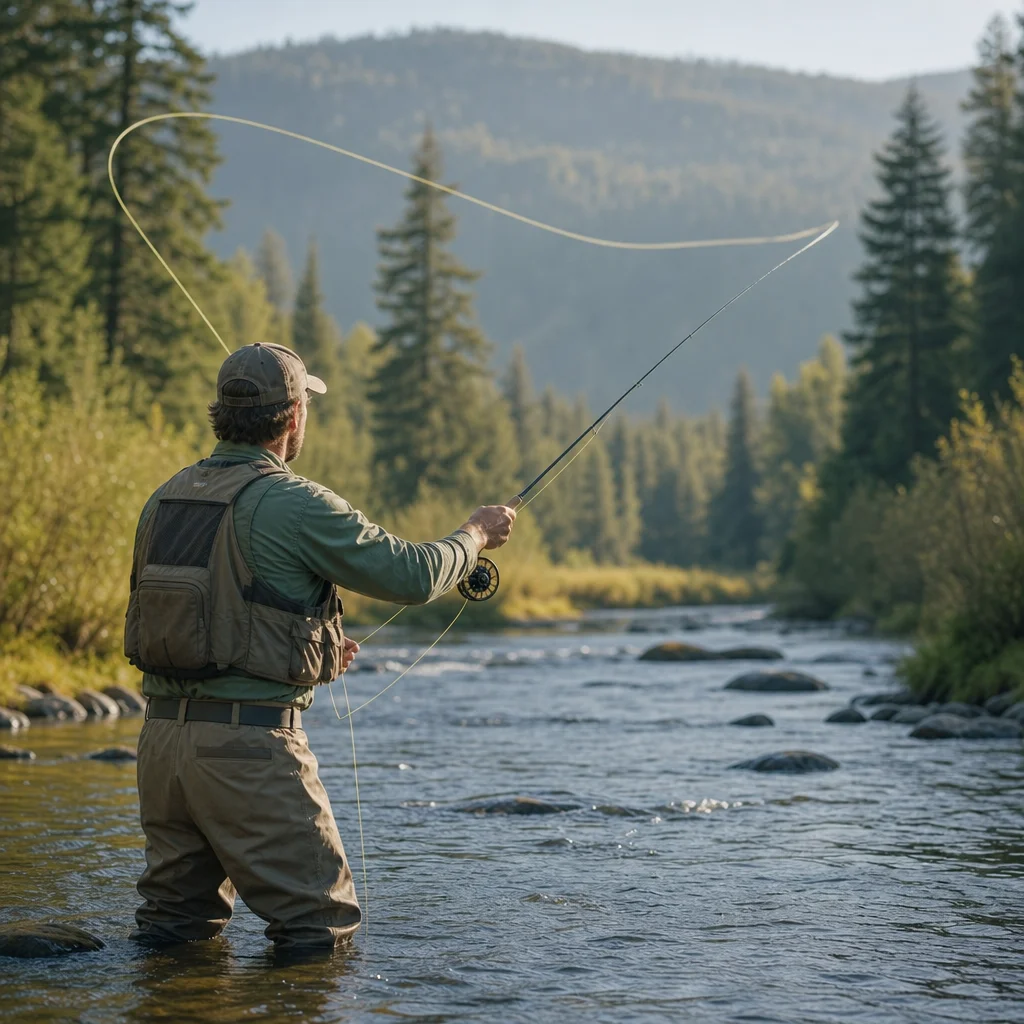
Wind turns a two-fly rig from a useful search pattern into a liability surprisingly quickly. The extra fly creates another hinge in the leader, and every poorly timed pause gives that hinge a chance to fold around the tippet, fly line, or your hat.
The answer isn’t always to abandon the second fly. In many windy situations, you can keep a tandem rig manageable by making deliberate choices about fly size, spacing, leader structure, and casting rhythm. The goal isn't to force a delicate presentation in conditions that don’t allow one. It’s to build a rig that has fewer ways to misbehave.
Start by choosing the simplest useful two-fly arrangement
A two-fly setup normally takes one of three forms:
- A dry fly with a nymph suspended below it
- Two nymphs, often with the heavier or more water-resistant fly on the point
- Two streamers or other subsurface flies fished in sequence
Wind favors the arrangement with the least air resistance and the fewest loose components. Large foam dries, bushy attractors, weighted streamers, and bulky indicators all act like small sails. Combining two of them can make even a sound leader design difficult to turn over.
Match the pair by role, not just by color
Give each fly a job. One might search a broad part of the water column while the other imitates a more specific food source. A buoyant dry can suspend a small nymph. A heavier point nymph can reach depth while a lighter tag fly explores the water above it.
Avoid pairing two flies that compete mechanically. Two large dries may land hard and twist the leader. Two heavily weighted nymphs can collapse the cast and drag the upper fly through the water. Two bulky streamers may be difficult to separate during the back cast and can create an unpleasant amount of momentum near your face.
In wind, a sensible pair is usually compact and balanced. If one fly is much larger than the other, place the more aerodynamic fly where it helps the rig turn over. If the larger fly is a point fly, use a stronger connection and give it enough room to straighten without adding excessive leader length.
Reduce the opportunities for tangles
A windy two-fly rig should generally be shorter and more controlled than the same rig in calm weather. Long spacing between flies can be useful when you need to cover a broad depth range, but it also creates more leader that can fold, loop, and wrap.
As a starting point, use enough separation to make the flies fish different water without making the leader unwieldy. For a dry-dropper arrangement, that may mean shortening the dropper compared with your calm-water setup. For two nymphs, begin with moderate spacing and add length only when you have a clear reason to reach a different depth.
The exact distance depends on fly size, current speed, depth, and the way you’re attaching the flies. What matters is the decision process:
- Decide which part of the water each fly should cover.
- Use the shortest spacing that accomplishes that job.
- Make a few controlled casts before adding length.
- Change one variable at a time if the rig needs adjustment.
If the flies repeatedly meet during the cast, spacing isn't the first thing to increase. First check your casting loop, leader stiffness, and fly combination. More distance between the flies can simply create a larger tangle.
Use a tag when it improves control
For two nymphs, attaching one fly to a tag in the leader or to a short section of tippet can make the rig easier to manage than connecting both flies in a long chain. A tag can also reduce the tendency of the upper fly to slide along the lower section after a snag or a fish.
Keep the tag relatively short in windy conditions. A long tag gives the fly more freedom to swing around the leader. The best tag length is the shortest one that keeps the fly fishing naturally and clears the point fly during the cast.
Whatever connection you use, seat the knot carefully and trim tag ends close enough that they don’t catch loops. Leave enough material for the knot to remain secure, but don’t leave long whiskers that act like tiny propellers.
Build the leader for turnover, not delicacy
Wind exposes a leader that is too fine, too long, or too soft for the flies you’re casting. A tapered leader with a firm butt and midsection transfers energy more predictably than a long, limp construction that collapses between the two flies.
You can improve turnover by:
- Shortening the leader slightly
- Using a stiffer or heavier tippet section appropriate for the flies and fish
- Keeping the final connection short enough to control
- Removing unnecessary loops, split shot, or bulky attachments
- Matching the leader length to the rod and casting space
This doesn’t mean using the heaviest tippet available. A tippet that is unnecessarily thick can reduce movement and may make a small fly look unnatural. The practical choice is the lightest material that handles the flies, expected fish, snags, and casting conditions with a reasonable margin.
A two-fly rig also magnifies weak knots and worn tippet. Inspect the section between flies after a snag, a hard cast, or contact with rocks and vegetation. Replace damaged material before continuing. It’s cheaper and less frustrating than discovering the weakness when a fish finally eats the fly you wanted to keep.
Check your rig before the first cast: Make sure both knots are seated, tag ends are trimmed, the flies are separated enough to avoid immediate contact, and no hook point is exposed near your hand or clothing.
Change the cast before changing the entire rig
Many two-fly tangles are caused by the cast rather than the rig itself. A long, abrupt stroke sends the flies traveling on separate, unpredictable paths. Sudden stops create narrow, high-energy loops that may look efficient with one fly but cause the second fly to kick sideways.
Use a compact stroke with smooth acceleration and a controlled stop. Think of turning over a small package rather than throwing a loose rope. Keep the casting loop open enough for the flies to travel without crossing each other, especially on the side receiving the wind.
Cast with the wind when possible
If the wind is blowing consistently in one direction, position your casting stroke so the wind carries the line and flies away from your body. This may mean casting over the side of your body rather than directly in front of you.
A sidearm or off-shoulder cast can keep the rig lower and create more separation from your face and torso. Your exact casting position depends on the bank, vegetation, current, and which shoulder is safest to use, but the principle is consistent: keep the flies on the downwind side whenever practical.
Avoid false casting more than necessary. Every false cast gives the two flies another chance to collide with the leader. It also keeps the hooks moving through the air near you. Strip enough line from the reel, make a controlled pickup, and deliver the rig when the loop is ready.
Let the leader straighten before the next movement
Rushing the transition between back cast and forward cast is a common source of tangles. Allow the leader to extend enough that the flies aren’t still traveling in a compact bundle behind you. In strong wind, you may need to use a slightly more deliberate pause, but don’t wait so long that the line drops into the water or vegetation.
Watch the line rather than relying only on timing. Once the rear portion of the leader has mostly straightened, begin the forward stroke. This takes some practice because wind changes the apparent timing from cast to cast.
Keep the cast compact when wading or fishing from a boat
Limited space makes tandem rigs harder to control. Current, boat movement, and uneven footing can all pull the leader into poor positions. Make your pickup deliberate, and clear the flies from the water before accelerating into the back cast.
If you’re fishing from a boat, account for the possibility that the wind can push the line or flies toward another person. Communicate before casting and keep the rig low when people are nearby. When you’re wading, be particularly cautious with a two-hook setup in gusty conditions; turning your body or changing direction quickly can send a fly somewhere you didn’t intend.
If conditions make safe casting difficult, fish one fly. A single well-presented fly is more useful than a tandem rig you can’t control.
Troubleshoot the tangle by its pattern
The location of the tangle usually points toward the problem.
The two flies wrap around each other
The flies may be too close, the loop may be too narrow, or one fly may be much more wind-resistant than the other. Open the loop slightly, smooth the casting stroke, and check whether the fly combination is mechanically compatible. If the problem continues, shorten the overall rig or replace the bulkier fly.
The dropper wraps around the leader
The tag may be too long, the dropper may be too heavy for its position, or the rig may be landing with slack. Shorten the tag, use a more compact fly, and make the delivery cast with enough authority to straighten the leader.
The rig piles up in front of you
The leader may not have enough energy to turn over. Try a shorter leader, a firmer butt section, or a less air-resistant fly. Also check that you’re not stopping the rod too abruptly or casting with too much line outside the rod tip.
The rig lands straight but tangles during the drift
This is more likely a water-management problem than an aerial one. Current seams can pull the leader in different directions, while wind can push slack across the surface. Mend carefully, keep the line under control, and consider shortening the distance between flies if the upper fly is repeatedly dragged across the lower one.
A practical windy-water setup process
Before committing to a long drift, make a few short casts near you. Confirm that the leader straightens, the flies separate, and the rig lands where you expect. Then extend the cast gradually.
If the setup fails, change the least complicated variable first. Smooth the cast. Then shorten the leader or spacing. Next, simplify the fly pair. Only after those changes should you rebuild the entire rig.
A good windy-condition two-fly rig isn't necessarily the most sophisticated one. It’s the arrangement you can cast safely, place accurately, and adjust without spending the afternoon untying knots.
Your next steps
Before fishing, decide which fly is doing the searching and which is doing the specific work. Use the shortest spacing that covers the water you want, keep the leader firm enough to turn over, and cast with a smooth, open loop on the downwind side.
Make a few test casts close to you. If the rig tangles, don’t automatically add length or power. First look for the simplest correction: a calmer stroke, less leader, a shorter tag, or a more aerodynamic fly. When the wind still wins, remove one fly and fish the setup you can control.