Why Trout Stop Rising When the Wind Lays Down
I’ll clarify why trout can stop rising almost as soon as a breeze fades, then compare the adjustments that help you keep fishing: changing flies, moving with the hatch, or targeting trout where they reposition below the surface.
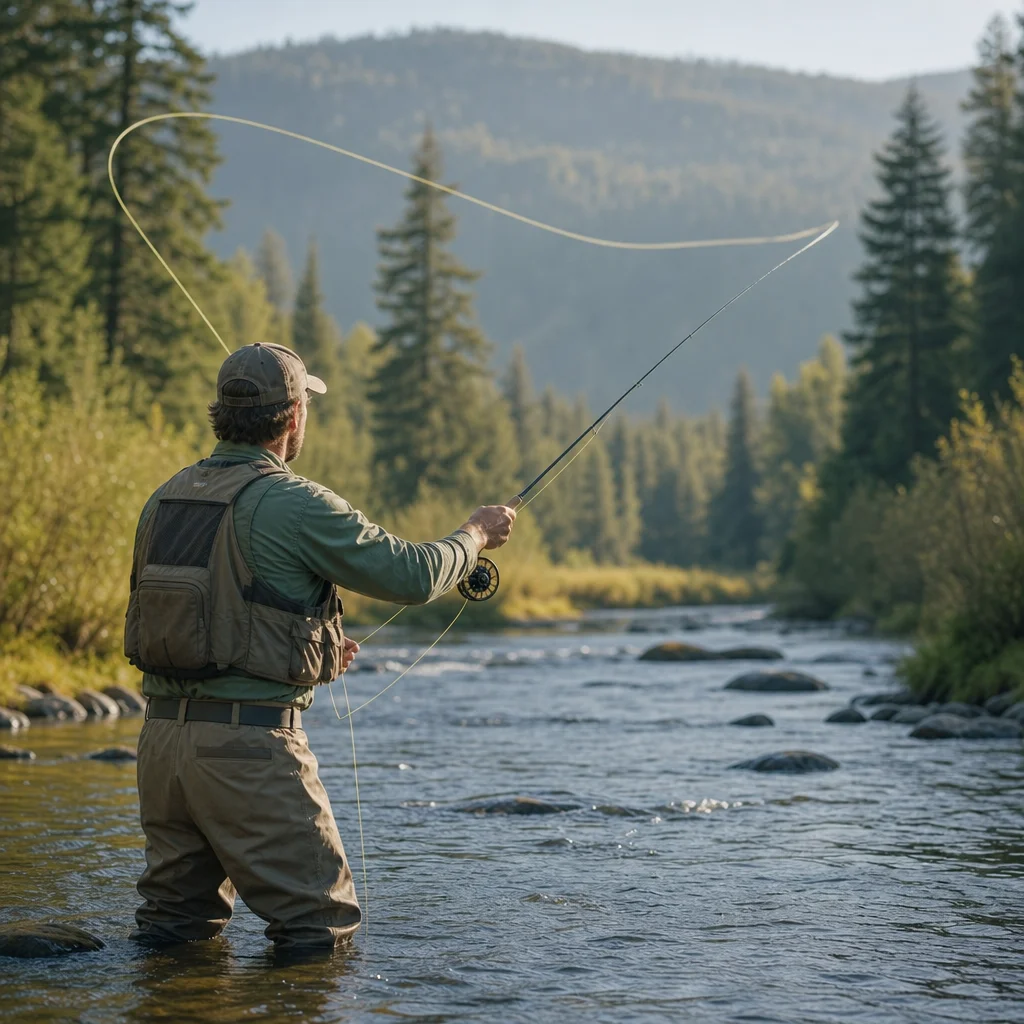
The breeze drops, the surface smooths out, and the rising trout seem to vanish. A few minutes earlier, fish were confidently sipping along a wind lane or soft current. Now the water looks empty, even though the hatch may still be happening.
That change usually isn’t mysterious, and it doesn’t necessarily mean the trout have stopped feeding. When wind lays down, several things change at once: insects reach the surface differently, trout lose the cover provided by broken water, and you can see more of what the fish are doing. The best response depends on which of those changes matters most.
What changes when the wind fades
Wind affects both the food and the trout. On a lake, it can push insects, floating debris, and warmer or cooler surface water toward a particular bank. On a slow river, it can roughen the surface, collect terrestrials, and make a riffle or seam more difficult for predators to inspect.
When the air becomes calm, that delivery system weakens. Food may stop gathering in one obvious area, while trout spread out, sink slightly, or move into less visible feeding lanes.
A calm surface also gives trout a better view of danger. Your fly line, leader, shadow, and movements become easier for them to detect. A fish that fed boldly through rippled water may still be willing to eat, but only if the presentation is more precise.
The key point is that “no more rises” can describe several different situations:
- The hatch has slowed or ended.
- Insects are still present but no longer concentrated at the surface.
- Trout have moved away from the wind-blown food lane.
- Trout are feeding just below the surface.
- Trout are still rising, but the calm water makes their rises harder to see.
- The fish remain interested but have become more selective.
Treat the change as a new set of conditions rather than proof that the fishing is over.
Surface food may have become less predictable
Wind often creates a conveyor belt. On a lake, waves push floating insects toward a shoreline, point, weed edge, or sheltered pocket. Trout learn that food arrives there with little effort. In a slow river, wind can blow ants, beetles, and other land insects onto the water, or push drifting material toward one bank.
When the wind drops, that concentration can disappear. The same insects may still be hatching, but they’re no longer arriving in a steady stream. Trout have less reason to hold in one visible area.
This creates a practical trade-off. Staying on the original wind lane is efficient if the food is still collecting there, but it becomes unproductive if you’re only waiting for the previous pattern to return. Moving can find the new food source, but leaving too quickly may mean abandoning fish that are still feeding quietly.
Watch the surface before changing flies. Look for shucks, adults, spent insects, ants, beetles, and small bubbles. Check several windward edges, not just the spot that produced earlier. If the wind has shifted rather than simply stopped, the productive bank or corner may have shifted with it.
Calm water exposes trout and angler alike
Broken water provides cover. It hides a trout’s movements and makes it harder for the fish to inspect your leader and fly. Once the surface flattens, the fish may become more cautious even when the available food hasn’t changed much.
This is especially noticeable in clear lakes, spring-fed rivers, and long, slow pools. Trout may continue taking small insects but refuse a fly that lands heavily, drags across the surface, or approaches from an obvious angle.
Before assuming the fly is wrong, improve the presentation:
- Lengthen the leader if the water is clear and the trout are wary.
- Reduce unnecessary false casts over the feeding area.
- Land the fly farther from the fish when possible.
- Use slack or reach casts to delay drag in slow currents.
- Keep your body low and avoid standing directly over shallow fish.
- Approach from an angle that keeps your shadow and line away from the likely holding water.
A longer leader isn’t automatically better. It can improve separation between line and fly, but it also makes turnover less certain and takes more room to manage. In a tight river corridor or around weeds, a slightly shorter leader that turns over cleanly may produce a better drift.
Trout may move below the surface
A surface hatch can fade without ending the feeding opportunity. Nymphs, emergers, drowned adults, and small aquatic insects may remain available just under the film. Trout can shift from obvious rises to subtle subsurface feeding that leaves little or no surface evidence.
If you see occasional flashes, bulges, or short swirls without clean rises, try an emerger or lightly weighted nymph before abandoning the area. Fish feeding in the surface film may respond better to a sparse emerger than to a fully dressed dry fly riding high.
A useful progression is:
- Keep the dry fly if you still see consistent rises and can identify the food.
- Try a smaller or more subdued dry if rises become selective.
- Change to an emerger when fish are showing just beneath the surface.
- Use a lightly weighted nymph when the trout are flashing deeper or the surface goes completely quiet.
- Return to the surface when new adults, spinners, or terrestrials begin appearing.
The trade-off is visibility. A dry fly helps you detect takes and match obvious surface activity. An emerger or nymph may represent what trout are actually eating, but you’ll need to track the drift more carefully. In calm water, a strike indicator can help, though a large or poorly placed indicator may disturb shallow fish. A suspending dry fly or small, unobtrusive indicator can be a better compromise where conditions allow.
Your fly choice may need to become less obvious
When wind roughens the surface, trout often have less time to inspect a fly. Calm conditions give them that time. Size, profile, color, and movement all become easier for the fish to evaluate.
That doesn’t mean you should immediately select the smallest fly in the box. Tiny patterns can be difficult to see and may fail to imitate the insects trout are actually eating. Start by matching the food’s general size and stage, then adjust the pattern’s footprint and presentation.
For example, if trout were taking mayflies in wind-chopped water, a standard high-riding dry might have worked. After the surface settles, a slimmer-bodied pattern, emerger, or lower-riding imitation may look more natural. If the hatch has been replaced by ants or beetles, a terrestrial pattern may be more useful than a smaller mayfly.
Avoid changing five variables at once. If you move, change flies, shorten the cast, and switch from dry to nymph all together, you won’t know which adjustment helped. Make one sensible change, give it several good drifts, and then reassess.
Decide whether to stay, move, or go subsurface
The most useful decision is usually based on evidence rather than frustration.
Stay and refine the surface presentation
Stay when you can still see rises, insects collecting nearby, or trout holding in the same lane. Improve your angle, reduce disturbance, and adjust the fly only as much as needed.
This approach preserves the information you’ve already gathered. Its weakness is that calm conditions can make a formerly productive lane look promising long after the food has dispersed.
Move to the new food source
Move when the original wind lane has gone quiet and another bank, seam, weed edge, or sheltered pocket shows signs of activity. Search for insects and surface texture, not just rises. Trout may be spread along a broader area rather than stacked in one narrow line.
Moving is often the efficient choice on lakes, where wind-driven food can relocate quickly. The cost is disturbance: wading, walking the bank, or repeated casts can alert fish in calm water. Move carefully, make the search deliberate, and avoid crossing shallow feeding areas.
Fish below the surface
Go subsurface when the hatch appears to have thinned, rises become sporadic, or you see signs of trout feeding beneath the film. Keep the presentation light at first. A deeply weighted nymph can pass below active fish, snag vegetation, and make it harder to identify the feeding depth.
Start near the level where you saw activity and adjust depth gradually. In lakes, trout may slide away from the bank or suspend at a consistent depth. In slow rivers, they may settle into the softer edge of a current seam or hold just below a riffle’s influence.
Don’t mistake calm water for dead water
A windless surface can be less forgiving, but it often makes the clues easier to read. You may notice the direction of tiny currents, the way insects gather around weed beds, or the subtle lane where a trout repeatedly shows itself.
Give the water a few quiet minutes before casting. Watch for feeding signs, inspect the surface for insects, and compare nearby areas. If the original pattern has genuinely disappeared, change location or depth rather than repeatedly presenting the same fly over empty water.
Then keep your adjustments modest: refine the approach, match the available food, and let the trout tell you whether they’re still interested in the surface.
Practical next steps
When trout stop rising after the wind drops, use this sequence:
- Recheck the original feeding lane and nearby windward edges.
- Look for insects, bubbles, flashes, and subtle surface movement.
- Improve your approach before changing flies.
- Try a smaller or lower-riding pattern if rises continue but become cautious.
- Switch to an emerger or lightly weighted nymph when feeding moves below the film.
- Move only when the evidence suggests the food or trout have relocated.
Calm conditions don’t always end the hatch. They change the balance between food concentration, trout cover, and presentation accuracy. Once you identify which part of that balance shifted, you can choose whether to stay, move, or fish a little deeper.