Recover From a Day of Short Strikes and No Landed Trout
I’ll compare the likely causes of short strikes and lost trout—from hook-setting timing and hook condition to tippet, fly size, and fish behavior—so you can make one sensible adjustment instead of changing everything at once.
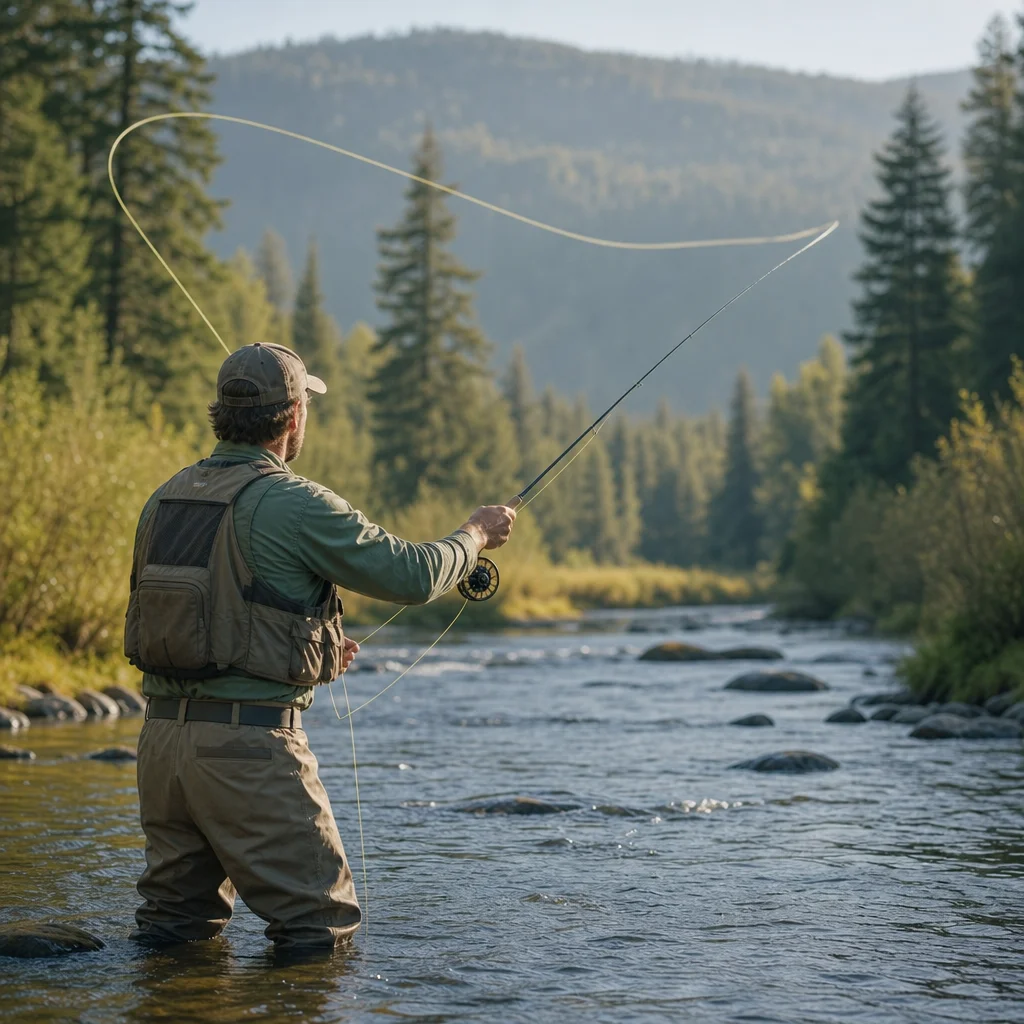
A day of short strikes can make every trout seem determined to win the argument. You see the mouth open, feel a tap, or briefly load the rod, and then the fly comes back without a fish attached. The temptation is to change flies, tippet, retrieve, and hook-setting style all at once.
That usually makes the problem harder to diagnose. Start by separating the two outcomes: the trout never fully connected with the fly, or you connected and lost it afterward. They can look similar, but they call for different fixes.
First, classify what happened
Before changing tackle, replay the last few encounters as precisely as you can. Your goal isn’t to assign blame; it’s to identify the stage at which the system failed.
A short strike
A short strike is usually a touch, flash, swirl, or visible take that never becomes solid pressure. The trout may have missed the fly, rejected it at the last moment, or contacted it without getting the hook point into its mouth.
Common clues include:
- You feel only a light tick rather than the rod loading.
- The fly comes back clean, with no sign of a hook connection.
- Several fish react but fail to stay attached.
- The same problem occurs across different casts or drifts.
A lost trout
A lost trout has usually been hooked for at least a moment. You feel sustained weight, the rod bends, or the fish turns before the line goes slack.
Clues include:
- The fish runs or shakes its head before coming free.
- The fly returns with a damaged body or flattened hackle.
- The hook is bent, dull, fouled, or pulled free of its connection.
- The failure happens during the hook set, first run, jump, or final approach.
This distinction matters. If the fish never took hold, changing your landing technique won’t solve the immediate problem. If the fish was hooked and then lost, striking harder may make things worse.
Check hook-setting timing before changing flies
Hook-setting timing is often the first variable worth examining because it changes quickly with water type and fly style.
With a dry fly, a trout may need a moment to close its mouth and turn. Lifting at the first visible splash can pull the fly away before the fish has it. The familiar advice to wait until the fish turns is useful, but don’t treat it as a stopwatch rule. Watch the fly and the fish when you can, then lift as the trout’s movement creates tension.
With a nymph or wet fly, the take may be subtle and the line may already be under tension. A firm lift is generally more useful than a large, fast overhead strike. The goal is to move the hook into the corner of the mouth without ripping the fly away or breaking a light tippet.
With streamers, the situation changes again. A trout may follow, nip, or grab from behind. A short pause or controlled strip set can help keep the fly moving into the hook rather than pulling it straight away. The exact response depends on whether the fish is coming toward you, crossing the current, or following downstream.
Make one timing adjustment
For your next few likely takes, choose one deliberate change:
- Dry fly: delay the lift slightly while keeping your eyes on the fish or fly.
- Suspended nymph: lift smoothly when the indicator, leader, or line gives a credible signal.
- Tight-line nymph: use a short lift rather than a dramatic arm movement.
- Streamer: keep the rod angle controlled and use a strip set when the fish takes at close range.
Don’t change timing and fly size on the same cast sequence. If the result improves, you’ll have a useful clue. If it doesn’t, move to the next variable.
Inspect the hook, not just the fly pattern
A fly can look perfectly fishable while its hook is the main problem. Check it after a few missed takes, a snag, contact with rocks, or an awkward release.
Look for:
- A point dulled by stone or hard structure.
- A point driven into the fly’s dressing.
- A gap crowded by excessive thread, dubbing, or material.
- A hook that has opened, twisted, or shifted out of alignment.
- A bend that doesn’t match the original shape.
Run the point lightly across a fingernail if you’re comfortable doing so. A sharp point should catch rather than skate. Replace a suspect fly when possible; spending several more casts trying to prove that a questionable hook is adequate rarely saves time.
Also check whether the fly is riding upside down, fouled around the hook, or sitting at an angle that hides the point. This is especially easy to miss with soft hackles, emergers, streamers, and heavily dressed patterns.
Treat tippet diameter as a trade-off
Tippet affects more than visibility. It influences how freely the fly moves, how quickly it sinks, how much force the hook set can transmit, and how much margin you have when a fish runs.
A thinner tippet may help a small fly behave naturally in clear, slow water. It also gives you less abrasion resistance and less tolerance for an abrupt strike or a strong fish. A thicker tippet offers more control and durability, but it can restrict a small fly or make a cautious trout less willing to take.
If the fish are repeatedly refusing or barely touching a fly, reducing diameter can be reasonable when conditions and local tackle allow it. If trout are taking but breaking off or pulling free under pressure, the better adjustment may be a stronger or less-worn section rather than a smaller one.
Inspect the final section after every fish contact. Look for roughness near the knot, nicks from rocks, and damage where the tippet passes through the surface film or brushes vegetation. Retie when the material is compromised, and make sure the knot is seated correctly.
Check your setup before the next drift: Confirm that the tippet is undamaged, the knot is fully seated, and the hook point is clear and sharp. If all three pass inspection, keep them unchanged while you test your next adjustment.
Change fly size only when the evidence points there
Fly size is an easy change, but it’s often used as a reflex. Downsizing can help when trout are inspecting a small natural, when the water is low and clear, or when your fly repeatedly gets refusals at close range. It can also make the hook harder to control and reduce the amount of hook gap available, especially if the pattern is crowded.
Upsizing may help when the fly is difficult for fish to track, when the water is carrying color, or when trout are feeding on larger prey. But a larger fly can produce more violent misses if fish are only nipping at it or if the retrieve is too fast.
Before changing size, ask what the trout’s behavior says:
- Visible refusals: the fish approaches, inspects, and turns away. Consider size, profile, drag, or presentation.
- Explosive misses: the fish attacks but doesn’t connect. Consider retrieve speed, hook position, and hook-setting timing.
- Light taps: the fish may be sampling a drifting fly, or your contact may be poor. Check line control before assuming the pattern is wrong.
- One miss followed by no further interest: the trout may now be wary. Change angle, drift, or rest the water before changing several pieces of tackle.
The pattern itself may also be the issue. A fly can be the right general imitation but still be poorly presented because it lands heavily, drags, or moves at a different speed from the surrounding food.
Account for fish behavior and water position
Not every missed take is a tackle failure. Trout often feed in ways that make clean hookups difficult. A fish rising into broken surface water may have limited visual precision. A trout chasing a streamer may slash at the tail. A fish holding in fast current may touch a fly while spending little energy on the attempt.
Your position can make the same take feel completely different. If the line is downstream of the fly, you may have too much slack to set effectively. If the fly is moving toward you, the fish may be hooked briefly and then lose tension. If the current is pulling the line across the fish’s mouth, the hook can be dragged sideways before it finds purchase.
Improve the connection before increasing force:
- Mend or reposition early enough to reduce unwanted drag.
- Keep only enough slack for the fly to move naturally.
- Use the rod angle and line hand to maintain contact.
- Set in a direction that works with the fly’s path rather than directly away from the fish.
- After the set, lower excessive rod angle only when you need more direct pressure or better control.
In lakes, wind and distance magnify these issues. A long floating line can hide a gentle take, while a sinking line can create a delayed connection. Keep the retrieve consistent for several casts and pay attention to where the line straightens relative to the fly.
Stop losing trout after the hook set
When the fish is attached, the priorities change. A trout can come free because of slack, excessive pressure, a poor rod angle, or a hook that never penetrated deeply.
Keep the line tight, but don’t lock the rod into one position. Use the rod to cushion sudden movements and the line hand to manage slack. If the trout runs, let the reel and drag work smoothly. If it turns toward you, recover line quickly enough to maintain contact.
A high rod angle can protect against some sudden movements, but it can also put excessive load on light tippet and reduce your ability to steer the fish. A lower side pressure angle can help turn a fish away from danger, particularly in current, but use enough control to avoid sending the trout into submerged branches, heavy weeds, or rocks.
Jumps are another common failure point. Avoid jerking the rod upward when the fish leaves the water. Maintain pressure without pulling directly against every head shake. The best response depends on the fish’s direction and the amount of tension already in the system.
Near the bank or boat, don’t rush the final moments. Many lost trout are given one last chance to escape because the angler lifts the head too aggressively, reaches before controlling the line, or tries to land a fish that still has full energy.
Use a one-change recovery plan
After several short strikes or lost trout, pause rather than rebuilding the entire rig. Use this order:
- Inspect the hook and tippet. Replace anything damaged or questionable.
- Improve line control. Remove excess slack and correct drag.
- Adjust hook-setting timing. Match the response to the fly and the take.
- Change fly size or profile. Do this when refusals or misses suggest a presentation mismatch.
- Reconsider tippet diameter. Balance natural movement against strength and abrasion resistance.
- Change position or water. A different angle may solve what looks like a tackle problem.
Make five to ten purposeful casts before judging a small adjustment, unless fish are visibly spooking or the setup is clearly unsuitable. Keep a simple mental note: what changed, what the trout did, and where the failure occurred.
Practical next steps
On your next outing, carry a few replacement flies in the same pattern at nearby sizes, fresh tippet, and a way to inspect hook points. After the first missed take, classify it. After the second, check the connection and hook. Then change only one variable.
The goal isn’t to eliminate every missed strike; trout will continue to make reasonable claims about their privacy. The useful goal is to turn an unproductive day into clear information about timing, equipment, presentation, or fish behavior. Once you know where the failure happened, the fix is usually smaller—and more reliable—than starting over.