How to Learn From a Fishless Day Without Changing Everything at Once
You can either replace half your setup or isolate one useful clue; I’ll show you a simple way to separate conditions, location, presentation, equipment, and luck after a fishless day.
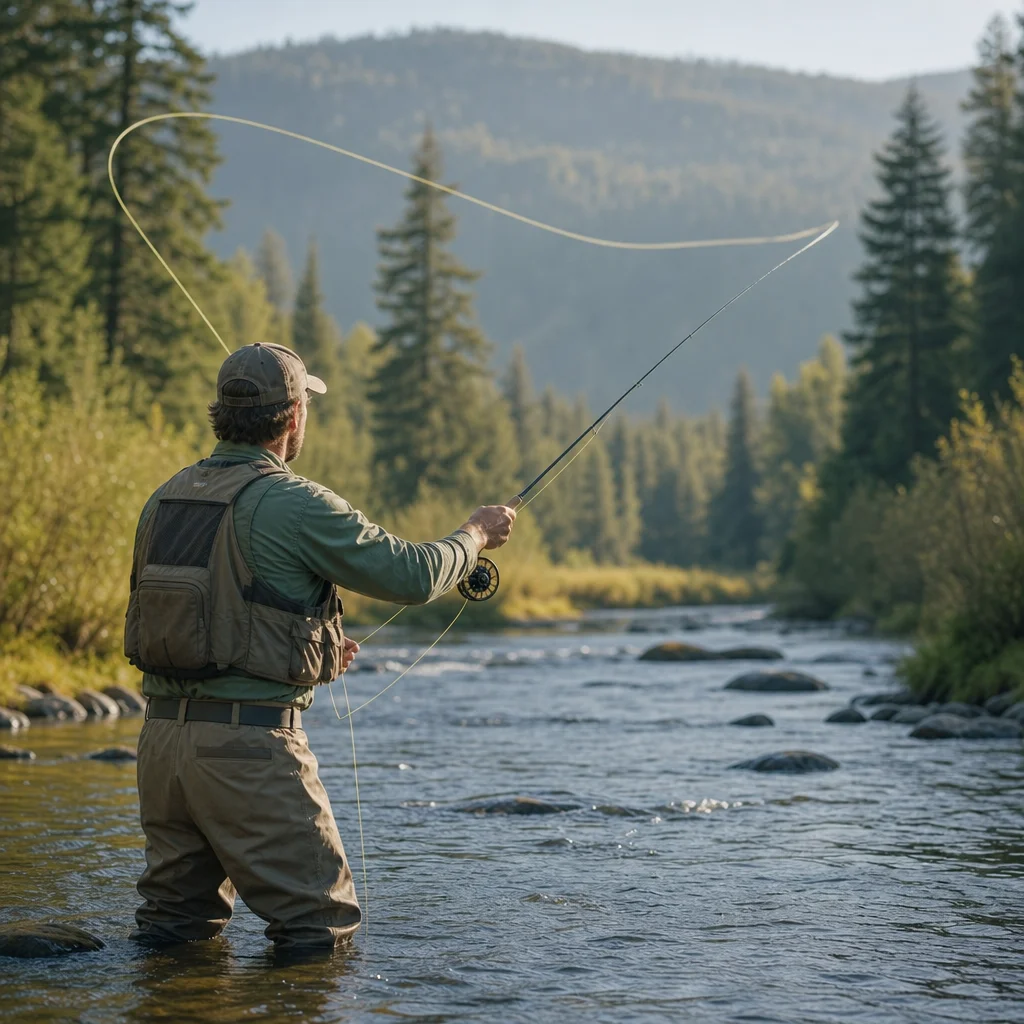
A fishless day creates a tempting problem: you want an explanation, but several explanations can look equally convincing. Maybe the water was wrong, your fly was wrong, your retrieve was wrong, or the trout simply weren’t interested. Changing everything at once feels productive, but it usually hides the answer.
A better approach is a small debrief. You don’t need a notebook full of measurements or a completely new fly box. You need enough information to identify the most likely weak point and one sensible adjustment for next time.
Start with the facts, not the verdict
Begin by describing what happened without judging your performance.
Write down or think through:
- Where you fished
- When you arrived and left
- Water level and clarity
- Weather and light
- Flies and tackle used
- Water you covered
- How many convincing opportunities you had
- What signs of fish you noticed
“Caught nothing” is a result, not an explanation. “Covered two riffles and a shaded bank with a dry fly in high, clear water” gives you something to examine.
Keep the first version short. A few accurate details are more useful than a dramatic account of every cast. If you can’t remember a detail, mark it as unknown instead of filling the gap with a guess.
Separate the five main variables
A simple debrief works best when you examine one category at a time. These categories overlap, but separating them prevents you from blaming the most visible part of your setup.
1. Conditions
Conditions include water temperature, flow, clarity, weather, wind, light, and recent changes. You don’t need precise readings for every outing. You’re looking for broad clues.
Ask:
- Was the water unusually high, low, clear, or cloudy?
- Had the weather or flow changed recently?
- Was the wind making presentation difficult?
- Did bright light, shade, or changing cloud cover affect where fish could hold?
Conditions often change fish behavior without making fishing impossible. High water may move fish toward edges or slower seams. Low, clear water may make them cautious and quick to spook. Strong wind may make a good fly difficult to present cleanly.
The useful conclusion isn’t “the conditions were bad.” It’s more specific: “I fished the middle of the current even though the flow pushed likely holding water toward the bank.”
2. Location
A familiar stream can still offer poor water on a particular day. You may have chosen a section that looked attractive but lacked depth, cover, food activity, or comfortable holding water under the day’s conditions.
Review the water you actually fished, not the water you intended to fish. Did you concentrate on one pool because it was convenient? Did you skip the slower margins, pocket water, undercut banks, or deeper seams? Did you move often enough to test different types of habitat?
Location doesn’t only mean the stream or access point. It also means your position within a pool, run, or bank. A trout may have been present but outside the lane you covered.
If you saw no fish, no rises, no movement, and no other signs of life, location deserves attention before you buy new gear. Next time, try a nearby piece of water with a different depth, speed, or structure while keeping the rest of your approach similar.
3. Presentation
Presentation is how the fly reaches and moves through the water. It includes casting accuracy, drift, drag, depth, leader placement, retrieve speed, and the amount of disturbance you create.
A fly can be a reasonable choice and still fail because it never behaved naturally. For a dry fly, look at drag and the quality of the drift. For a nymph, consider whether it reached the likely feeding depth and stayed there long enough. For a streamer, consider whether the speed and angle matched the current and the fish’s mood.
Ask yourself:
- Did the fly land close enough to likely holding water?
- Did it reach the depth where fish were likely feeding?
- Did current pull the line, leader, or fly unnaturally?
- Did you give one presentation enough time before abandoning it?
- Were repeated casts educating fish in clear or shallow water?
Presentation is often the most useful first adjustment because you can change it without replacing equipment. Alter your position, mend earlier, shorten or lengthen the leader when appropriate, slow the retrieve, or make fewer casts from a better angle.
4. Equipment
Equipment matters, but it’s easy to overestimate its role after a blank day. A new rod, reel, line, or box of flies may feel like a solution because it gives you something tangible to change.
First ask whether your equipment prevented a reasonable presentation. Did the line make it difficult to cast the required distance? Was the leader too heavy or too short for the water? Was the fly damaged, poorly tied, or unsuited to the depth? Did a knot, tippet, or reel problem cost you a real opportunity?
If the equipment functioned and you could reach the water with a controlled presentation, it probably wasn’t the main cause of a fishless day. That doesn’t mean gear is irrelevant. It means you should identify a specific limitation before replacing something.
For example, “I need a better rod” is vague. “My current line makes short, accurate roll casts difficult in tight brush” is a testable problem. You can then try a different casting position or line handling technique before spending money.
5. Luck
Luck belongs in the debrief, but it shouldn’t become either a complete excuse or a personal accusation. Trout don’t feed on your schedule. Fish may be inactive, dispersed, or simply absent from the water you covered.
You can make good decisions and still catch nothing. You can also make poor decisions and catch a fish that happened to be willing. One outing is weak evidence by itself.
Use luck as a reason to avoid overcorrecting. If your fly was plausible, your presentation was controlled, and you explored suitable water, the correct adjustment may be small—or none at all. The next useful test might be fishing the same setup under different conditions rather than rebuilding your approach.
Choose one clean test: For your next outing, change only the factor most strongly supported by your debrief. Keep the fly, tackle, and general method consistent when possible so the result teaches you something.
Look for evidence, not just outcomes
A fishless day can still contain useful evidence. Pay attention to what happened between the first cast and the final one.
Did you see rises, flashes, wakes, spooked fish, insects, baitfish, or other anglers catching nearby? Did fish follow a streamer without striking? Did a fly drift through likely water untouched? Did you get one soft take that you failed to convert?
These clues narrow the problem.
- You saw fish but had no takes: Examine presentation, depth, fly size, and your approach.
- You had follows or short strikes: Examine retrieve speed, hook size, hook sharpness, and timing.
- You spooked fish repeatedly: Examine your position, silhouette, casting distance, and movement.
- You saw no fish or activity anywhere: Examine location and conditions before changing flies repeatedly.
- You had a few opportunities but poor hook-ups: Examine knots, hook points, line control, and how you reacted to takes.
None of these clues proves a single cause. They simply help you choose a more focused next question.
Use a one-change rule
After a difficult day, choose one primary change and, at most, one small supporting change. This keeps the experiment understandable.
Examples include:
- Keep the same fly and move to slower edge water.
- Keep the same location and improve your angle and drift.
- Keep the same presentation and test a fly at a different depth.
- Keep the same fly and method but fish during a different part of the day.
- Keep the same setup and move less carefully through shallow water.
Avoid changing your location, fly family, leader, retrieve, casting style, and rod all at once. You might catch fish, but you won’t know which change mattered. You might also continue catching nothing and have no clear idea what to try next.
The one-change rule isn’t a demand for laboratory conditions. Fishing is too variable for that. It’s simply a way to reduce unnecessary noise.
Keep a minimal fishing log
A useful log can fit in your phone’s notes app. Record five things:
- Conditions: water appearance, weather, flow, and light
- Water: the types of habitat you fished
- Method: fly, depth, retrieve, and presentation
- Evidence: rises, follows, strikes, spooked fish, or no signs
- Next test: one adjustment for another day
Add a photo of the water if that helps you remember it. You don’t need to record every cast or create a database of fly-fishing statistics. The purpose is to notice patterns across several outings.
After a few trips, you may find that “bad luck” has a pattern. Perhaps you struggle mainly after rising water, in bright low flows, or when you fish only the obvious pool. Patterns are more trustworthy than conclusions drawn from one blank day.
Know when not to change anything
Sometimes the best response is to repeat a sound approach. If you fished appropriate water, made controlled presentations, and had no clear evidence of a mistake, changing your setup may only create confusion.
Repeat the method when:
- The conditions were unusual and unlikely to represent your normal fishing
- You covered too little water to draw a conclusion
- You were still learning the presentation
- Your equipment worked as intended
- You had no strong evidence pointing to a particular failure
A repeat outing doesn’t mean doing exactly the same thing forever. It means giving one reasonable approach another chance under a different set of circumstances or in a better-sampled area.
Your next-step debrief
Before you pack away the lesson from a fishless day, answer three questions:
- What did I directly observe?
- Which variable is most likely to have limited my chances?
- What single change will give me the clearest test next time?
Start with conditions and location, then examine presentation, equipment, and luck. Keep the adjustment small. A blank day doesn’t require a new identity, a new rod, or a heroic fly-box overhaul. It usually requires a clearer question and another chance to test the answer.