How to Recover a Fly-Fishing Day After Breaking Your Only Leader
I’ll explain how to turn spare tippet and the flies already in your box into a fishable setup, check whether damaged materials are trustworthy, and prevent one broken leader from ending the day—or causing a worse problem.
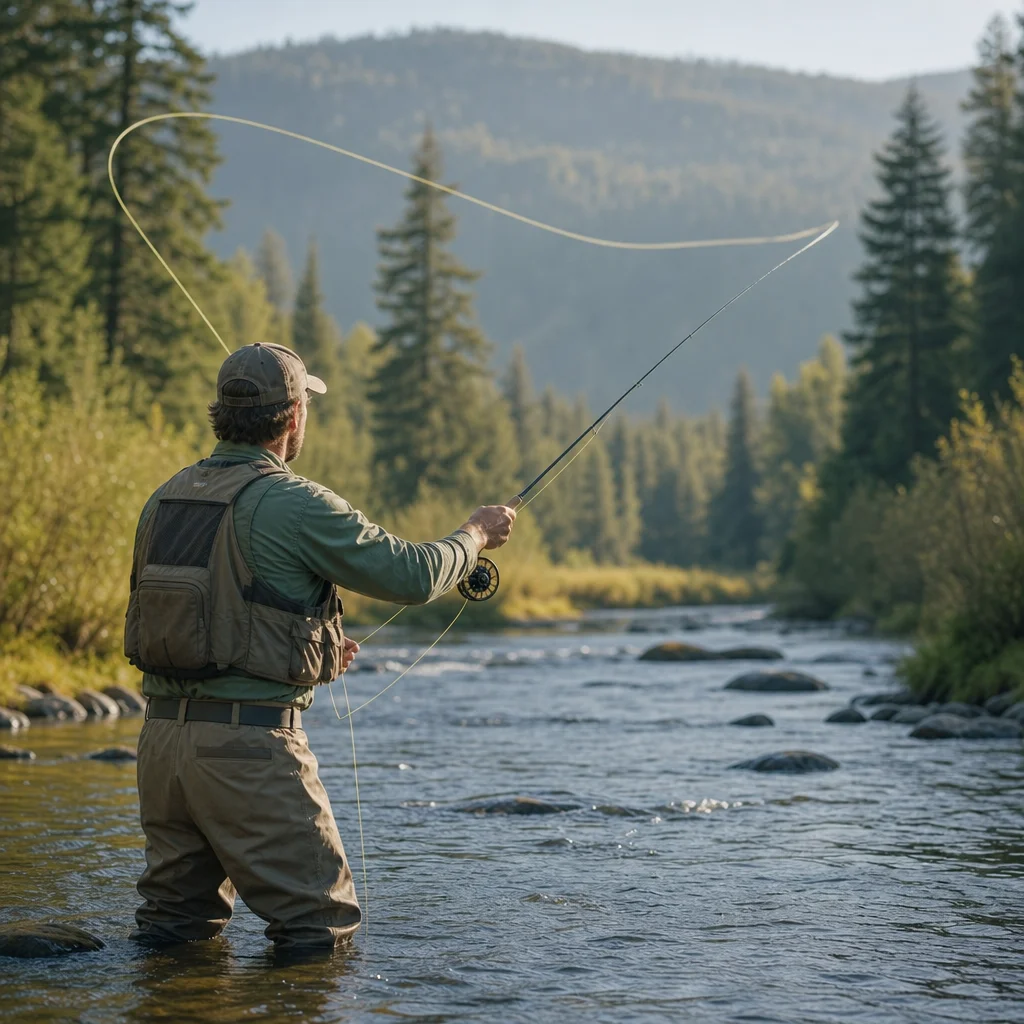
Breaking your only leader can make a productive outing feel finished, especially when the nearest fly shop is several miles away. It doesn’t always have to end that way. With a careful inspection, a few sensible knots, and realistic expectations, you can often build a temporary system that casts well enough to keep fishing.
The goal isn’t to recreate a factory-tapered leader perfectly. It’s to make a controlled, reliable connection that matches your fly, casting distance, and water conditions without asking damaged material to do more than it can.
Stop and find out what actually failed
Before tying anything, retrieve every loose piece you can. Check whether the break occurred at the fly, at a tippet knot, near the leader butt, or in the leader material itself. The location tells you what can be reused.
If the break is at the fly
The leader may still be sound. Run the last several feet between your fingers, looking for roughness, flat spots, discoloration, or a section that feels noticeably thinner. If the material feels smooth and resilient, cut away the damaged end and tie on a fresh section of tippet.
A break at the fly often comes from abrasion, a poor knot, or a sharp edge on the hook eye. Inspect the eye before attaching another fly. If the eye has a burr or is partially blocked by varnish or paint, replace the fly rather than repeatedly sacrificing tippet.
If the break is at a knot
A knot failure doesn’t necessarily condemn the entire leader. Examine the material on both sides of the knot. If it’s clean and undamaged, trim back beyond the compressed section and rebuild the connection with fresh tippet.
If the knot pulled out because the material was badly kinked, burned, or scraped, remove more than the visibly failed section. Nylon and fluorocarbon can have damage that’s difficult to see but easy to feel.
If the break is near the leader butt
A break close to the fly line is more serious. You may be able to shorten the leader and attach new material, but the resulting setup will be less tapered and may turn over poorly. If the remaining leader is frayed, cracked, or unusually stiff, don’t trust it simply because it’s still attached.
When in doubt, sacrifice a little length. A shorter, clean leader is safer and more predictable than a longer one with a suspicious section.
Check the water before restarting: Before you wade back in, reassess footing, current speed, weather, and visibility. A broken leader is an equipment problem; rushing to fix it in moving water can create a much bigger one.
Use the best material you still have
Sort your spare material by diameter and condition. Don’t choose a section only because it’s the longest. The strongest-looking piece with a clean surface is usually the better starting point.
Ideally, a leader has a thicker butt section near the fly line, a middle section that tapers down, and a finer tippet near the fly. If you have several diameters available, imitate that progression. The exact number of sections matters less than avoiding an abrupt jump from very thick material to very thin material.
For example, you might use:
- A thicker piece as the connection to the remaining leader or fly line
- A medium section to create a smoother transition
- The finest suitable tippet for the final connection to the fly
Join sections that are reasonably close in diameter. A large difference can make knots bulky, weak, or prone to catching in the guides. A surgeon’s knot is a useful field choice because it’s quick to tie and works well when the joined materials are similar in size. A blood knot can produce a neater connection, but it’s less forgiving when the diameters differ and can be harder to tie in poor light or cold fingers.
Moisten the knot before tightening it, then pull the standing lines steadily rather than jerking them tight. Trim the tags close enough to prevent snagging, but leave a small amount until you’ve tested the connection.
Three workable emergency setups
1. Extend an intact leader with fresh tippet
This is usually the best option. Cut back to clean material on the existing leader, then add a length of tippet that suits the fly and conditions.
Keep the extension long enough to give the fly room to move naturally, but not so long that the connection becomes difficult to cast. A shorter section is often the sensible choice when you’re working with limited material or fishing a weighted fly, wind, or tight cover.
After tying the fly on, make a few short casts. Watch whether the leader straightens, piles up, or lands in a heap. If it fails to turn over, shorten the tippet or use a less air-resistant fly.
2. Build a short tapered leader from spare tippet
If the original leader is unusable but you have multiple tippet diameters, make a compact leader with two or three sections. Use the thickest available material at the top and the finest material at the fly.
This setup won’t behave like a carefully tapered commercial leader, but it can work at modest distances. Keep the total length conservative at first. A short leader is easier to control while you learn how the improvised taper responds.
Attach the thick end to the fly line with the connection your line system supports. If your fly line has a loop, a loop-to-loop connection is usually straightforward. If it has no loop, use a connection you already know and can tie securely; an improvised knot you’ve never tested is a poor place to save time.
3. Fish a level tippet system
If all you have is one diameter of spare tippet, use a short length as a level leader. This is the least elegant option, but it can be adequate for short casts, small flies, and sheltered water.
A level section doesn’t transfer energy as smoothly as a tapered leader. It may land abruptly, fail to straighten, or cause the fly to turn over unevenly. Reduce the demands on it:
- Shorten the overall length
- Choose a compact, lightly dressed fly
- Cast with a smooth, controlled stroke
- Avoid forcing long casts into the wind
- Keep the fly away from heavy cover where a poor presentation may leave you stuck
If the system repeatedly collapses, don’t compensate by casting harder. Harder casting usually produces more tangles and puts greater stress on a weak connection.
Match the fly to the emergency setup
Your fly box can help solve the leader problem. Select a fly that the improvised system can turn over rather than insisting on the pattern you originally planned to use.
Large foam flies, heavily weighted nymphs, streamers, and bulky patterns create more air resistance or momentum. They can expose weaknesses in a short, level, or poorly tapered leader. A smaller dry fly, lightly weighted nymph, or compact soft-hackled pattern is often easier to manage.
Fly choice still needs to fit the water and the fish. Don’t automatically downsize to an extremely fine tippet if rocks, weeds, branches, or larger fish make a break likely. A clean presentation is useful only if the connection has a reasonable chance of surviving the retrieve.
When changing flies, consider the hook eye as well as the pattern. Pass the tippet through cleanly, seat the knot neatly, and test it with firm hand pressure. Avoid yanking hard enough to damage the material, but don’t treat a knot as trustworthy until it has been loaded.
Test the repaired system before fishing seriously
Move away from people, brush, and fragile surroundings. Pull the leader straight and make several short false casts or roll casts. You’re checking more than turnover.
Look for:
- A knot that slips or tightens unevenly
- A tag end catching in the guides
- A connection that repeatedly hinges
- Cracks, white stress marks, or flattened material
- The fly failing to straighten at the end of the cast
- Unexpected weakness when lifting the fly clear of the water
If the knot fails during this test, you’ve learned something useful without losing another fly. Retie it, shorten the damaged section, or change to a less demanding fly.
Don’t test by wrapping the leader around your hand and pulling with all your strength. That can cut skin and doesn’t recreate the forces of a cast or hooked fish. Use controlled tension and keep hooks clear of your fingers.
Know when to stop improvising
A temporary repair is reasonable when the material is clean, the knots are familiar, and the fishing conditions are forgiving. It becomes a poor choice when the situation demands more strength or precision than your setup can provide.
Consider calling it a day, changing locations, or switching to a sturdier setup if:
- The leader or tippet has repeated abrasion
- You can’t make a connection you trust
- The water is fast, deep, or difficult to exit
- Wind makes the improvised system hard to control
- You’re targeting fish large enough to overwhelm the repaired material
- The only available fly requires a leader the setup can’t turn over
There’s no prize for losing a second fly in the same place. A controlled retreat is part of good tackle management, not a failure of persistence.
Prevent the next single-leader failure
Once you’re home, replace the temporary arrangement rather than leaving it as your new standard. Inspect the fly line tip, leader connection, tippet material, and knots. If the original leader failed near a connection, identify whether abrasion, a damaged loop, poor knot seating, or excessive strain played a role.
Carry enough spare tippet to rebuild the final section at least several times. A small selection of diameters is more useful than one large spool if you fish varied water. Keep it where you can reach it without emptying every pocket in the vest.
A few additional habits help:
- Check the last few feet of leader whenever you change flies
- Replace visibly rough or cloudy material
- Keep a simple knot tool or nipper in an accessible pocket
- Practice your preferred leader-to-tippet knot at home
- Carry at least one backup leader when a long walk or remote water is involved
- Store leaders and tippet away from prolonged heat and direct sunlight
A simple recovery sequence
When the only leader breaks, work through this order:
- Get clear of immediate hazards and retrieve the broken pieces.
- Identify where the failure occurred.
- Cut back to clean, undamaged material.
- Use the thickest suitable spare material near the line and the finest suitable material near the fly.
- Choose a compact fly that your emergency setup can turn over.
- Tie, moisten, seat, and trim each knot carefully.
- Test with short, controlled casts before returning to the target water.
- Shorten or simplify the system if it hinges, tangles, or feels unreliable.
The repaired leader may not be beautiful, but it can be functional. Treat it as a limited, tested solution—not permission to ignore damaged material or force difficult casts. A few spare sections of tippet, a familiar knot, and a willingness to scale back your presentation can turn an abrupt equipment failure into an ordinary interruption.