A Simple Practice Routine for Learning to Fly Fish in a Small Yard or Park
Short casts feel awkward, loops collapse, and a small yard seems too cramped for useful practice. I’ll show you how to build timing, loop control, and accuracy with simple equipment and a repeatable routine before you visit the water.
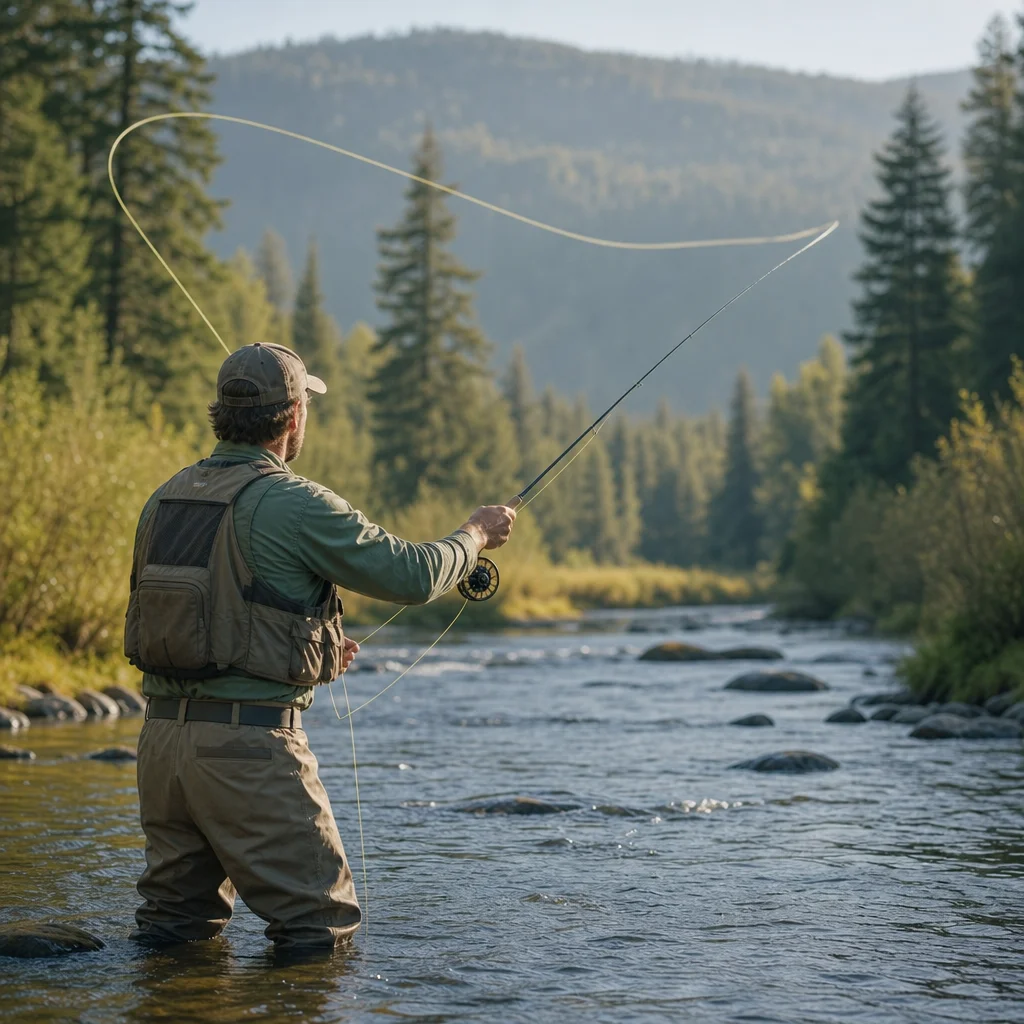
Learning to fly fish in a small yard or neighborhood park can feel awkward at first. You may have enough room to move a rod but not enough space for long casts, and grass, fences, trees, and curious passersby add complications. That doesn’t make practice pointless. It means you need a compact routine built around control rather than distance.
A short session several times a week can help you learn the movements that matter most: lifting the line, stopping the rod cleanly, forming a manageable loop, and placing the fly near a target. You won’t reproduce every condition of a trout stream, but you can arrive at the water with fewer moving parts to solve.
Set up a small, safe practice area
Choose the largest open space available, but don’t assume a park is automatically suitable for casting. Look above, behind, and in front of you before you begin. Branches, light fixtures, playground equipment, picnic shelters, parked vehicles, and walking paths can turn a simple drill into a hazard.
Check the space first: Before you cast in a public park, confirm that casting or fishing practice is allowed there and choose a quiet area away from paths, pets, children, roads, and overhead obstacles. Local park rules and access conditions can vary.
A space roughly the length of your rod and leader is enough for early drills. More room is useful, but you don’t need a football field. A flat lawn is usually more forgiving than pavement, although grass can grip the line during some drills.
Use a bright yarn fly, a short piece of yarn, or another hookless practice indicator. Remove the hook from a fly, or use a dedicated casting yarn. Avoid practicing with an exposed hook in a yard or public area. The goal is to learn line movement, not to create a small, airborne fishing problem.
A basic setup includes:
- Your fly rod and reel
- Fly line, with the leader shortened if needed for the practice area
- A visible piece of yarn tied to the end
- A measuring tape or several small targets
- Cones, paper plates, or towels for targets
- Eye protection when other people or hard surfaces are nearby
Keep the leader and yarn short enough that you can maintain control. If the full leader repeatedly catches on grass or nearby objects, shorten the practice section temporarily. Restore a normal fishing setup when you move to the water.
The 25-minute practice routine
Practice for about 20 to 25 minutes. Stop while your movements are still reasonably clean. Ten focused minutes are more useful than forty minutes of increasingly frustrated arm waving.
1. Practice the basic grip and stance: 3 minutes
Hold the rod as if you were holding a small hammer, with the thumb generally on top of the grip. Keep your grip firm enough to control the rod but relaxed enough that your hand and forearm don’t become rigid.
Stand with your feet about shoulder-width apart. Point your non-casting shoulder toward the direction you intend to cast. Keep your casting elbow near your side rather than letting it drift far behind you.
At this stage, let the line rest on the ground. Move the rod slowly between a forward position and a rearward position without trying to cast. Notice how little hand movement is needed to move the rod tip. The rod should bend and recover; your arm doesn’t need to make a large sweeping motion.
2. Learn the pause: 5 minutes
The pause is the foundation of a controlled cast. After you move the rod backward, wait for the line to straighten behind you before making the forward stroke. Then wait for the line to straighten in front before lifting it again.
This doesn’t mean you need to watch the line constantly. In a yard, turn your head enough to observe the back cast when possible. You’re trying to connect the feeling in your hand with the shape and movement of the line.
Start with a short amount of line outside the rod tip. Make a small back cast, pause, then a small forward cast. If the line falls in a heap, shorten the line or lengthen the pause. If the line travels almost straight up, you may be moving the rod too vertically or using too much force.
The correct pause changes with the amount of line, the rod, and the casting speed. Don’t treat it as a fixed count. Wait for the line to finish the part of the loop that matters before starting the next stroke.
3. Work on small loops: 5 minutes
A loop is the portion of line traveling through the air after the rod changes direction. For beginner practice, aim for a compact loop that moves forward without collapsing. It doesn’t have to be narrow or fast.
Use short, deliberate strokes. Imagine that the rod tip is traveling along a straight path rather than drawing a wide circle. A wide, rounded stroke often produces a large loop and gives the line more opportunities to tangle.
Try this sequence:
- Lift the line gently from the ground.
- Move the rod backward with a controlled stroke.
- Pause until the line straightens behind you.
- Move the rod forward and stop firmly.
- Pause again before repeating.
The stop matters because it allows the rod to unload and transfer energy into the line. A soft, drifting stop makes it harder for the loop to form. A violent stop usually creates tension in your arm and doesn’t improve the cast.
4. Add line gradually: 5 minutes
Once you can make several controlled short casts, add line in small amounts. Pull or strip a little more line from the reel, then repeat the same motion. If the loop collapses, return to the previous length.
This is a useful rule for practice: add only one difficulty at a time. Don’t add line, increase speed, introduce a target, and cast around a tree all at once. You won’t know which change caused the problem.
Keep your casting hand in a comfortable working range. You shouldn’t need to make a huge arm movement to carry line across a small yard. For stream fishing, control at short and medium distances is usually more useful than chasing maximum distance in practice.
5. Practice accuracy with three targets: 5 minutes
Place three targets at different distances. Paper plates, towels, or small cones work well. Keep them large enough that you can measure improvement without turning the drill into a contest.
Start with the nearest target. Make a single back cast, then present the yarn toward the target. Allow the yarn to land before retrieving the line. Repeat several times, then move to the middle and far targets.
Judge each attempt by two questions:
- Did the line straighten before the forward stroke?
- Did the yarn land with enough slack to look natural rather than snap tight?
For now, don’t worry about landing within an inch of the center. A controlled presentation near the target is a better goal than a forceful cast that happens to land close once.
6. Finish with roll casts: 2 minutes
A roll cast is especially useful when you can’t make a full back cast because of trees or a steep bank. It also helps you become comfortable moving line without repeatedly throwing it behind you.
Let the line rest in front of you. Slowly lift the rod until the line forms a small loop or “D” shape behind the rod tip. Then drive the rod forward and stop, allowing the line to roll across the ground.
Grass can make this drill inconsistent, so focus on the motion rather than distance. If the line sticks, use a smoother surface only when it’s safe and permitted, or keep the drill brief. Roll casting is worth learning, but it shouldn’t replace practice with the basic overhead cast.
Common practice mistakes and simple fixes
Trying to cast too far
Distance encourages extra force, large arm movements, and poor timing. Reduce the amount of line and concentrate on a clean stop. Add distance only when the loop remains controlled.
Starting the forward cast too soon
This is one of the most common beginner problems. The back cast hasn’t straightened, so the forward stroke has little useful line to load the rod. Pause longer, watch the line when possible, and practice with less line.
Following the line with your whole body
Your shoulders and upper body can remain mostly quiet. If you twist dramatically or step through every cast, accuracy becomes harder to repeat. Keep your stance stable and let the rod hand do the smaller work.
Holding the rod too tightly
A clenched grip makes the rod feel heavy and reduces sensitivity. Keep your thumb supportive, your wrist reasonably firm, and your forearm relaxed. If your hand or shoulder aches, stop and reset rather than practicing through discomfort.
Practicing with too much equipment nearby
A chair, backpack, dog, child, and collection of fly boxes can quickly become obstacles. Keep the practice area simple. Put away anything that can catch the line or distract you, and leave the dog out of the casting lane—even if the dog is certain it’s helping.
How often should you practice?
Three short sessions per week is a reasonable starting point. Use the same basic routine for a week before changing it. Repetition helps you notice whether a problem comes from timing, line length, or the environment.
Keep a brief mental or written note after each session: what distance felt controlled, whether the back cast straightened, and where the yarn usually landed. You don’t need a detailed training log. A few observations can prevent you from repeating the same correction without knowing whether it helped.
Your next steps before fishing
Before your first stream outing, practice these three skills in order:
- Make a controlled pickup and short overhead cast.
- Pause long enough for the line to straighten behind you.
- Place the yarn near a target without forcing the cast.
Then try the routine with the leader and fly setup you expect to use, while keeping the hook removed or safely covered during practice. At the water, start with less line than you think you need. Short, controlled casts let you focus on reading the current, presenting the fly, and avoiding the branches that were kind enough to wait for you.