A Simple Streamer Rig for Trout Without Excess Hardware
I’ll clarify how leader, tippet, and streamer connections fit together so you can keep the fly moving naturally without adding swivels, snaps, or other hardware that creates more tangles than solutions.
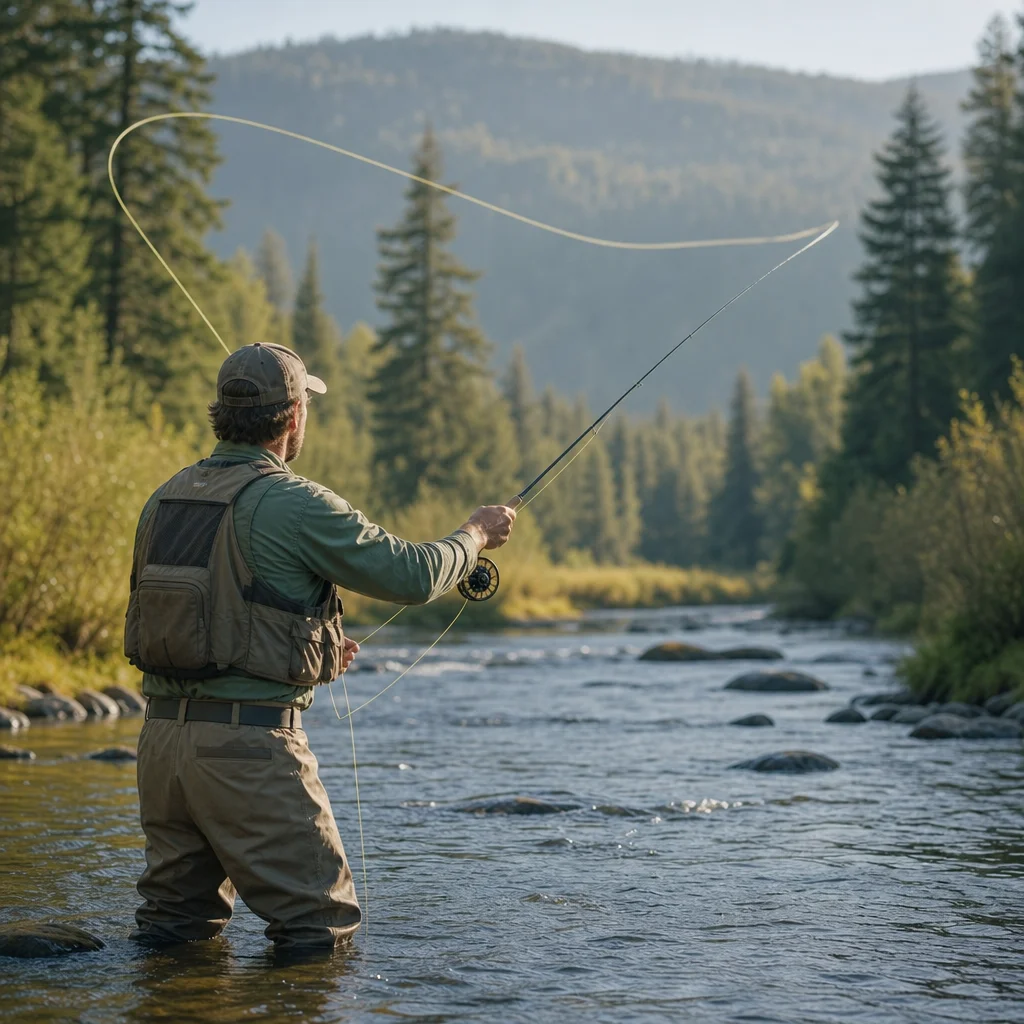
When streamer fishing feels more complicated than dry-fly fishing, the extra hardware is often the reason. Anglers add snaps, swivels, split shot, and multiple sections of line in an effort to control a larger fly or reach deeper water. The result can be a stiff connection, poor fly action, or a leader that tangles before the streamer reaches the current.
A simple streamer rig usually needs only your fly line, a leader, a short section of tippet, and a reliable knot to the fly. The right setup depends on the streamer’s size, the water’s depth, and whether your fly line already sinks. Start with the fewest connections that solve the actual problem, then add complexity only when conditions require it.
The basic streamer connection
For most beginner streamer fishing, use this sequence:
- Fly line to leader — Use the loop-to-loop connection built into your fly line and leader, or attach the leader according to your line’s design.
- Leader to tippet — Tie a short, heavier tippet section to the end of the leader with a blood knot, double surgeon’s knot, or another knot you can tie consistently.
- Tippet to streamer — Attach the fly with a non-slip loop knot when you want more movement, or a compact clinch-style knot when you prefer a tighter connection.
That’s the whole rig. There’s no automatic need for a snap, swivel, or metal leader accessory.
A tapered leader gives you a gradual change from the thick butt section to the thinner tip. The taper helps transfer energy during the cast and turns the fly over more cleanly than a sudden jump from heavy leader material to fine tippet. For streamers, you’ll generally use a stronger, thicker terminal section than you would for a small dry fly.
Choose the leader around the streamer
The leader should be strong enough to cast the fly safely and control it in the current, but not so heavy that it makes the streamer behave like a piece of rope.
For smaller streamers, a standard trout leader with a relatively stout tippet section may be enough. For larger or weighted patterns, shorten the leader and use heavier tippet. A shorter leader also helps when you’re trying to keep the fly near the surface or want a more direct connection for stripping and twitching.
As a starting point, many anglers use a leader in the roughly 7.5- to 9-foot range for general streamer work, then add a short tippet section. In shallow water or when the fly is light, a longer leader can help keep the fly away from the line and reduce disturbance. In deeper water, faster current, or tight quarters, a shorter leader is usually easier to cast and control.
The exact tippet diameter matters less than the relationship between the fly and the line. If the streamer twists the tippet, fouls the cast, or refuses to turn over, the terminal section may be too light. If the fly swims stiffly and the knot seems to act like a hinge made of cable, the tippet may be heavier than necessary.
Add tippet without building a tangle factory
A short tippet section protects the tapered leader from repeated fly changes and lets you adjust the fly without cutting back the leader every time. For streamer fishing, keep this addition modest rather than automatically adding several feet.
A useful starting point is 12 to 24 inches of tippet. Go shorter if you’re casting a bulky or weighted streamer, fishing close to cover, or using a sinking line. Go longer when the water is clear, the streamer is small, and the fly needs a little more freedom from the leader.
Tie the leader and tippet together with a knot that matches your skill and the materials you’re using:
- Double surgeon’s knot: Quick to tie and easy to inspect. It’s a practical choice when you need to rebuild a rig on the bank.
- Blood knot: Creates a neat connection when the two materials are reasonably similar in diameter. It takes more practice but passes through guides smoothly when tied well.
- Loop-to-loop connection: Convenient when the leader has a welded or tied loop, though the connection is bulkier than a direct knot.
Wet the knot before tightening, pull it down smoothly, and trim the tags close without cutting into the knot itself. Then test it with firm hand pressure. A knot that slips during a hand test won’t become more trustworthy when a trout and a submerged branch are involved.
Select the fly knot for the action you want
The final knot changes how a streamer moves.
A non-slip loop knot leaves a small loop at the eye of the fly. That loop allows the streamer to pivot, wobble, and turn more freely when you strip, pause, or swing it through current. It’s often a good choice for flies designed to dart or swim with a broad profile.
A clinch-style knot seats the tippet directly against the hook eye. It’s compact, familiar, and useful when you want a firm connection or need to keep the fly from moving independently of the tippet.
Neither knot is universally better. A loop knot can improve movement, but it also leaves another part of the rig to inspect. A tight knot is simple and compact, but it may make some streamers swim with less freedom. Tie the knot you can make correctly, then observe the fly in the shallows. If it tracks naturally and the knot stays seated, the setup is doing its job.
Check the connection before the first cast: Pull firmly on each knot, inspect the tippet for nicks, and watch the streamer beside the bank to confirm it swims and tracks as intended.
Skip the snap unless you have a specific reason
Snaps can make fly changes fast, but they add weight, bulk, and another point that can catch weeds or interfere with a small streamer. They may also open, deform, or fail to close completely. For most beginner trout rigs, tying the fly directly to the tippet is simpler and easier to troubleshoot.
A small snap may be reasonable when you’re changing large streamers frequently, fishing a system designed around that connection, or using a fly that moves properly only with a particular attachment. Even then, inspect it regularly and make sure its size doesn’t overpower the fly.
Swivels are similarly unnecessary in many trout streamer situations. They can help manage severe fly twist, but they don’t solve every cause of twist. A streamer may rotate because of an unevenly tied body, a damaged tippet, an overly fast retrieve, or a knot that has slipped into an awkward position. Correct the cause before adding hardware.
Match the rig to the line
Your leader length should work with your fly line rather than fight it.
With a floating line and an unweighted or lightly weighted streamer, a longer leader can keep the fly from being pulled directly by the thicker fly line. You’ll usually fish the streamer higher in the water column unless current, a weighted pattern, or added weight changes its depth.
With a sinking tip or full sinking line, a shorter leader often gives you better contact with the fly. A long leader can leave the streamer suspended well above the sinking section, especially in deeper water. You may still need some tippet to separate the fly from the line, but there’s no benefit in adding length you can’t control.
If you use split shot, place it carefully and check your local rules before fishing. Weight attached directly to the tippet can create a hinge, damage the line, and make casting less predictable. It can also increase the chance of a heavy fly or weight striking you during a bad cast. Use the least amount of added weight that reaches the depth you’re trying to fish, and slow down your casting stroke when the rig becomes heavy.
Troubleshoot the common failures
The streamer tangles around the leader
Start by shortening the leader or tippet. Then check whether the fly is spinning. A rotating streamer can twist the tippet and wrap around the connection, especially during fast retrieves or poor turnover.
Cast with a smooth pause rather than an abrupt, forceful stroke. Open your casting loop slightly if the fly is bulky, and allow enough space behind you for the line to straighten. If the problem continues, inspect the fly for materials that are catching the hook bend or tippet.
The fly lands in a heap
The leader may be too long, the tippet may be too light, or the fly may be too heavy for the line and casting stroke. Shorten the terminal setup first. If that doesn’t help, use a heavier tippet or a less heavily weighted streamer.
A controlled, open loop is safer and more effective than trying to force a heavy fly into a tight loop. Let the line carry the fly; don’t accelerate the rod harder simply because the streamer is large.
The fly swings but doesn’t move naturally
Check the final knot and the tippet diameter. A loop knot may give the fly more freedom, while a lighter but still suitably strong tippet may reduce stiffness. Also look at your retrieve. A streamer often needs pauses and changes of direction, not constant speed.
The current can provide much of the movement. Cast across or slightly downstream, mend as needed, and let the fly swing before stripping it back. If the fly only looks alive when you pull it hard, the rig may be too stiff or the pattern may not suit that presentation.
The knot keeps failing
Retie after every serious snag, visible abrasion, or hard shock. Make sure the knot is fully dressed before tightening, and don’t leave excessively long tag ends that can catch during the cast. If you can’t tie a particular knot reliably with cold or wet hands, choose a simpler knot and practice it at home.
A dependable minimalist setup
For a straightforward starting point, use a tapered leader, add about 12 to 24 inches of sturdy tippet, and tie the streamer directly to the tippet. Choose a non-slip loop knot for maximum fly movement or a compact clinch-style knot for a tight, familiar connection. Adjust leader length and tippet strength only when the water, fly, or line gives you a reason.
Before fishing, pull-test every connection, inspect the tippet, and watch the streamer move at close range. If it casts cleanly, tracks naturally, and stays connected after a few snags, you’ve probably found the right level of simplicity. The best streamer rig is rarely the one with the most parts; it’s the one you understand well enough to fix when the trout, current, or riverbank makes an unscheduled adjustment.