How to Recover Your Fly Line After It Wraps Around a Reel Handle
A loose loop can become trapped under the handle, against the spool, or around the reel frame just when you need to move quickly. I’ll walk you through a calm recovery sequence, explain which pulls cause damage, and show how to prevent the wrap next time.
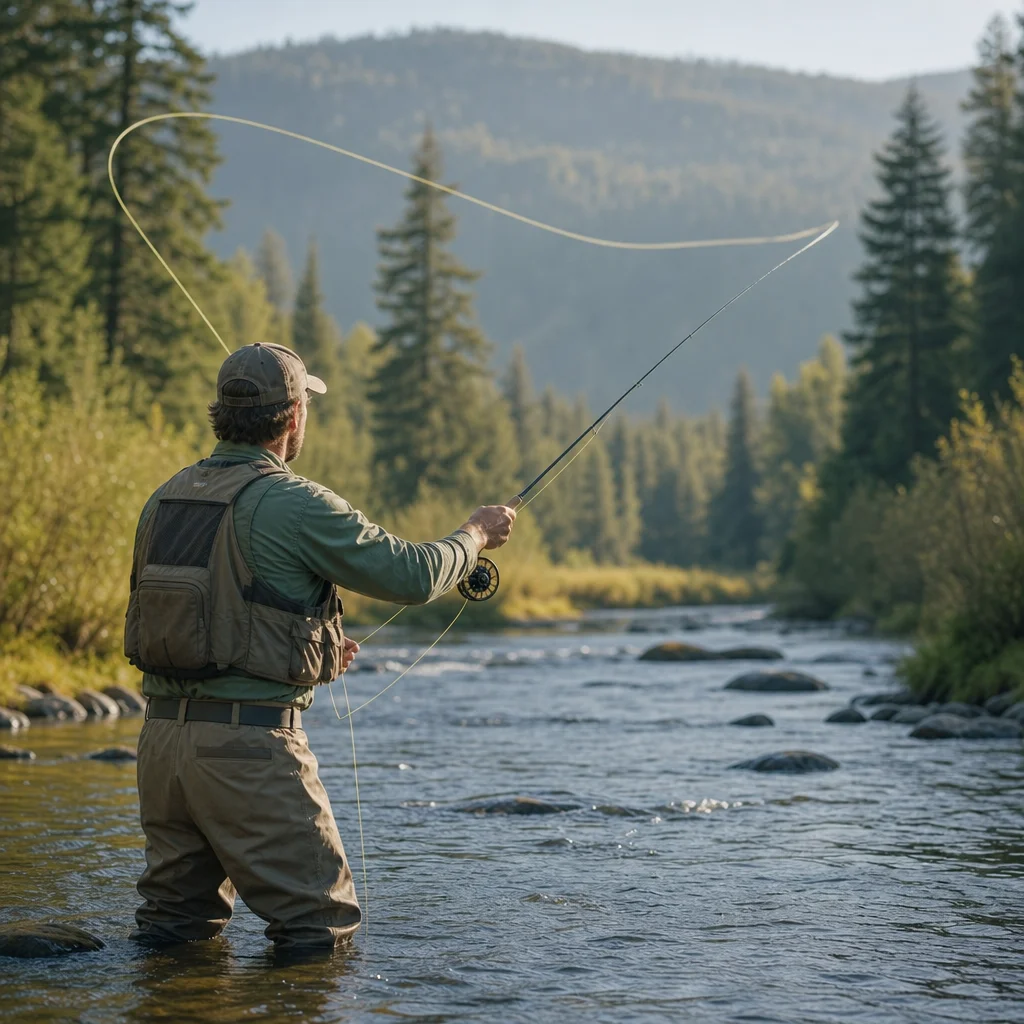
A fly line wrapped around a reel handle is usually a small problem that becomes expensive when you keep pulling. The handle, spool, and line all have moving parts, so force can flatten the line, damage the coating, or turn a simple loop into a tight knot.
The safest approach is to stop retrieving, create slack, locate the trapped section, and unwind it deliberately. You usually won’t need to remove the reel or cut anything. A few extra seconds of patience can save a fly line, leader, and a fair amount of streamside muttering.
Stop and control the line
Stop stripping or cranking as soon as you feel unusual resistance. Don’t continue turning the handle to “see if it clears.” Each rotation can pull another section of line into the wrap.
If you’re holding a rod, keep the tip in a safe position and avoid putting the line under heavy tension. Pinch the line lightly against the cork or rod handle, or hold the loose section in your line hand so it can’t run through the guides.
If a fish is attached, the priorities change. Keep steady pressure without dragging the fish toward the obstacle, and clear the line as soon as you can. If you can’t free it immediately, avoid wrapping the line around your hand or the rod. A trapped line can transmit sudden movement from the fish directly to you.
Protect the line before pulling: Check that the line is slack and that no fish, current, or snag is adding tension. A tight line is much more likely to cut into itself or damage the coating while you work.
Find exactly where the wrap is
Look at the reel from both sides before trying to unwind anything. The line may be wrapped around:
- The handle knob or the small stem holding it
- The handle arm between the knob and the reel
- The edge of the spool
- The reel frame or cage
- The drag knob or another protruding control
- The reel foot, where the line has slipped behind the reel
Follow the line from the rod toward the reel with your eyes. Find the first point where it leaves its normal path. This matters because pulling on the free end can tighten a loop that is actually caught several inches away.
A common example is a loop that slips around the handle knob while you’re stripping line. The loop may look as if it is caught on the spool, but the real obstruction is the handle stem. Another is a loose coil that passes over the spool rim and becomes trapped between the spool and frame.
Create room to work
Hold the rod securely and give the line a little slack between the rod tip and reel. You don’t need a large amount; just enough that the trapped loop isn’t carrying the weight of the line or leader.
If loose line is lying at your feet, gather it into large, loose coils rather than pulling it tight. Keep those coils away from rocks, branches, wading boots, and anything else that could create a second tangle.
If the reel is still attached to the rod, turn the rod so you can see the trapped section clearly. A reel that is upside down or partly hidden by your hand makes it easy to pull in the wrong direction.
Free a loop around the handle
When the line is looped around the handle knob or its stem, start with the simplest movement:
- Hold the loose line close to the wrap.
- Push or guide the loop back toward the opening it entered through.
- Pass the loop over the knob or around the end of the handle.
- Let out a little line as the loop comes free.
- Check that the line hasn't crossed underneath another section.
Don’t yank the free end. If the loop won’t pass over the knob, rotate the reel or spool by hand in the direction that opens the loop. Use slow, small movements and watch the line as it moves.
Some handles have a knob that spins freely, while others have a fixed or semi-fixed design. Don’t assume that turning the knob itself will release the line. The goal is to move the line around the obstruction, not to force the obstruction through a tight loop.
If the loop is trapped beneath a handle arm or another fixed part, maintain slack and work the line back along the route it took into the trap. You may need to reverse the last few inches of your retrieve by turning the spool backward with your fingers. Keep your fingers clear of narrow gaps between the spool and frame.
Clear a wrap near the spool
A line caught between the spool and frame needs a slower approach. First, stop the spool from turning. Hold the spool lightly if the reel design allows it, and identify whether the line is pinched or simply lying over the rim.
If the line is lying over the rim without being pinched, guide the loop back over the edge by hand. Pulling hard from the rod side can make the line wedge deeper into the gap.
If the line is pinched, release tension from both sides. Then rotate the spool a small amount in the direction that loosens the line. Many fly reels allow the spool to be turned by hand, but the exact direction depends on which side of the reel the line entered and how the wrap formed.
Don’t insert a knife, forceps, or another sharp tool into the spool gap. A tool can nick the line, scratch the reel, or damage a sealed drag. If the line remains firmly trapped, remove the spool only if the reel is designed for simple field removal and you know how its retaining mechanism works. Otherwise, leave the reel intact and deal with it in a clean, well-lit place.
Separate the fly line from the leader
If the wrap is near the connection between fly line and leader, avoid pulling on the leader or tippet. Those thinner materials can break while the thicker fly line remains trapped.
Hold the fly line near the reel and work the wrap loose from that side. If the leader has passed around the handle, guide the leader back through the opening with your fingers rather than dragging the fly, tippet, or knot through the obstruction.
A fly caught in clothing or gear can create a second hazard while you’re concentrating on the reel. Set the hook safely aside or secure it in the reel’s hook keeper if your setup has one. Keep it away from your fingers while you inspect the line.
When not to keep working the wrap
Stop and reassess if you notice any of the following:
- The line is deeply wedged between the spool and frame
- The coating is visibly cut, split, or compressed
- The leader or tippet is wrapped under heavy tension
- The reel has a sealed or unfamiliar mechanism that would need disassembly
- The line is attached to a fish or snag that keeps loading the wrap
- You’re tempted to use a knife, pliers, or a sharp hook to pry it out
Cutting the line is a last resort, but it can be sensible if the alternative is damaging the reel or leaving a fish trailing a long section of line. If you do need to separate the line, cut the least valuable and most accessible section rather than pulling until a knot or connection fails unpredictably.
Inspect the line after it comes free
Run the affected section slowly between your fingers. Look and feel for:
- A flattened or sharply kinked section
- Cracks, cuts, or rough patches in the coating
- A deep crease that doesn't relax
- Discoloration or damage near a welded loop
- A leader connection that has slipped or weakened
Minor temporary bends may straighten as the line warms and is stretched gently. A cut coating, exposed core, damaged welded loop, or severe permanent crease is a reason to replace or shorten that section. Damage near the front of a fly line deserves particular attention because it can affect leader connections and casting control.
If the line feels sound, pull out several yards and lay it in loose coils. Make sure it runs cleanly through the guides before you resume fishing. A wrap that has just been cleared can return immediately if the remaining coils are still crossed.
Why the wrap happened
The recovery is easier to repeat when you identify the cause. Common habits include:
Stripping line too close to the reel
When your stripping hand moves behind the reel or crosses the handle, a loose loop can catch the handle knob. Keep the line hand in front of the reel and release each strip into an open, controlled area.
Cranking with loose coils near the reel
If you retrieve while several loose coils hang below the rod, the reel can pull those coils across the handle or spool rim. Gather excess line before winding it onto the reel.
Reeling while the line is off to one side
A line entering the reel at a sharp angle can climb the spool edge or slip behind the frame. Bring the line in with the rod and line hand reasonably aligned with the reel, especially during a hurried retrieve.
Letting the handle become a storage point
It’s tempting to hook a loose loop over the handle while changing flies or moving along the bank. That makes an accidental wrap more likely. Keep loose line in your hand, a stripping basket, or a clear section of ground instead.
Ignoring early resistance
The first sign may be a slight hesitation rather than a full jam. Treat unexpected resistance as a warning. Stopping at that point is much easier than freeing a wrap after several handle rotations.
A simple prevention routine
Before you start moving or retrieving quickly, use this short check:
- Keep the line hand forward of the reel handle.
- Let loose line form broad, visible coils.
- Keep those coils away from your boots and nearby vegetation.
- Watch the line’s entry angle as it approaches the spool.
- Stop immediately if the reel feels different from its normal retrieve.
- Inspect the first few feet of line after clearing any wrap.
A stripping basket can help when you’re managing substantial line on a beach, boat, or open bank, but it isn’t required for ordinary stream fishing. The important principle is the same: loose line needs a predictable place to go.
Practical next steps
When a fly line wraps around the reel handle, don’t fight the reel. Stop retrieving, control the loose line, add slack, and locate the exact obstruction. Then unwind the loop through the opening it used to get trapped, using small movements rather than force.
Afterward, inspect the line and connection, clear any crossed coils, and consider what placed the loop near the handle. Keeping your stripping hand forward and stopping at the first unusual resistance will prevent most repeats—and let you get back to fishing before the trout develop a suspicious interest in your repair work.