When Should You Use a Perfection Loop on a Trout Leader?
I’ll clarify when a perfection loop makes sense on a trout leader, when another knot is better, and how to inspect a loop-to-loop connection before changing leaders or trusting it on the water.
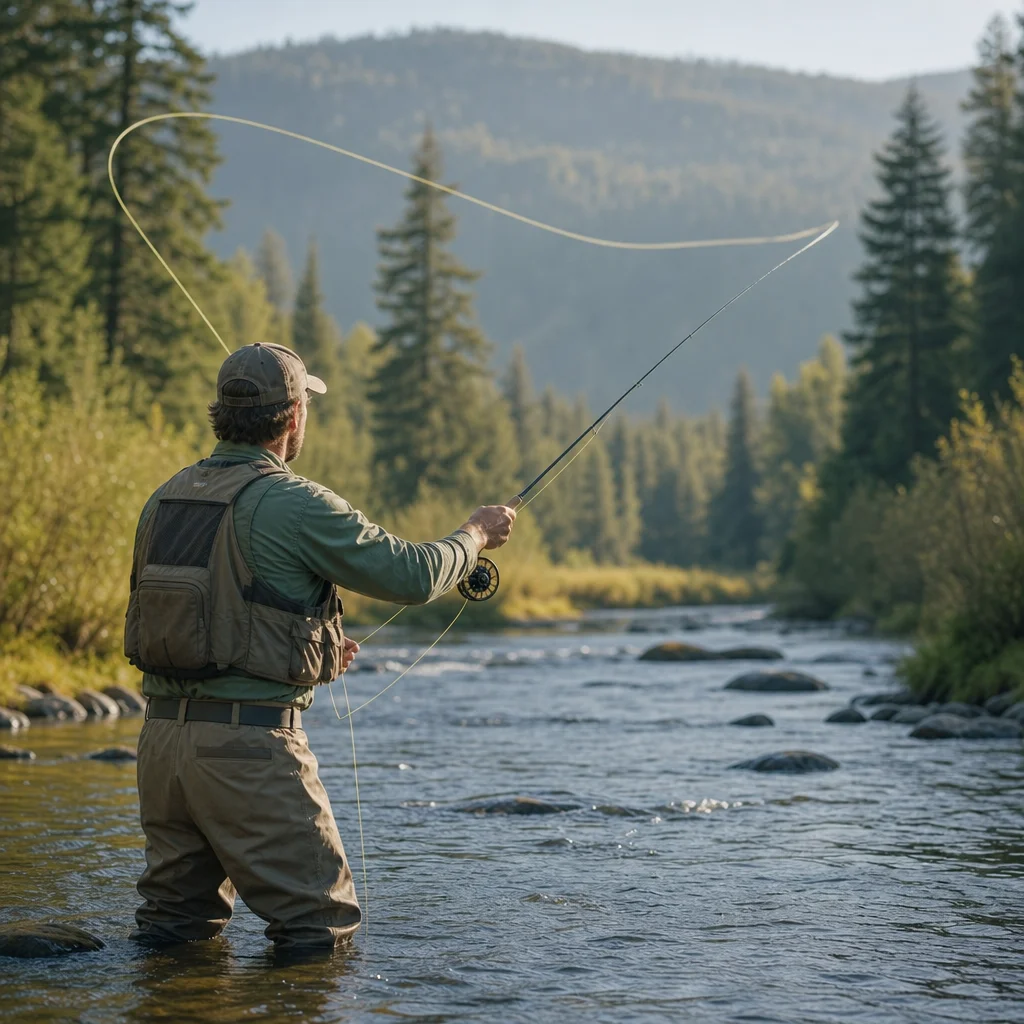
A perfection loop is useful on a trout leader, but it isn’t the universal answer to every leader connection. Its best use is usually at the butt end of a tapered leader, where it creates a neat loop for attaching the leader to a fly line or another looped section.
The confusion starts because the same knot can also be tied at the tippet end. That’s possible, but it often creates a larger, less subtle connection than you need for presenting a small trout fly. Choosing the right location matters more than simply knowing how to tie the knot.
What a perfection loop does
A perfection loop creates a fixed loop in the end of monofilament or fluorocarbon. When tied correctly, the loop stays compact and aligned with the leader rather than swinging off to one side.
On a trout leader, that loop can serve as a reusable connection point. You can attach the leader to a looped fly line, a looped butt section, or a short loop-to-loop extension without cutting and retying the leader each time.
The knot is especially convenient with commercially made tapered leaders. Many packaged leaders come with a perfection loop already tied in the butt end. That loop is intended to connect to a matching loop on the fly line or to a loop you’ve added to a backing or leader system.
The knot doesn’t make the entire connection indestructible. The loop, the line loop, the leader material, and the way the connection is seated all contribute to its reliability.
The most useful location: the butt end
For most trout fishing, the butt end is where a perfection loop provides the clearest benefit.
A loop-to-loop connection lets you change a tapered leader quickly. You can remove a worn, tangled, or incorrectly sized leader and attach another one without shortening the fly line or rebuilding a nail-knot connection.
This is handy when you move between situations such as:
- A short, sturdy leader for a weighted nymph rig
- A longer leader for dry-fly presentation
- A lighter leader for small flies and cautious fish
- A stronger leader for streamers or larger trout
The connection also makes it easier to carry a few prepared leaders. You can store them in small packets or leader wallets, then select one without carrying extra spools and tying several knots beside the stream.
A perfection loop is a sensible choice when convenience, repeatability, and quick leader changes matter more than making the smallest possible connection.
When a loop-to-loop connection works well
Use a perfection loop at the leader butt when the other side of the connection has a suitable loop. Common examples include a tapered leader attached to:
- A welded loop on a fly line. This is the standard arrangement for many modern fly lines.
- A factory-made loop on a leader. Some leaders are designed to connect to another looped section.
- A short butt section. A separate section of stiff monofilament can remain attached to the fly line while you change the rest of the leader.
- A looped leader system used for specialized rigs. This can be convenient when you regularly switch between prepared setups.
The loops should be reasonably similar in size. A very small leader loop pulled through a much larger loop can create an awkward connection, while an oversized loop may catch guides or collect debris.
To make the connection, pass one loop through the other, pass the leader or fly-line end through the loop you just passed through, and pull the standing sections in opposite directions. The result should seat neatly with the loops lying together rather than twisting around each other.
Why you mightn't use one at the tippet end
A perfection loop can be tied in tippet material, but it’s not usually the first choice for attaching a fly.
A loop at the fly end adds bulk. That bulk may matter with small dry flies, light tippets, or presentations where you want the fly to land delicately. A loop connection can also allow the fly to move more freely, which is sometimes useful for certain flies and techniques but undesirable when you want precise control.
For a standard trout fly attachment, many anglers use an improved clinch knot, a non-slip mono loop, or another knot suited to the fly and tippet diameter. These knots can provide a more compact connection or a more deliberately controlled amount of movement.
The decision depends on the fly and presentation:
- Small dry flies: A compact knot is often preferable.
- Streamers: A loop knot may improve movement, especially when the fly is meant to dart or swing.
- Nymphs: A compact, dependable knot is usually sufficient, particularly when you’re changing flies frequently.
- Flies with large eyes: A loop can be easier to pass through, but inspect the finished connection for excess material.
A perfection loop at the tippet end is therefore a specialized option, not a default replacement for your fly knot.
Situations where it saves time
The knot earns its place when you need to change leader configurations often. That might happen on a larger river, where a morning of dry-fly fishing becomes an afternoon of nymphing, or on a trip where you’re carrying only a small selection of leaders.
It can also help when your hands are cold or the light is fading. A loop-to-loop connection is easier to repeat than tying a new direct connection to a fly line. You still need enough dexterity to inspect and seat it, but you avoid rebuilding the entire rig.
Another useful situation is replacing a damaged leader after contact with rocks, submerged branches, or a fish’s teeth. If the loop and fly-line connection remain sound, you can remove the damaged leader and attach a fresh one quickly.
That convenience comes with a trade-off: every additional loop and connection is another component to inspect. Speed is helpful only when the connection is properly seated.
Common mistakes to avoid
Using mismatched loop sizes
A leader loop that is dramatically smaller or larger than the loop it joins can create a bulky hinge or an untidy connection. If the loops don’t sit naturally together, consider changing the leader, rebuilding the loop, or using a different connection method.
Pulling only the leader
A loop-to-loop connection should be tightened by pulling the connected standing sections in opposite directions. Pulling one loose end while leaving the rest slack can leave the loops partly open or twisted.
Leaving long tag ends
A perfection loop should have a short, clean tag end. A long tag can catch weeds, grass, or rod guides. Don’t trim so closely that you risk cutting into the knot, though; leave enough material for the knot style and line diameter you’re using.
Connecting a loop to a damaged loop
A fly-line loop can develop cracks, fraying, or soft spots after repeated use. If the loop on the fly line is failing, tying a perfect perfection loop in the leader won’t solve the problem. Repair or replace the fly-line connection before attaching a new leader.
Assuming the knot is seated because it looks tidy
A neat appearance is encouraging, not conclusive. Pull the connection firmly by hand before fishing it. The loop should remain closed and aligned, with no sudden slipping or uneven movement.
How to inspect the connection before fishing
Run your fingers over the leader butt, the loop, and the joined sections. Look for flattened material, deep nicks, whitening, roughness, or a loop that has started to deform.
Then check the connection under moderate hand tension. You’re looking for movement that shouldn’t be there, not trying to reproduce the full force of a hooked fish. If anything slips, opens, or feels uneven, cut it off and retie or replace the leader.
Check the connection before the first cast: Make sure both loops are intact, fully seated, and free of cracks or abrasion. After snagging the rig, landing a fish, or dragging the leader through rocks, inspect the connection again before continuing.
Keep the joined loops small enough to pass through the rod guides without catching. A loop-to-loop connection that repeatedly jams in the guides can damage the leader, disturb your cast, or make a quick change less convenient than a direct knot.
Perfection loop or another connection?
Use a perfection loop when you want a reusable, quick-change connection at the butt end of a trout leader and the opposing loop is sound and appropriately sized.
Choose a direct knot instead when you want the smallest possible connection, when the fly line has no suitable loop, or when you’re attaching a fly and don’t want an extra loop at the tippet end. A loop knot at the fly may still be appropriate when you specifically want more freedom of movement.
The knot is also less attractive when you rarely change leaders. If you fish one leader setup for most of a day, a direct connection may offer simplicity without giving up anything meaningful.
A simple decision checklist
Before tying or using a perfection loop, ask:
- Am I making a butt-end connection or attaching a fly?
- Does the other side have a strong, compatible loop?
- Are both loops free of cracks, abrasion, and distortion?
- Will the connection pass through my rod guides cleanly?
- Do I need quick leader changes, or would a direct knot be simpler?
- Have I pulled the finished connection snug and checked it again after fishing?
For most trout rigs, the practical answer is straightforward: use a perfection loop at the leader butt when you want fast, repeatable leader changes. At the fly end, choose it only when its added movement and bulk suit the fly. Tie it carefully, inspect both sides of the connection, and retest it whenever the rig has taken a hard pull.